The choice of lotion bottle labels for transparent glass is a balancing act between the structural dimensions of the bottle, the durability of the label material, visual contrast and the operational environment. Since skincare lotions usually contain oils, emulsifiers and moisture and are generally applied in high-humidity bathroom situations, the label system must retain stable adherence and readability throughout the product’s shelf life.
Unlike plastic squeeze bottles, stiff glass offers outstanding optical clarity, a smooth surface finish and a premium feel in the hand. But the physical properties of glass also pose unique packaging challenges. The performance of printed labels over time can be directly affected by factors such as bottle shape, surface cleanliness, label panel area and the colour of the liquid inside the bottle.
This article covers how to assess, size and check bespoke labels for glass lotion packaging, assisting packaging managers in pairing label choice with bottle choice.
What Makes Lotion Bottle Labels Suitable for Glass Bottles?
Surface quality, cleanliness and geometry of the glass bottle all affect label adhesion. Unlike plastic containers, glass is chemically very stable and flat. Check that the bottle body is free from dust, oil, or other impurities which could influence adhesive wetting and bonding, and prepare the bottle surface as specified by the label provider before application.
Moreover, lotion products generally contain oils, water and surfactants, and the liquid may locally contact the outside of the bottle during use. The label must therefore be firmly attached and also tested on chemical penetration resistance according to the actual lotion formulation, contact time and a complete testing of the label system.
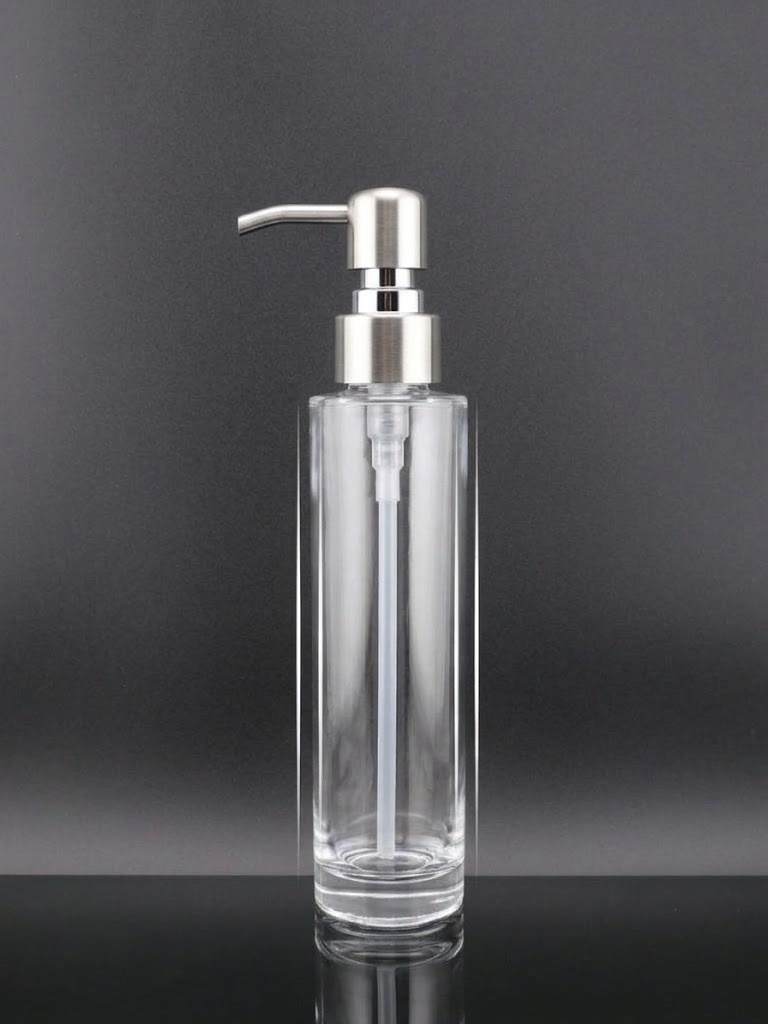
In analysing the applicability of a label, the design of the label and the physical characteristics of the glass bottle should be viewed as an integrated system:
Surface cleanliness and adhesive compatibility: Ensure that the pressure-sensitive adhesive (PSA) formulation is compatible with glass and can maintain stable adherence in high-humidity use settings.
Label placement and curvature avoidance: Avoid the mould seams and the upper/lower transition curvature zones to avoid label edge lift due to surface unevenness.
Real usage environment: Think about friction during pressing or handling, frequent contact, and bathroom humidity, and determine the durability requirements for label edges and surface print layers.
The label design should be developed as a separate decision together with the bottle shape and closure, since these packaging details influence the label area and the appearance of the final product.
How Bottle Shape Affects Label Size and Placement
The bottle shape has a direct impact on the effective flat labelable area (Label Panel). The straight wall height and circumference of the bottle must be measured accurately to tailor the label proportions so that they do not overlap the curved portions of the shoulder or bottom.
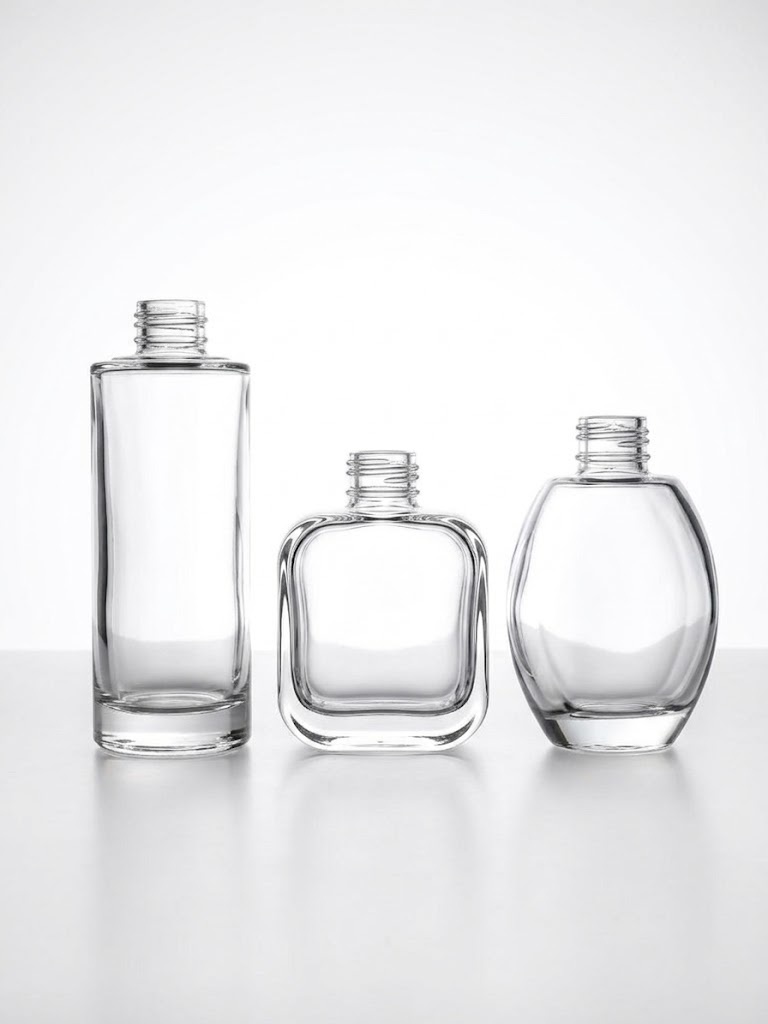
The following is a summary of labelling design considerations and physical sampling verification objectives for popular clear glass lotion bottle geometries (real performance will vary based on actual container geometry) :
| Bottle Profile | Design & Labelling Considerations | Focus on Sampling Verification |
| Cylindrical | labels may be single-sided, double-sided or wrap-around. For wrap-around labelling, the seam approach (overlap or butt) should be used according to the accuracy of the labelling equipment and the label structure. | Check the seam alignment, make sure there is no diagonal misalignment in automatic or manual labelling. |
| Square | Flat areas are intuitive, but the actual labelable area relies on the bottle’s side chamfers or corner radii. Try to avoid placing label edges at corners where they might float. | Ensure the edges are flat and pressed firmly, and check clearance between label edges and right angle corners. |
| Flat/Oval | The front and back display areas are large and the side transition zones may have compound curves. The effective flat labelable area should be calculated exactly from the 3D dimensions of the bottle. | Check the center area of oval curve, if it is flat and bubble-free; Check the edge peel force and adherence. |
Brands looking at round, square and flat-sided bottles can better evaluate which bottle shape provides a useful front-facing label area by studying the various glass lotion bottle designs.
Clear Labels vs. White Labels on Clear Glass
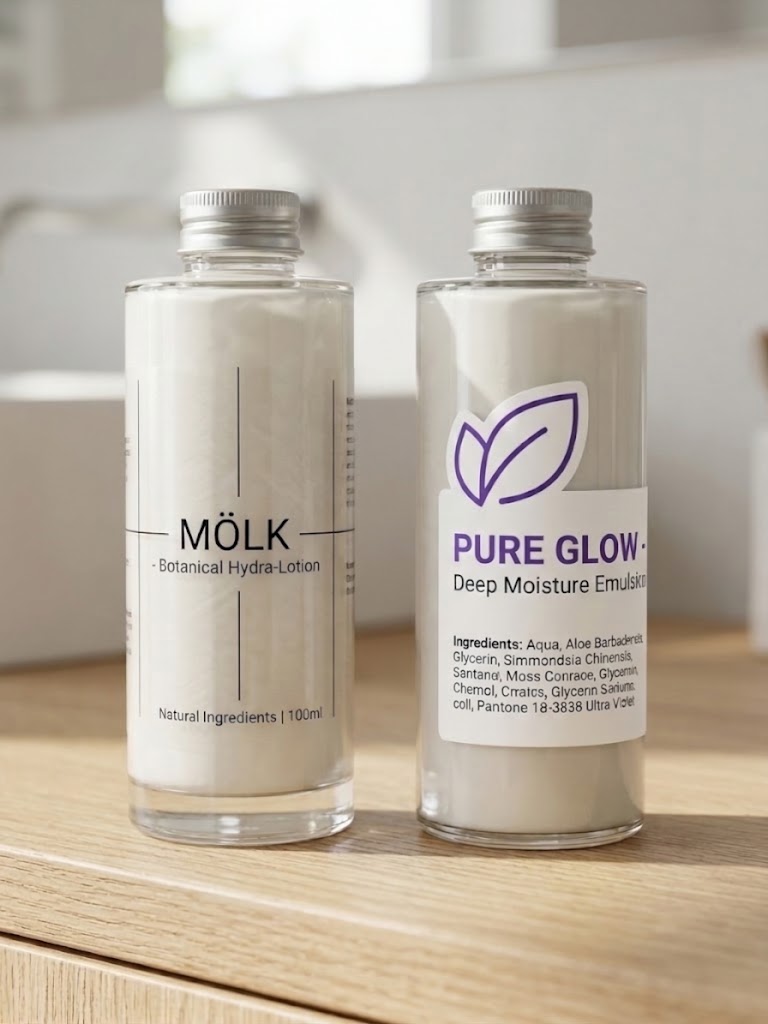
Clear glass bottles can show the texture and colour of the lotion within, however clear labels and white facestock labels work quite differently on clear glass:
1. Clear / “No-Look” Labels
Visual effect: Achieves a perfect frameless impression that improves the transparency of the glass and the real colour of the goods.
Thin lines or light coloured text on a translucent background can easily lose contrast against the rich background colour. If the clear facestock does not provide enough contrast for the colour or text, local white underprint can be used to boost the opacity of the colours and improve readability.
2. White Labels
Visual effect: Provides a solid opaque background, which is not affected by the lotion colour or texture change in the bottle. It helps to display brand standard colours and ingredient information clearly.
Design considerations: The label will cover part of the bottle body, thus the visual harmony between the label shape (e.g. die-cut uneven edges) and the overall geometric proportions of the glass bottle should be carefully evaluated.
Verification principle by sampling: Don’t select a solution based on a screen mockup. When sampling, make sure you apply the printed sample to a clear glass bottle filled with the actual lotion mix and assess text contrast and visual balance in varied lighting conditions.
How to Choose Label Materials for Lotion Bottles
Label facestock, adhesive and surface protection layer (lamination or varnish) matching provide performance across the whole product lifecycle. The final finished performance is not the same thing as the facestock itself. All three must be assessed as an integrated system against real use situations.
Common Label Facestock Characteristics and Suitable Conditions
BOPP film (Biaxially Orientated Polypropylene): One of the primary options for glass lotion bottle labels. Combined with proper adhesive and protective layer, it has good moisture resistance, oil resistance and tear resistance.
Vinyl / PVC : Good flexibility, under certain formulations it can conform to slightly curved glass surfaces. Good moisture resistance, scratch resistance.
Paper labels: They have a certain texture and feel, and are typically employed by firms that want a natural or vintage feel. Paper facestock often needs appropriate lamination or protective varnish to limit the chances of moisture and oil penetration.
The label is only one aspect of the packaging system, the container material also contributes to the overall look and use of the finished product and for this reason some brands compare glass and plastic cosmetic packaging before settling on the design.
Labels vs. Direct Printing on Glass Bottles
Apart from pressure-sensitive labels, direct ornamentation on the surface of glass bottles (e.g., screen printing and hot stamping) is another a typical packaging method. The two methods are different in the characteristics of design adjustment, visual effect and production requirements:
| Comparison Factor | Pressure Sensitive Labels | Direct Bottle Decoration |
| Design Flexibility | Label layout and artwork adjustments are generally simpler | Changing the design frequently involves new printing plates or production setups |
| Visual Appearance | Independent label structure or obvious borderless impact | Patterns and text directly placed to the bottle surface |
| Application Requirements | Test adhesive, facestock and bottle shape compatibility | Need to assess decorative process, glass surface quality and cure needs |
| MOQ & Cost | Depends on the label printing method, the material and the order size | Depending on the decoration method, equipment set up and volume of order |
What to Check Before Approving a Label Sample
Before approval of the bulk purchasing, conduct engineering sample verification on the actual bottle according to the following steps:
Dimensions, Seams and Adhesion Status: Place the sample label on the actual glass bottle and verify that all edges are smooth, free of bubbles and lifting, avoiding mould seams and excessive curvature. For wrap around labels, check that the seam is aligned as required by the technique.
Text and ingredient readability: Ensure that the ingredient list, warnings and text information are readable and that small fonts do not have blurred edges or ink loss.
Environmental resistance testing: Design the test settings according to the predicted use environment. Place the labelled glass bottle under the condition of humidity, temperature and contact medium, and check the adhesion of the label edge and the printed protective layer. The actual duration of the test and acceptance criteria should be defined according to the recommendations of the label supplier and the requirements of the product.
Package testing: Evaluate the overall appearance and user experience of the package after filling the contents and adding the final cap or dispensing accessory of choice (pump, screw cap, etc.
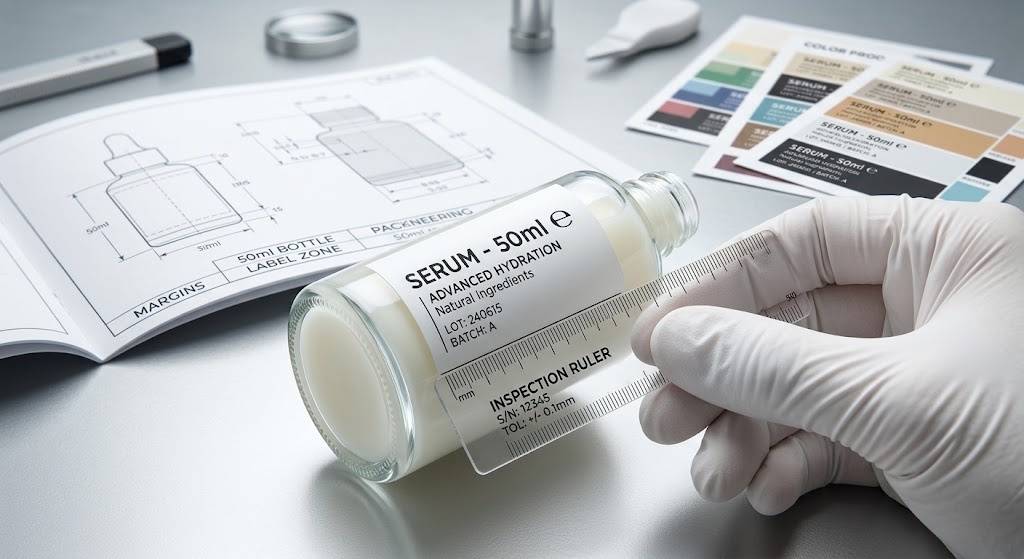
Tests should be conducted on a sample of the actual container and not merely on a flat piece of artwork proof. For example, testing on a specific bottle format such as the 50ml HJ-X031 lotion bottle gives a practical container profile against which label placement, tolerance and overall visual balance can be measured once the labelable area is defined.
If you’re a brand still deciding on the ideal glass container and design method, it’s important to think about the bottle itself, as well as the label. Hengjing Glass offers various cosmetic glass bottles that may be customised with varied forms, capacities, colours, and surface finishes including screen printing, spray painting, and engraving. Brands may get a feel for how the full package will look and what decorative strategy will work best for their product by checking out these choices before finalising the label design. Browse our selection of custom cosmetic glass bottles to see the range of styles and finishes we offer.
Final Checklist for Lotion Bottle Labels
To make sure your glass lotion bottle packaging project goes successfully, please fill in the following checklist before you confirm the final solution:
- Labelable Area . Clearly specify the effective flat area on the bottle that is labelable from the engineering drawings or measured dimensions. Do not include curved surfaces or mould seams.
- For clear labels with white underprint or white facestock labels, confirm full visual contrast and legibility on actual filled bottles.
- Evaluate the resistance performance of the label facestock, adhesive and protective layer in the intended usage environment in a comprehensive manner.
- Check presentation possibilities and print layout of label text, net contents and ingredient information according to the respective regulatory standards of the product’s target sales market.
- Full integration of sample confirmation with the glass bottles used on the final production process and the sample labels.