
When comparing a champagne glass vs wine glass, The main differences are bowl shape, rim diameter, and how the design balances aroma, aeration, and bubbles. A wine glass usually gives you more room to swirl and aerate, which helps a still wine open up. A champagne glass is doing a different job: it wants to keep the carbonation alive while still sending aroma toward the rim. Shapes? Slim flutes, wider tulips, old-school coupes—take your pick. Me? I’d take a tulip over a flute most days—you lose a little fizz, but you actually smell the wine. Neither is automatically better. Match the glass to the drink, the serving style, and the experience you’re after.
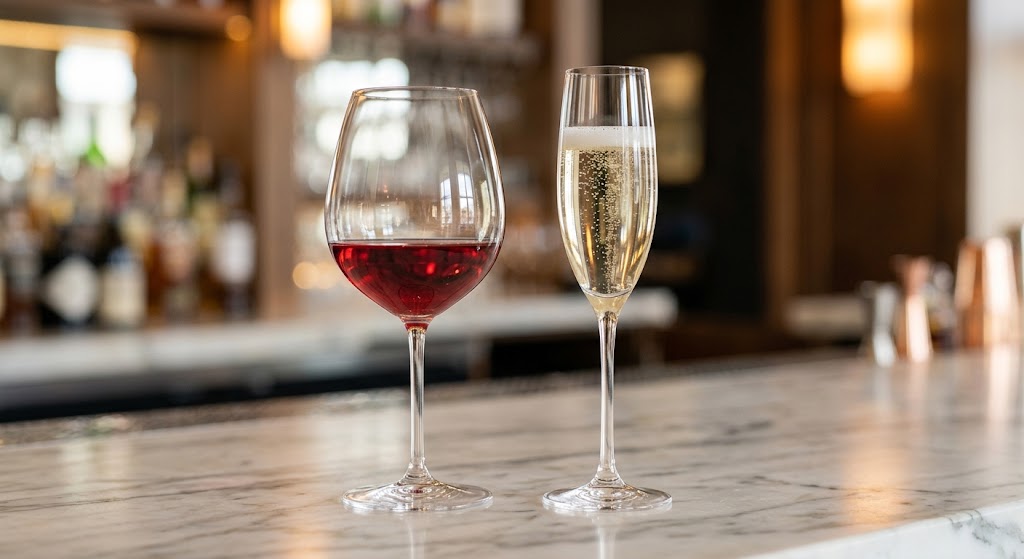
Champagne Glass vs Wine Glass: What Is the Difference?
The table below gives a quick read on the core functional and structural differences between a champagne glass vs wine glass.
| Feature | Wine Glass | Champagne Glass |
| 1. Bowl Shape | Wider, rounded bowl with a broader opening | Varies from narrow flutes to rounded tulips and wide coupes |
| 2. Aroma & Aeration | Open top; provides more space for swirling and air contact | Narrower opening; helps concentrate aromas near the rim |
| 3. Carbonation | Carbon dioxide gas escapes faster in open bowls | Narrower designs generally help retain carbonation longer |
| 4. Glass Varieties | Red (large bowl), White (medium bowl), Universal | Flute (classic), Tulip (aromatic), Coupe (vintage) |
| 5. Interchangeability | White wine glasses can work well for complex Champagnes | Better suited to sparkling wine; less ideal for bold reds |
| 6. Material & Stem | Long stem reduces hand contact; glass or crystal | Long stem reduces heat transfer; glass or crystal |
| 7. Primary Focus | Maximizing aeration and flavor development | Balancing carbonation retention and aroma concentration |
7 Key Differences Between Wine and Champagne Glasses
Structure affects how a drink tastes. That makes glass choice practical. Seven functional differences matter.
1. Bowl Shape and Opening Size
Wine glasses have a wider, rounder bowl and opening. More room to swirl. More air contact. For some still wines, that contact helps aroma release. In service, the wider bowl lets wine move against air.
Champagne glasses come in more shapes. Tall flutes. Tapered tulips. Wide coupes. Narrower shapes cut down large liquid-to-air contact. That slows CO2 loss. Bubbles last longer.
2. Aroma Development and Aeration
A wide wine glass opening makes swirling easy. Aroma release and collection follow. Gently turn the glass. Wine spreads along the bowl. Surface area grows. Volatile aroma molecules escape. Your nose gets more layers.
A narrow champagne rim focuses delicate floral, fruit, and yeast notes near the rim. Sparkling wine releases aroma through the wine and through rising bubbles. Hard swirling is usually unnecessary. The shape guides those bubble-borne aromas upward.
3. Carbonation and Bubble Preservation
A tapered champagne rim means smaller liquid-to-air surface. Slower CO2 loss. Dissolved CO2 is central to sparkling wine. A narrower bowl supports a smooth, steady bubble stream.
Some champagne glasses have tiny etched or textured spots at the bottom. These are nucleation points. They give bubbles a place to form. Dissolved CO2 becomes a visible, continuous stream.
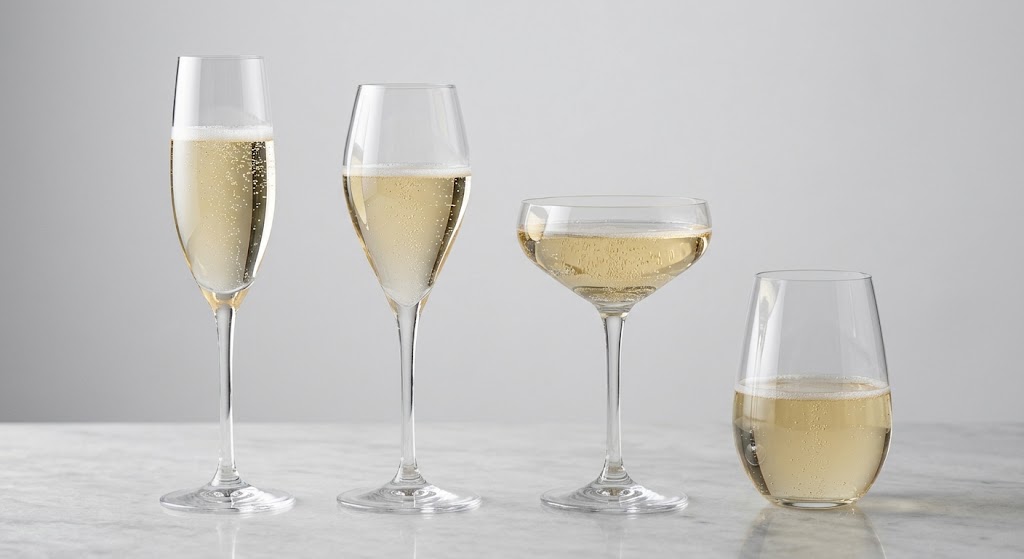
4. Glass Styles and Shape Varieties
Wine glasses: red, white, universal. Red glasses often have a larger bowl for air contact. White glasses have a smaller bowl. Glass size and capacity matter when you match pours to the wine and the table setting.
Champagne glasses cover several serving needs.
Flute: classic tall, straight glass. Built for rising bubbles and the traditional toast look.
Tulip: slightly gathered bowl, moderately narrowed rim. Practical for complex sparkling wine when you want aroma concentration and bubble performance.
Coupe: retro shallow bowl. Wide rim. Distinctive look. Bubbles fade faster. Common for vintage-themed events, decorative displays, or champagne towers.
Stemless: modern casual style. No stem. Suits informal social settings.
5. Interchangeability and Swapping Rules
A white wine glass or tulip glass works well for vintage Champagne. For complex aged Champagne or high-end sparkling wine, a wider bowl with a slightly narrowed rim gives more room for aroma layers. It still keeps some bubble performance.
A narrow champagne glass is not ideal for full-bodied red wine. A slim flute limits swirling. Less air contact. Red wine aroma cannot open fully. For some crisp white wines, a champagne glass can work in a pinch.
6. Material, Stem, and Temperature Control
The stem keeps your hand away from the bowl. That cuts heat transfer from hand to wine. Serving temperature stays more stable. Lead-free crystal and soda-lime glass are both common in stemware. Material affects clarity, weight, feel, and durability. Soda-lime glass is common for everyday practical use. Commercial dishwasher suitability depends on product design and manufacturer instructions.
7. Best Use and Serving Purpose
A wine glass serves still wine aroma and flavor. Wider bowl and opening let air in. That speeds oxidation and the waking-up process. Good for red, white, and rosé.
A champagne glass balances bubble retention and aroma guidance by sparkling wine type.
Flute: regular sparkling wines such as Prosecco or Cava. Emphasizes a continuous bubble stream.
Tulip: complex or vintage Champagne. Balances aroma release and carbonation retention.
Coupe: retro ceremony. Works with champagne bottle sizes to plan pours. Good for champagne towers or as a visual centerpiece.
Which Glass Should You Choose?
Pick by drinking scenario and wine type.
Wine glass: Still red, white, or rosé wines. More room for swirling and aroma release. Versatile everyday table use.
Champagne flute: Prosecco, Cava, or regular sparkling wine. Slower carbonation loss. Rising bubbles. Traditional toasts and celebrations.
Tulip glass: Complex or vintage Champagne. Better balance between aroma release and bubble retention.
Champagne coupe: Retro look. Special visual displays or champagne towers.
What Should Buyers Check When Selecting Glassware?
For restaurants, hotels, and commercial buyers, glassware choice depends on scale. When evaluating a high-quality commercial champagne glass line, check these 5 points.
Beverage Fit: glass shape and rim match the flavor and bubble traits of the wine served.
Clarity and Appearance: material clarity shows the true color of the wine.
Durability: handles expected frequency of handling, washing, and commercial use.
Weight and Balance: even weight distribution between bowl and base. Stable and comfortable in hand.
Design and Branding: overall design and finish match brand positioning and table setting.
Can Glassware Be Customized for Commercial Use?
Commercial custom glassware can be developed around the service concept. Bowl size, capacity, color, and surface decoration. For hotels, restaurant brands, and wine merchants, OEM and ODM services adjust glass specs to match a menu or brand image.
For large-volume champagne glass purchases or bulk order development, working directly with a manufacturing factory like Hengjing Glass makes coordination easier. Product specs. Sample development. Large-scale production. Direct-from-factory production supports quality consistency across bulk orders. It also meets specific delivery requirements for commercial projects.
Conclusion
The fundamental difference between a champagne glass vs wine glass depends on balancing aroma expansion against carbonation preservation. Glass shape affects swirl, aroma concentration, and bubble life. That helps you choose the right glass for different drinks. For commercial buyers, matching drink needs with carefully made glassware supports functional performance and a better overall drinking experience.