
Different types of champagne glasses are not all the same. Shape changes things. Bubbles last longer or fade faster. Aroma gets trapped or spreads out. Even the look on the table shifts. Some glasses are for slow sipping. Others are built for celebrations and show.
Think about flutes. Tall and sleek. Coupes? Wide and vintage. Tulips try to find a middle ground. So what matters to you? Watching bubbles rise? Smelling every note? Or maybe you just want that dramatic champagne tower at a wedding.
Tulips sit between flutes and coupes. Your call depends on what you value. Maybe you want long lasting fizz. Maybe you care more about aroma. Or maybe you want the visual punch of a coupe stack. When you set the table, pair the glass with the right different champagne bottle sizes. Knowing each shape’s strengths stops you from making a bad pick.
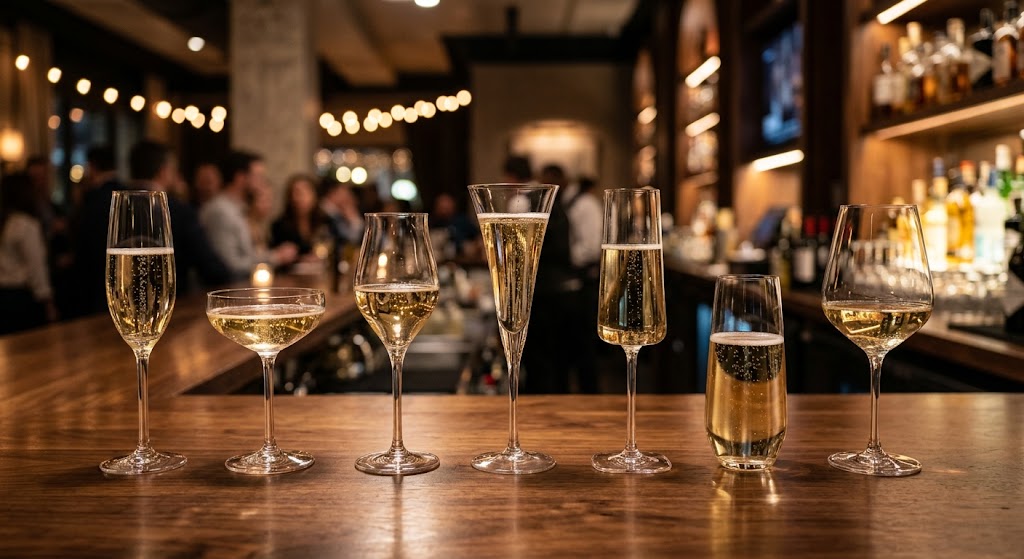
What Are the 7 Different Types of Champagne Glasses?
Walk into most bars or restaurants. You’ll hear about three main champagne glass styles. But modern makers have rolled out extras too. Those tweak the look, the feel, or what the glass does for different occasions.
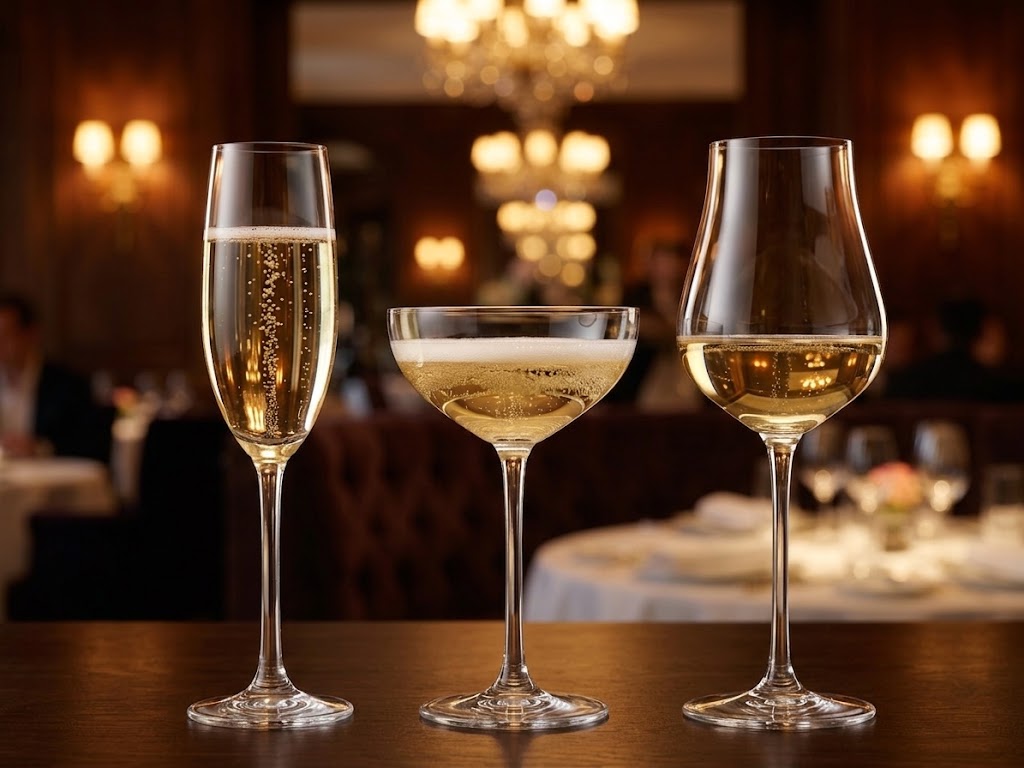
The 3 Main Champagne Glass Types
1. Flute
Classic flutes are tall and skinny. Straight sides. The narrow shape limits surface contact with air. That slows bubble loss. Compared with wide mouthed glasses, the tight rim lets you see bubbles stream upward in a neat chain. Flutes have long stems. Hold the glass by the stem, not the bowl. That keeps hand heat away from the champagne. The drink stays cooler. For wedding toasts, gala dinners, or formal celebrations, the flute is the usual first choice.
2. Coupe
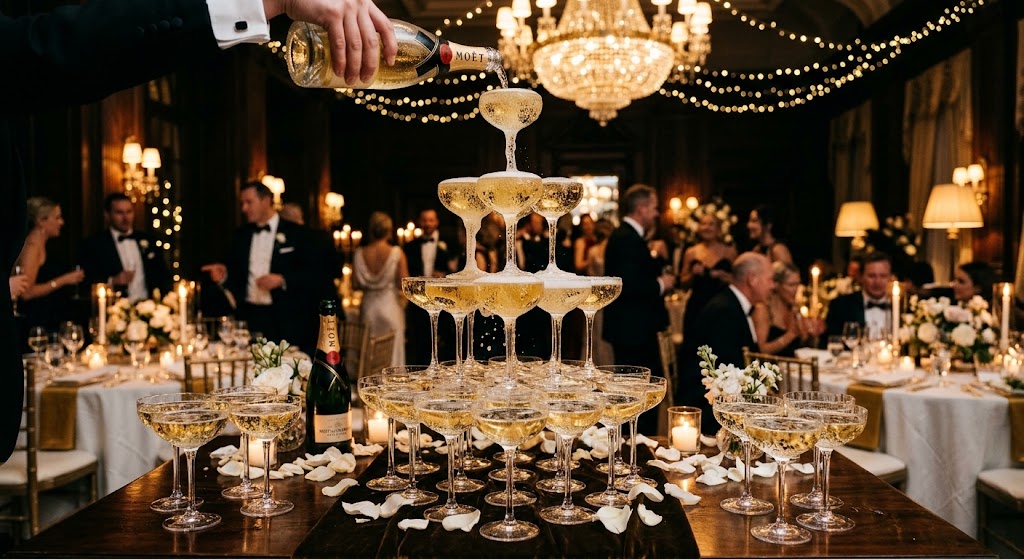
Coupes have wide, shallow bowls. Flat and open, almost dish like. They carry an old school vintage charm. That broad bowl exposes a lot of liquid to air. Champagne loses fizz faster than in a flute. Not great for bubble enthusiasts. But the coupe’s flat shape excels at building champagne towers. Layer those wide cups and they stack beautifully. The roomy opening also accepts fruit peels, herbs, or other garnishes easily. That makes coupes a good pick for certain classic champagne cocktails.
3. Tulip
Tulip glasses have a slightly wider belly that narrows at the top. This design balances bubble retention with aroma release. The rounded bottom gives the wine room to breathe. Scent develops. The tapered rim captures those aromas and directs them to your nose. Fizz loss is slower than in a coupe. The tulip also fixes a flute’s shortcoming: flutes are too narrow to capture much aroma. That is why tulips appear often in tastings and fine dining, where aroma matters as much as taste.
4 Other Champagne Glass Styles
Beyond the big three, modern glassmakers have added fresh designs that bring different visual styles and drinking experiences.
4. Trumpet Flute
Trumpet flutes take the classic straight shape and flare the rim outward. Think of a blooming flower. That outward curve is mainly decorative. It adds a graceful, ornamental touch that breaks away from straight lines. You often see these at dinner parties, event table settings, or any setup where the glass’s appearance matters alongside the drink. They bring a bit of visual energy to the table.
5. Square Flute
Square flutes have a flat bottom and sharp, angular lines. A modern, geometric look. This design stands out against the round, smooth surfaces of traditional glassware. The unusual edges catch attention. They fit right in at contemporary bars, modern events, or any setting that wants something unexpected.
6. Stemless Champagne Glass
No stem. That means easier handling and storage. Less cupboard space. Less risk of snapping a fragile stem. The trade off? You hold the bowl directly. That warms the champagne faster. For casual gatherings, outdoor parties, daily drinking, stemless works just fine.
7. Champagne Wine Glass
Champagne wine glasses come with a broader bowl than flutes. That extra room lets the wine breathe. Flavors develop and spread. You can actually smell and taste the finer points. The stem stays, keeping that elegant look. But the focus shifts from bubbles to sensory experience. When aroma beats fizz in importance, this glass is worth a look.
How Are the 7 Champagne Glass Types Different?
Compare these glasses side by side. You’ll notice three things really matter. Bubbles. Aroma. Visual impact. For bubbles, narrow rims keep carbonation longer. Wide coupes let fizz escape quickly. For aroma, a tight rim holds scents near your nose. A wider bowl lets complex aromas open up. That’s why tulips and champagne wine glasses show up at serious tastings.
| Glass Type | Shape Features | Bubble Retention | Aroma Experience | Best For |
| Flute | Tall, slender, narrow rim | Higher | Moderate | Weddings, toasts, large celebrations |
| Coupe | Wide, shallow dish | Lower | Open release | Champagne towers, classic cocktails |
| Tulip | Wider belly, tapered rim | Moderate to Higher | Higher | Professional tasting, fine dining |
| Trumpet | Flared rim, graceful curve | Varies by design | Moderate | Dinner parties, display focused events |
| Square | Sharp angles, flat bottom | Varies by design | Moderate | Modern bars, design forward events |
| Stemless | No stem, flat base | Varies by design | Moderate | Casual get togethers, outdoor bars |
| Champagne wine | Wide bowl, stemmed | Moderate | Higher | Aroma focused tastings, flavor exploration |
Which Champagne Glass Is Best for Each Occasion?
Real world serving matches the glass to the moment. For weddings, grand openings, and large toasts, flutes work well. They look graceful and are easy to hold during clinks. When you need a dramatic champagne tower or vintage cocktails, coupes come into play. Their visual impact is strong.
Tulips work well for tastings and fine dining. They let you appreciate aroma and layered flavors. Stemless glasses shine at pool parties or brunch. Stable. Easy to pass around. Simple to store. Square and trumpet styles suit fashion events or brand activations where tabletop looks count. For tasting flights where every detail matters, grab the champagne wine glass.
How to Choose the Right Champagne Glass?
Your choice comes down to what you actually value. For restaurants, hotels, wedding planners, and brand buyers looking at champagne glasses in bulk, shape isn’t everything. You also need to think about capacity. Glass material, crystal or soda lime. Durability. Dishwasher compatibility. Hengjing Glass offers a wide selection and OEM/ODM customisation. They can handle everything from design to production, matching your shape, size, material, and finishing needs.
Conclusion
Once you understand the design logic behind these different types of champagne glasses, picking the right one for any celebration, tasting, or table setting gets easier. Bubble retention matters. Aroma concentration. Visual appeal. Practical use. Each shape excels in one or more. For hospitality and procurement teams, the right balance depends on event needs, glass performance, and manufacturing specs. That balance creates a serving experience that looks good and works well.