
Are You Wondering the sizes of champagne bottles? Well, You Have Come to the Right Place! Ranging from single-serve bottles all the way up to gigantic ones that require two people just to pour, champagne bottles come in all shapes and sizes. Knowing your bottle sizes matters immensely whether picking out a bottle for an event such as a wedding or building your wine collection; or trying to create the ideal glass packaging strategy.
This guide walks you through the 10 standard champagne bottle sizes. We will cover the exact volume, how many glasses you get, and why picking one size over another can affect everything from aging potential to glass pressure resistance and even how safely it ships.
Sizes of Champagne Bottles Chart: All Formats from Small to Large
Let’s kick things off with the full picture. The table below gives you a quick snapshot of every major format, from the cutest little mini bottle up to the showstopping giants. It includes the size, approximate servings, how it compares to a standard 750ml bottle, and where you typically see these used.
| Name | Volume | Approx. Servings | Equivalent to 750ml | Primary Application |
| Piccolo / Split | 187.5 ml | 1–2 glasses | 1/4 bottle | Airline flights, hotel mini-bars, wedding favors |
| Half / Demie | 375 ml | 2–3 glasses | 1/2 bottle | Restaurant single servings, tasting samples |
| Standard | 750 ml | 5–6 glasses | 1 bottle | Mainstream retail, standard winery bottling |
| Magnum | 1.5 L | 10–12 glasses | 2 bottles | Premium aging, celebratory dinners |
| Jeroboam | 3.0 L | 20–24 glasses | 4 bottles | Award ceremonies, nightclub displays, private collections |
| Rehoboam | 4.5 L | 30–36 glasses | 6 bottles | Historical size, rarely used in modern champagne, mostly for special collectors |
| Methuselah | 6.0 L | 40–48 glasses | 8 bottles | Luxury weddings, high-profile corporate events |
| Salmanazar | 9.0 L | 60–72 glasses | 12 bottles (full case) | Top-tier auctions, exclusive winery custom orders |
| Balthazar | 12.0 L | 80–96 glasses | 16 bottles | Grand celebrations (seriously, you need two people to pour this) |
| Nebuchadnezzar | 15.0 L | 100–120 glasses | 20 bottles | Flagship brand PR stunts, custom collector’s pieces |
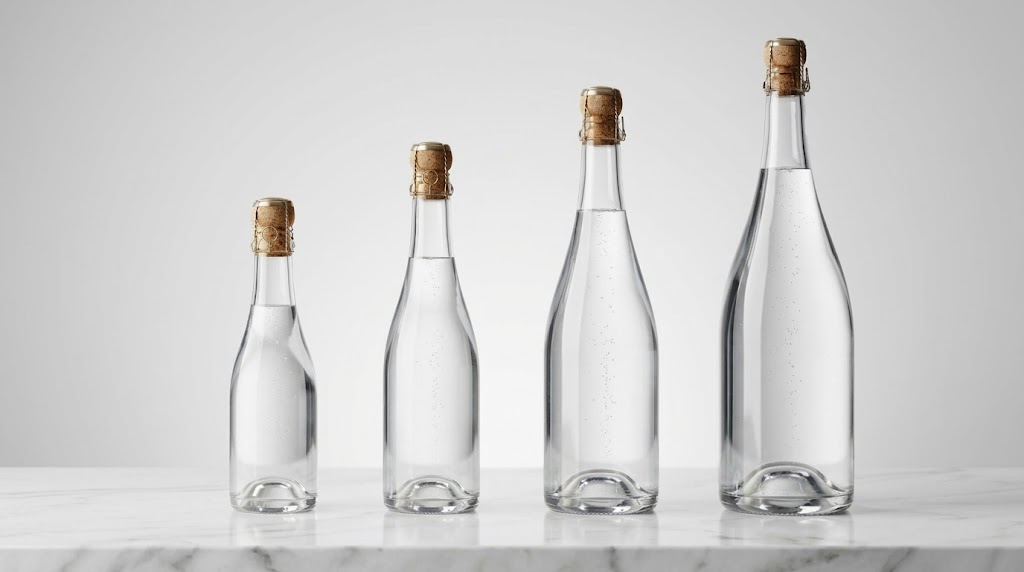
Small Champagne Bottle Sizes: 187.5ml to 375ml Options
Once we’ve got an idea of the bigger picture, let’s concentrate on products that are smaller in scale. Single-serve and mobile-service consumption has witnessed rapid growth in the past few years.
Piccolo Champagne Bottle (187.5ml)
The Piccolo champagne bottle is the smallest commercial champagne bottle on the market and perfect for a single serving. It’s 187.5 milliliters, or one quarter of a conventional bottle, and delivers one or two glasses of bubbly per bottle. These small beauties are so light and portable you can see them everywhere: aircraft beverage carts, high quality hotel mini-bars, picnics or wedding favors; it really gives you single serving champagne perfection!
Half Bottle Champagne (375ml)
A Half Bottle, commonly referred to as Demie, is the perfect balance. At just under 400 milliliters and two or three glasses per half bottle, it makes an ideal solution for two people who are enjoying casual drinks without making the commitment of buying an entire 750ml bottle of champagne. As such, its popularity among diners makes this an excellent way to try premium bubbly without incurring sticker shock and any fear of wasteful spending; making this an easy, stress-free way of enjoying something fancy!
Standard Champagne Bottle Size: Why 750ml Is Most Popular
After looking at the smaller formats, we have to talk about the absolute heavyweight champion of the wine world: the 750 milliliter standard bottle.
Let’s be honest, 750ml is the undisputed gold standard for champagne and sparkling wine production, shipping, and retail. It dispenses roughly five to six standard glasses, making it perfect for sharing at dinner parties and casual get-togethers. But its popularity goes beyond tradition – this size was designed specifically to maximize efficiency: fitting perfectly into automated bottling lines, stacking neatly on wooden pallets and sitting comfortably on supermarket shelves are just some of the reasons behind its appeal.
For most champagne brands, the 750ml bottle serves as their main vessel of production. It works seamlessly with existing logistics, retail demands, and filling equipment. From the glass manufacturer’s perspective, this is the size where they really dial in the weight control, pressure strength, and production speed. It is the backbone of the industry.
Large Champagne Bottle Sizes: Magnum and Above Explained
Beyond the standard 750ml, things start to get exciting. Large format bottles are not just about having more juice. They play a unique and important role in premium collections, serious aging, and of course, making a grand entrance at big events.
Magnum Champagne Bottle (1.5L)
Many wine experts consider the Magnum the ideal format for aging champagne. At 1.5 liters it holds the equivalent of two standard bottles and offers approximately 10–12 glasses. Why is the Magnum ideal? This comes down to the oxygen to wine ratio; when air is trapped in its neck instead of increasing proportionally with liquid volume, the lower oxygen to wine ratio allows oxidation processes to take place more gradually, creating complex flavors over a much longer timeframe.
Jeroboam Champagne Bottle (3L)
The Jeroboam, commonly known as a Double Magnum, is the showstopper on Formula 1 podiums or at large celebrations. This spectacular bottle holds four standard bottles at once and can pour 20–24 glasses – providing instant visual impact to any event! The striking height and weight make this bottle truly iconic and add to its visual presence at any gathering. Because the internal pressure is so high at this size, the glass walls need to be significantly thicker. From this size up, bottling usually involves a mix of manual and semi-automated processes. It is not your everyday bottle.
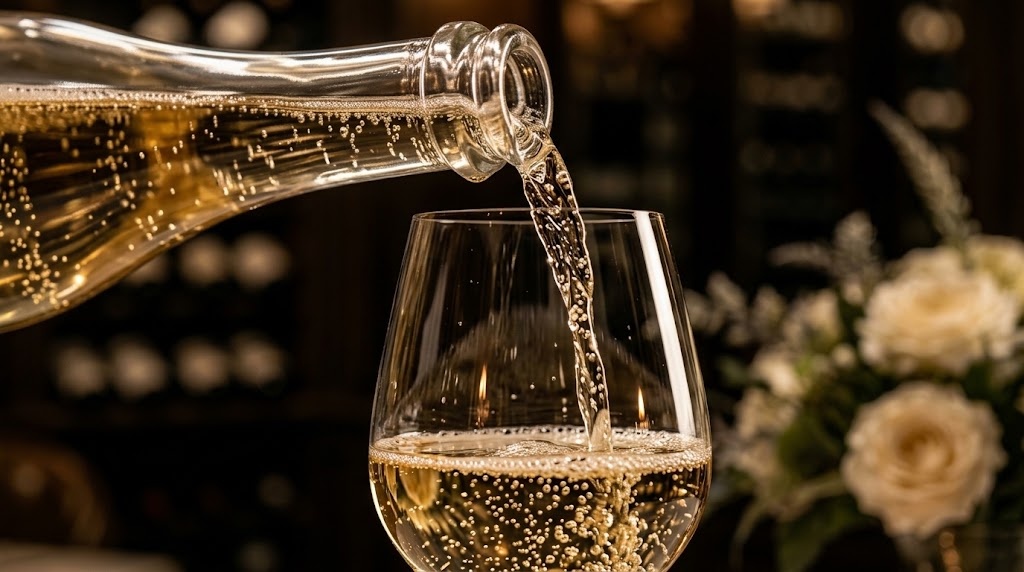
Methuselah and Larger Champagne Bottles
As soon as we hit 6 liters and above, we begin discussing Methuselah (6L), Salmanazar (9L), Balthazar (12L) and Nebuchadnezzar (15L). These sizes are more for high-end display purposes such as events or custom orders from ultra-rich individuals; Rehoboam‘s 4.5 liter bottle has become somewhat of a historical footnote today. You rarely see it in modern champagne production; it pops up more in special wine collections.
These giant bottles are incredibly heavy and the internal pressure is intense. Pouring them is not a one-person job. You will often see them placed on special tipping racks or handled by two people just to get the champagne safely into a glass.
How Champagne Bottle Size Affects Aging and Quality
So, now that we know the sizes, you might be wondering: does the bottle size actually change how the champagne tastes? The short answer is yes. Let’s break down why.
The Oxygen to Wine Ratio
The bigger the bottle, the better it protects the wine’s freshness. The tiny amount of oxygen trapped in the neck is fairly constant across all bottle sizes. In a larger bottle, like a Magnum, that same amount of oxygen is spread over a much larger volume of liquid. Less oxygen contact means the champagne ages more slowly and gracefully, keeping its vibrant bubbles and fruity character alive for much longer.
Aging Stability and Bubble Integrity
Bigger bottles also create a more stable internal environment for long-term aging of champagne, as carbon dioxide produced during its second fermentation in the bottle creates its fizz. When stored properly, their sheer mass helps cushion against small temperature swings. This stability helps the wine develop a fine, persistent bubble structure over many years.
Light Strike Defense
You have probably noticed that champagne bottles are usually dark green. That is not just for looks. Ultraviolet light is champagne’s number one foe; its effects include “light strike,” or goût de lumière, and it can destroy its delicate flavors. Thicker glasses containing darker green tints or UV protection work as a protective shield to shield your wine from harm during its journey from vineyard to glass.
Choosing Champagne Glass Bottle Sizes for Your Brand
Okay, so you have learned all about how bottle size impacts quality. Now it is up to brand owners or procurement managers to put this knowledge into action by choosing champagne bottle sizes carefully for their brand, taking into consideration three areas when making this selection process:
1. Product Positioning
Your bottle size should reflect both your target customer and price point. For quick consumption, single servings or gift boxes, the 187.5ml and 375ml bottles are excellent starting points; for mainstream retail and restaurant by the glass programs the 750ml is your go to bottle; while adding a 1.5L Magnum could really elevate brand image while opening up additional pricing opportunities.
2. Packaging Design and Light Protection
Let’s be real: the bottle has to look good, but beauty cannot come at the expense of safety. Champagne bottles hold a lot of pressure, usually around five to six atmospheres. That is why you need a deep punt – the indentation at the bottom – to help distribute the pressure evenly. The walls have to be thick and uniform. When choosing glass color, always lean towards dark green or UV protective options. It is a smart choice that combines visual appeal with genuine quality protection.
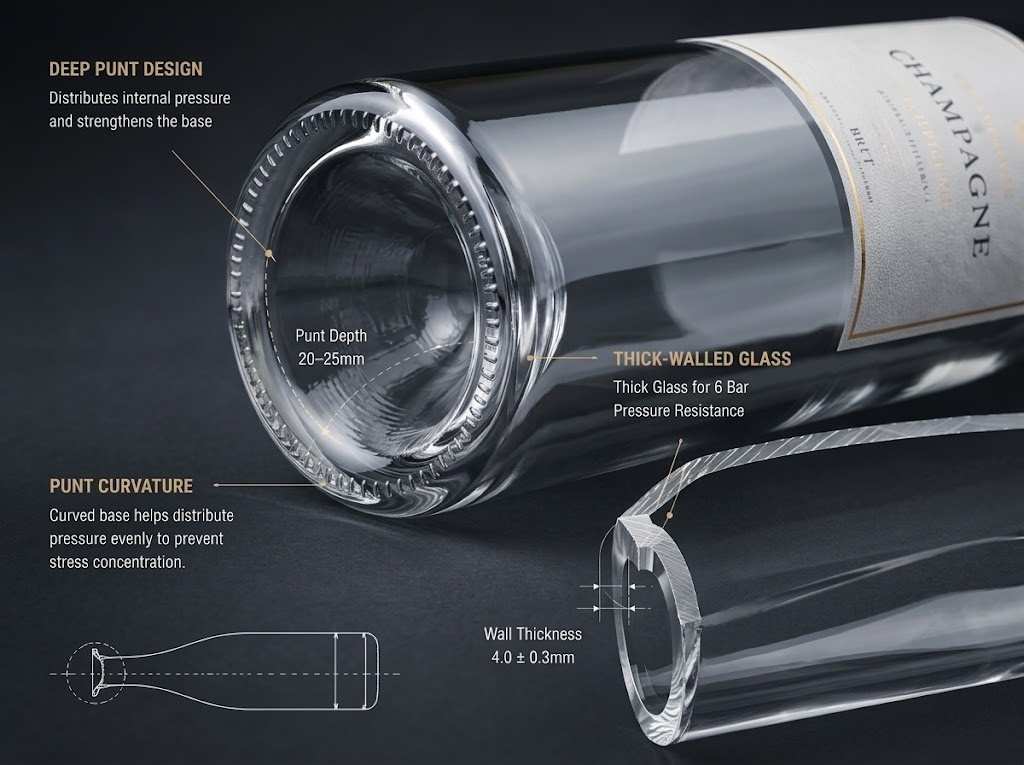
3. Production Requirements and Quality Control
This is the practical side. Your glass bottle needs to fit your filling line and capping process perfectly. For instance, many champagnes use crown caps during the secondary fermentation before they get their final cork and wirehood. This is where working with an experienced glass manufacturer really pays off. A trusted partner like Hengjing Glass can help you ensure your bottles are pressure-safe, compatible with your machinery, and consistent in quality from batch to batch. That way, you get a beautiful, recognizable bottle that is also safe and reliable for shipping.
Conclusion
Finding the appropriate sizes of champagne bottles comes down to three main considerations: aging performance, market strategy and packaging safety. Each size serves a distinct purpose with its own set of requirements: from the 187.5ml Piccolo for quick enjoyment, to the reliable 750ml Standard bottle, or the 1.5L Magnum that demands considerable cellaring time.
Hengjing Glass provides customized glass bottles for every product line, including customized volumes, colors, pressure-tested specifications and even unique bottle designs tailored specifically for filling operations. They have extensive experience handling volumes of orders with different specifications such as volumetric requirements and unique bottle designs tailored specifically for you.