
Glass goblets are delicate in appearance and high-end in texture, but inherently fragile. In the wholesale process, packaging is not only the “shell” that protects the product, but also directly affects the damage rate, transportation costs, brand image and customer satisfaction. A scientific packaging plan can control the damage within an acceptable range, while controlling costs and enhancing the unpacking experience. From requirement analysis to the ground below, a systematic how to select the suitable packaging for wholesale glass goblet.
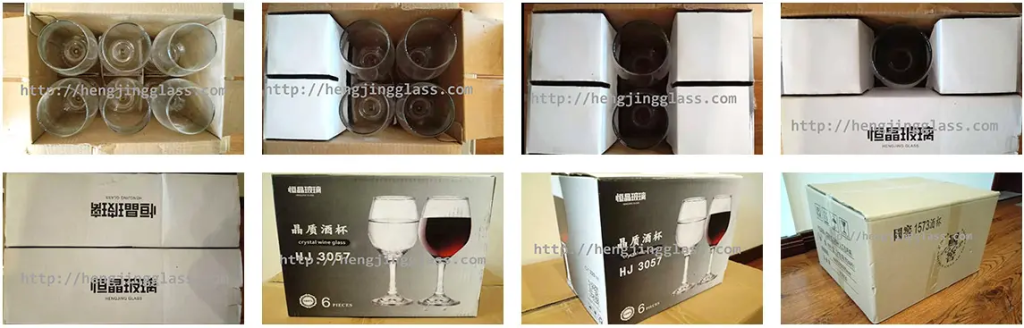
Clearly Define Packaging Requirements and Goals
Before choosing any packaging, you must first clarify “why package, for whom, and how it will be transported.”
Product characteristics are the starting point. Glass highball glasses usually have slender stems, wide mouths and curved bodies. These parts are the most prone to damage in cases of collision, compression or tilting. Cups of different capacities and shapes have different centers of gravity and vulnerable points, and the packaging must be specifically positioned and cushioned accordingly.
Business scenario determines the intensity and form of packaging. Material thickness and structural design are affected by short-haul domestic distribution, long-distance cross-border sea/air transport, storage stack height, and the need for secondary distribution. Also be clear about the target breakage rate (e.g., less than 1%), the upper limit on the cost of each piece of packaging, and whether the end customer is the restaurant for bulk use or retail display.
Compliance and environmental requirements cannot be overlooked. Exported products usually need to pass tests such as drop and vibration. In some markets, there are clear requirements regarding the recyclability of packaging materials and the environmental friendliness of inks.
How to Select Core Packaging Materials
Packaging is typically divided into two layers: inner packaging and outer packaging, accompanied by cushioning fillers.
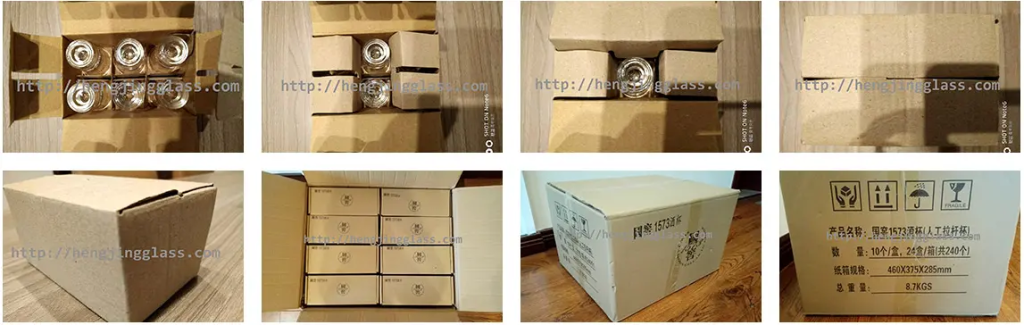
Inner packaging directly comes into contact with the product and is responsible for anti-scuffing, shock absorption, and positioning. Common choices include:
- EPE pearl cotton or special-shaped foam trays: They can precisely fit the cup legs and body, have good cushioning performance, and are suitable for mid-to-high-end products.
- Bubble wrap or air cushion bags: They are cost-effective and suitable for single-piece independent packaging, but have weak positioning ability.
- Cutting paper cards or pulp trays: They are environmentally friendly and suitable for customers who are sensitive to plastic, but have relatively limited strength.
- Felt bags or non-woven fabric covers: They are mainly used for high-end gift boxes to enhance the touch and brand perception.
Outer packaging bears the main shipping and stacking loads. Corrugated cardboard boxes are the mainstream choice. Double corrugated is suitable for regular wholesale, while triple corrugated or heavy-duty boxes are suitable for long-distance or high-value products. For extremely valuable or scenarios requiring frequent turnover, wooden boxes or recyclable plastic turnover boxes can be considered.
Cushioning and void-fill materials must work in coordination with the inner and outer packaging. Foam corners, paper partitions, inflatable bags, shredded paper fillers, etc. all have application scenarios. When choosing, one should comprehensively compare the buffering performance, cost, volume occupation and environmental protection attributes to avoid situations where “it looks thick but provides insufficient protection”.
Structural Design Is the Key to Protection
Even with the right materials, poor structure will still lead to breakage.
Effective approaches include:
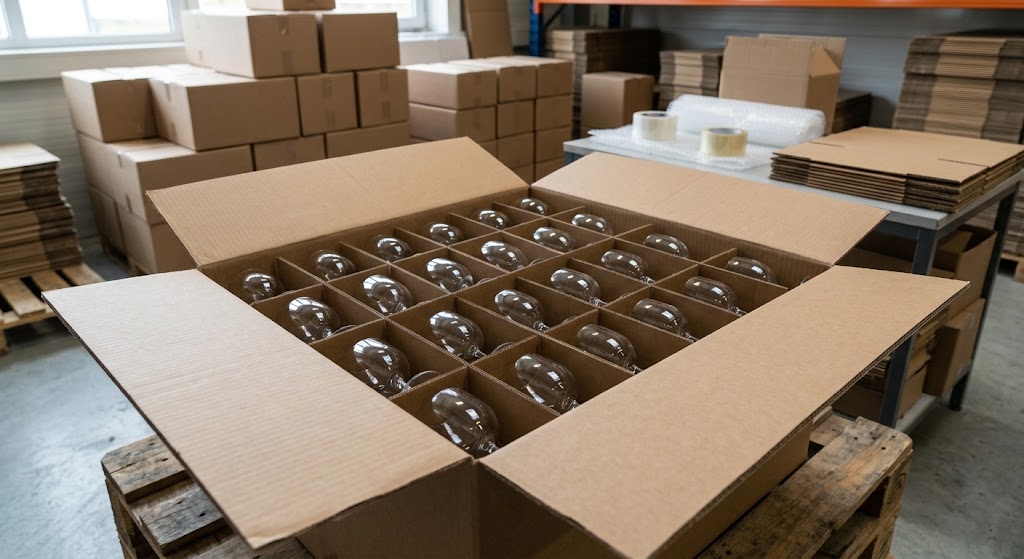
- Individual positioning: Each cup has its own fixed position. The cup feet provide support and the cup mouth has protection to prevent collisions with each other.
- Layering and dividers: When packaging in multiple layers, use paper dividers or foam dividers to separate them, to avoid the upper layer weight directly pressing on the lower layer cups.
- Anti-tilt and anti-slip features: Add limiting structures inside the box to prevent the box from shifting even when tilted during transportation.
- Individual vs. multi-pack: For high-value or fragile items, it is recommended to pack each item separately in an outer box before placing them in the main box; for regular items, multiple items can be combined to reduce unit cost.
After structural design is finalized, simulated testing is essential. Drop tests, vibration tests, and compression tests are basic requirements.
Balancing Cost and Efficiency
Packaging is not better when thicker, nor is it better when cheaper. The real goal is the lowest total cost—the sum of material cost + breakage loss + shipping volume cost + labor efficiency.
Key points to watch:
- Dimensional weight. Excessive thick foam significantly increases volume and drives up freight costs.
- Labor efficiency. Overly complex structures that require multiple folding and positioning steps raise packing labor costs.
- Minimum order quantities and mold fees. Custom foam trays or special paper pulp molds often involve tooling costs that must be carefully calculated for small runs.
- Reusable vs. single-use. If customers have return logistics or fixed store deliveries, reusable packaging can be more economical in the long run.
It is recommended to calculate “per-unit total packaging cost = material cost + allocated expected breakage cost + allocated freight” for side-by-side comparison, rather than looking only at material unit prices.
Brand Presentation and Unboxing Experience
Although wholesale packaging prioritizes protection, the unboxing experience still matters—especially when selling to brand owners, boutique hotels, or high-end restaurants. Packaging itself becomes a brand touchpoint.
Consider the following:
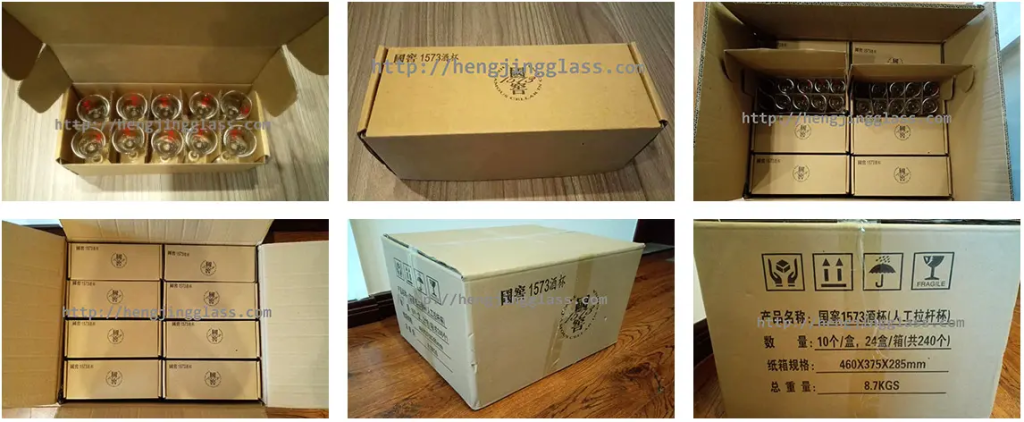
- Clear printing of brand information, product illustrations, and “handle with care” instructions on the outer carton.
- Simple brand exposure on inner trays or dividers.
- For premium lines, add ribbons, instruction cards, anti-counterfeit labels, or small gifts.
- Design structures that allow easy separation for secondary sales or distribution to stores.
At the same time, incorporate sustainability messaging. Recyclable materials, reduced plastic use, and clear recycling instructions can all become competitive advantages.
Testing, Validation, and Supplier Selection
Even the best design must be validated. Establishing a closed loop of small-batch trial packing → simulated shipping → data feedback → iterative optimization is far more reliable than relying on a one-time “feels solid” judgment.
When selecting suppliers, focus on:
- Actual experience with glassware or other fragile-product packaging;
- Speed of sampling and communication efficiency;
- Robustness of the quality control system;
- Delivery reliability and whether minimum order quantities match your business rhythm.
Do not compare on price alone—overall service capability and long-term partnership stability matter more.
Conclusion
Selecting packaging for wholesale glass goblets is essentially a systematic trade-off among protection, cost, efficiency, and experience. There is no universal “best solution”—only the solution that best matches your product characteristics, channels, and customers. Start with requirement analysis, validate with data and testing, and continuously optimize in small steps. Only then can you truly reduce breakage rates and turn packaging into a competitive advantage.