
The indented part at the bottom of a wine bottle is commonly called the wine bottle punt. It is a recessed structure at the base of the bottle. It can be a deep groove or just a slight indentation, and not all wine bottles have an obvious punt.
So why do wine bottles have punts? There is no single answer that applies to every bottle. It is related to traditional glass bottle manufacturing methods, and it may also involve bottle structure, sparkling wine packaging requirements, traditional pouring habits, and the visual design of modern bottles. For today’s bottles, the punt should be seen more as part of the overall bottle design, rather than simply understood as one fixed function.
What Is a Wine Bottle Punt?
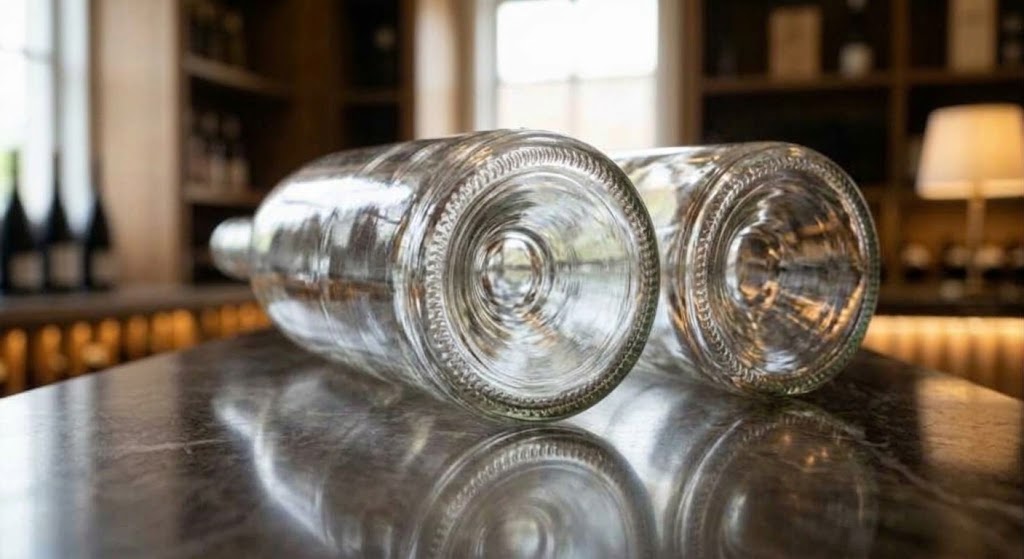
Wine Bottle Punt The concave space at the center of the bottom of a wine bottle , recessing into the bottle . When the bottle is held upright, the outer edge of the base is in touch with the table while the middle is pushed up into the body of the bottle creating a noticeable recess.
The depth and shape of the punt will vary with the design of the bottle. Some bottles have a deep groove when seen from the side, some have only a shallow indentation, and some have practically flat bottom with the punt being almost not seen.
So whether a bottle has a visible depression cannot immediately identify the type of wine, nor can it be used alone to determine the quality of wine.
Varied varieties of alcohol also have varied bottle forms. Wine bottles and spirit bottles can vary greatly in body shape, shoulder line, base design and overall look. The base of the bottle is simply part of the design of the packaging for companies and should be examined along with the body, neck, capacity, and overall appearance. If you further compare different wine bottle shapes, you will also see clear differences in body proportions, shoulder shapes, and capacity.
Why Do Wine Bottles Have a Punt?
To understand why this structure remains common on modern bottles, it is necessary to look at traditional manufacturing methods together with today’s packaging design. The punt does not exist for one single purpose; it is more like the result of historical craft, bottle structure, and modern design over time.
1. Historical Glassmaking Methods
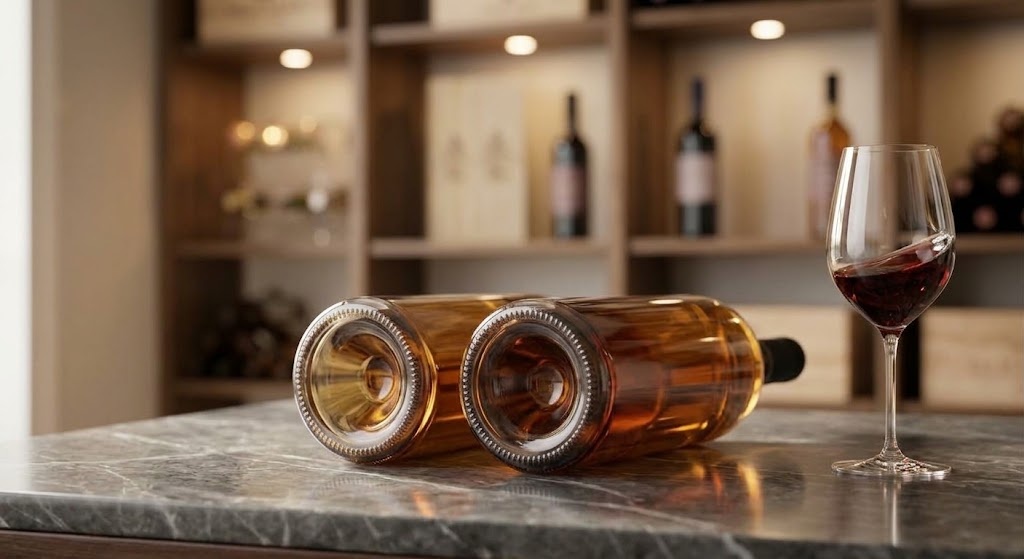
The punt has a historical connection with early glass bottle manufacturing methods.
In traditional hand-blown glass bottle production, glassmakers needed to handle the structure formed at the base and allow the bottle to stand upright stably. Pushing the center of the base inward could prevent the central area from forming a structure unsuitable for direct contact with the table, while also helping to form a relatively regular base.
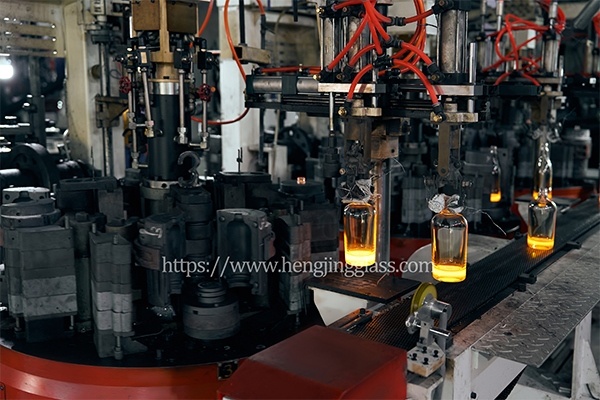
With the development of modern glass manufacturing technology, bottles can now be produced through more standardized processes, so today’s bottles do not need to rely on the punt to be manufactured.
However, this traditional structure has not completely disappeared. Many modern bottles still retain a similar base design, so the punt has gradually changed from part of early manufacturing craft into part of bottle structure and appearance design.
2. Bottle Stability and Structural Design
The shape of the bottle base affects how the bottle contacts the surface it is placed on, so the punt can also be understood from the perspective of overall structural design.
But note that it cannot simply be said that “a bottle with a punt is definitely more stable than a flat-bottomed bottle.” Actual stability is also affected by base diameter, bottle height, glass weight, center of gravity, and overall bottle shape.
Therefore, a more accurate statement is: the punt is part of the bottle’s base structure, and it needs to be designed together with the entire bottle shape, rather than being a structure that can independently determine bottle stability.
This is also why, when selecting or developing a bottle, you cannot focus only on recess depth; you need to consider body proportions, base dimensions, and overall weight at the same time.
3. Pressure Requirements in Sparkling Wine Bottles
Sparkling wine bottles can help further explain why bottle structure needs comprehensive design.
Compared with ordinary still wine bottles, sparkling wine bottles need to handle higher internal pressure, so glass distribution, overall structure, and closure methods all need to meet corresponding packaging requirements.
A deeper punt is relatively common in some traditional sparkling wine bottles, but this does not mean that “the deeper the recess, the stronger the pressure resistance.” The base structure is only one part of the overall bottle design and cannot alone be used as the basis for judging pressure resistance.
If a brand needs to develop sparkling wine packaging, it should confirm whether the bottle is suitable according to actual product specifications and professional design requirements, rather than merely comparing punt depths visually.
4. Sediment and Pouring Considerations
The punt is also often associated with traditional wine pouring methods.
Some wines aged for a long time may produce sediment. In traditional pouring, if the bottle is slowly tilted and the pouring speed is controlled, sediment at the bottom can be kept from entering the glass as much as possible. In this case, the base recess can become part of the area where sediment gathers.
But a common misunderstanding should also be avoided here: the punt is not a device specifically designed to “filter sediment.” Whether sediment can be effectively kept in the bottle depends more on the wine itself, storage conditions, and the actual pouring method.
Therefore, rather than saying the punt’s role is to filter sediment, it is better to understand it as a connection between traditional bottle structure and pouring habits.
5. Bottle Appearance and Brand Identity
The punt on modern bottles also has an increasingly obvious role: visual design.
The depth of the recess, thickness of the base, and bottle proportions affect the overall silhouette when the bottle is viewed from the side. A deeper recess may make the bottle look heavier, while a shallow recess or flat base can create a cleaner visual effect.
For brands, this difference can become part of packaging recognition. A bottle not only performs storage and transportation functions; it also contributes to the consumer’s first impression of the product.
Therefore, the punt on modern bottles does not necessarily need to correspond to one single function. It may also be a design element formed jointly by bottle shape, glass weight, and brand visuals.
Does a Deeper Wine Bottle Punt Mean Better Wine?
No.
This is one of the most common misunderstandings consumers have about the wine bottle punt. Some people believe that the deeper the recess at the bottom, the heavier the bottle, and therefore the more premium the wine inside.
In fact, wine quality cannot be judged directly by punt depth.
A bottle’s weight, shape, and base design can indeed affect consumers’ visual and tactile impressions of the packaging, but these features cannot directly represent the quality of the wine itself. In its discussion of this issue, Decanter also pointed out that the size of the punt cannot be a reliable standard for judging wine quality.
Different regions and different traditional bottle shapes themselves have clear differences. Some wines use deeper recesses, some use shallow recesses, and some traditional bottle shapes basically use a flat-bottom design. Therefore, even if two bottles have completely different punt designs, this cannot be used to judge that one wine is higher quality than the other.
So, if evaluating wine, the punt is better regarded as a packaging design feature of the bottle, not a signal of wine quality grade.
What Do Different Wine Bottle Punt Shapes Mean?

From the perspective of actual bottle design, base forms can be simply understood as several common types: deep recess, shallow recess, and flat bottom.
A deep recess has a clear base profile and usually gives the bottle a heavier visual effect. This design often appears on bottles with a traditional style or an emphasis on packaging texture, but it does not mean the wine inside is necessarily higher quality.
A shallow recess retains a certain indented base structure while making the bottom look generally flatter. It can be combined with different heights, diameters, and shoulder designs.
A flat-bottom design has no obvious punt. It can also be used for wine packaging; it does not mean the bottle is lower quality, nor does it correspond to a fixed wine grade.
Therefore, rather than directly mapping recess depth to “ordinary,” “premium,” or a fixed alcohol category, it is better to understand it from the perspective of overall packaging. The final visual effect usually depends on whether the bottle body shape and base structure are coordinated, and whether these designs fit the product and brand positioning.
How to Choose a Wine Bottle with the Right Punt Design
How should you choose or develop wine packaging? The real question is not “Is a deeper recess better?” but whether this base design suits the overall product.
First, you need to decide on the basic bottle form, depending on the sort of alcohol. The criteria for packaging for still wine, sparkling wine and spirits may change and hence the same shape of bottle cannot be utilised as the standard for all products.
Secondly, evaluate the punt against the entire bottle body. The bottle height, maximum diameter, base dimensions, weight of the glass and neck structure influence the final appearance and use of the bottle. A distinctive-looking recess in itself may not give the perfect package effect if not harmonised with the bottle proportions.
For products such as sparkling wine that need to consider internal pressure, it is even more necessary to confirm based on the specific bottle shape and technical requirements, rather than judging whether the bottle is suitable only by recess depth.
Finally, consider brand visuals. The bottle itself is part of product packaging. Bottle silhouette, glass color, base structure, logo, and surface decoration can together form brand packaging recognition.
For brands that need custom packaging, Hengjing glass provides wine bottles, spirit bottles, and glass packaging in different shapes, and can customize bottle shape, color, logo, and surface decoration according to brand needs. Therefore, when choosing wine bottles and spirit bottles, you can determine them comprehensively based on factors such as alcohol type, capacity, bottle shape, and brand visuals, rather than pursuing a particular punt depth alone.
Final Thoughts
Wine bottle punt is a structural design at the bottom of a bottle, not a grade marker of wine quality.
It has a historical connection with traditional glass bottle manufacturing methods, and it may also be related to bottle structure, sparkling wine packaging requirements, traditional pouring habits, and modern brand design. But in modern bottles, the punt can hardly be explained by a single function.
Therefore, when choosing a bottle, rather than pursuing a deeper recess alone, it is better to make an overall judgment based on the characteristics of the alcohol, bottle shape, base structure, closure requirements, and brand visuals. For brands that need to develop custom packaging, starting from a suitable bottle product and then designing around capacity, bottle shape, glass color, and surface decoration will be more reasonable than choosing a bottle solely based on punt depth.