Wine bottles and spirits bottles are both commonly made from glass. Still, they are not built the same way. The bottle type, what it is used for, and how brands want it to look can all differ. Because of that, you often see changes in the bottle shape, the size or capacity, the opening at the top, and the way it is sealed. You may also notice different glass weight and different options for adding labels or unique designs.
For wineries, distilleries, and beverage brands, the right glass bottle choice is more than just a pack. It also has to fit the product needs. The seal system matters. The filling steps matter too. Transport conditions play a role as well. Even the look of the bottle helps shape how the brand is seen.
So, what sets wine bottles apart from spirits bottles? In many cases, wine bottles follow older, more classic styles and sizes. Spirits bottles are often made with more room for different designs. They can be shaped and finished in ways that help brands stand out.
What Is the Difference Between Wine Bottles and Liquor Bottles?
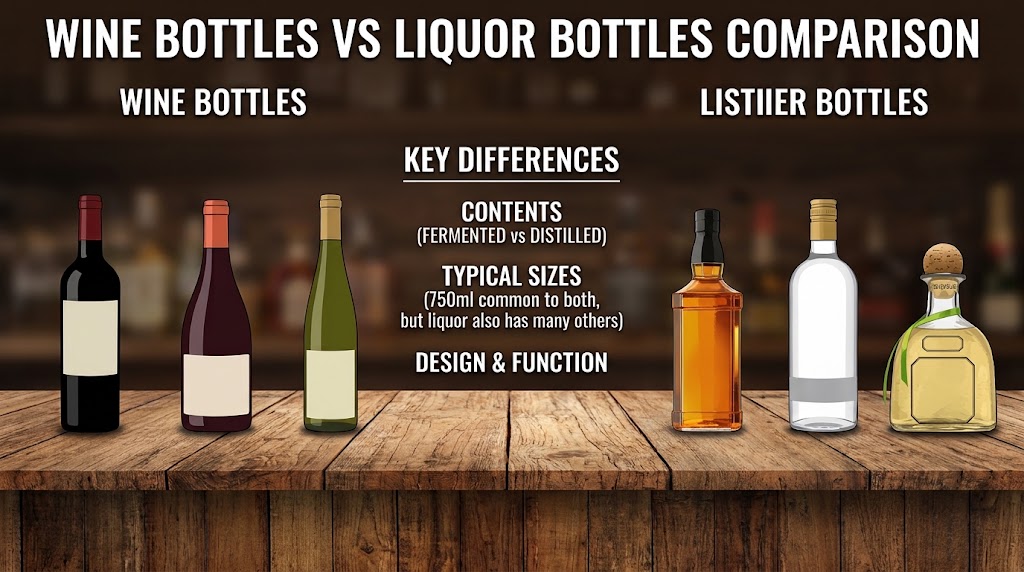
The difference between a wine bottle and a spirits bottle is not just what kind of wine is inside. After long-term development, the two types of packaging have formed different product characteristics and brand needs.
Wine packaging is usually more closely related to the more mature traditional bottle type. For example, Bordeaux, Burgundy, and Rhine have become more recognizable wine bottle types. Bottle proportions and sizes are often chosen based on the type of wine and the brand’s packaging strategy.
Spirits packaging can usually be more flexible. Distillers and spirits labels often play with bottle shape, the thickness of the glass, the style of the base, and the cork. Because of that, the bottle look for whisky, gin, or vodka often feels more distinct.For beverage brands, this means that wine bottle design often balances tradition and product identity, while liquor bottle design may place greater emphasis on differentiation and shelf presence.
Wine Bottle Shapes
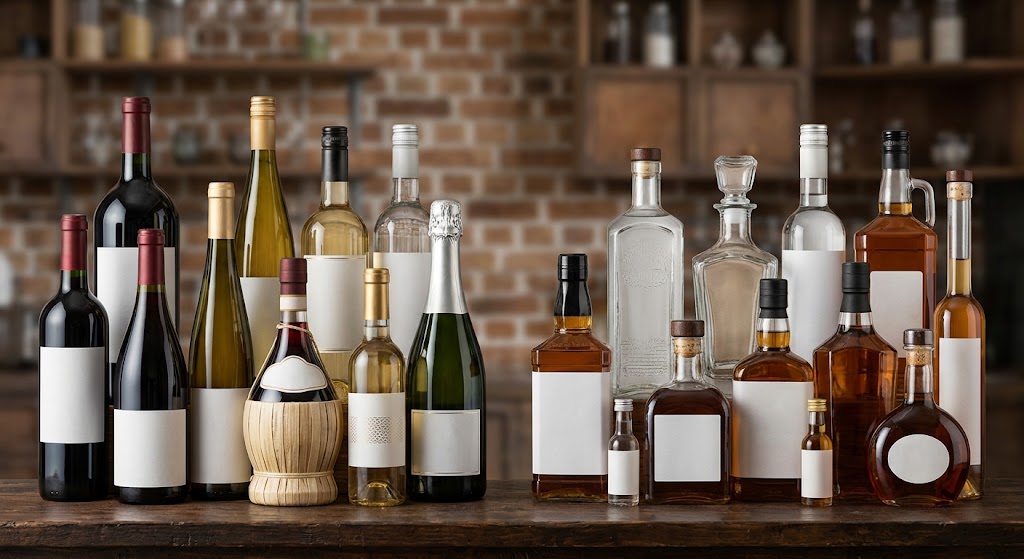
Wine bottles are available in several established shapes, each with its own visual characteristics.
Bordeaux Wine Bottles
The Bordeaux bottle usually has a relatively straight body and a distinct shoulder, making it one of the most recognizable wine bottle shapes.
It is typically associated with red wine, but can also be used for other types of wine. The relatively regular shape also facilitates labeling, storage and transportation.
Burgundy Wine Bottles
The shoulder of the Burgundy bottle is usually more rounded, and the body of the bottle is softer compared to the Bordeaux bottle. Traditionally, it is associated with Burgundy wines and is often used for wines such as Pinot Noir and Chardonnay.
Rhine or Alsace Wine Bottles
Rhine-style bottles are generally taller and slimmer than Bordeaux and Burgundy bottles. Their elongated profile creates a different appearance on the shelf and is commonly associated with aromatic white wines such as Riesling.
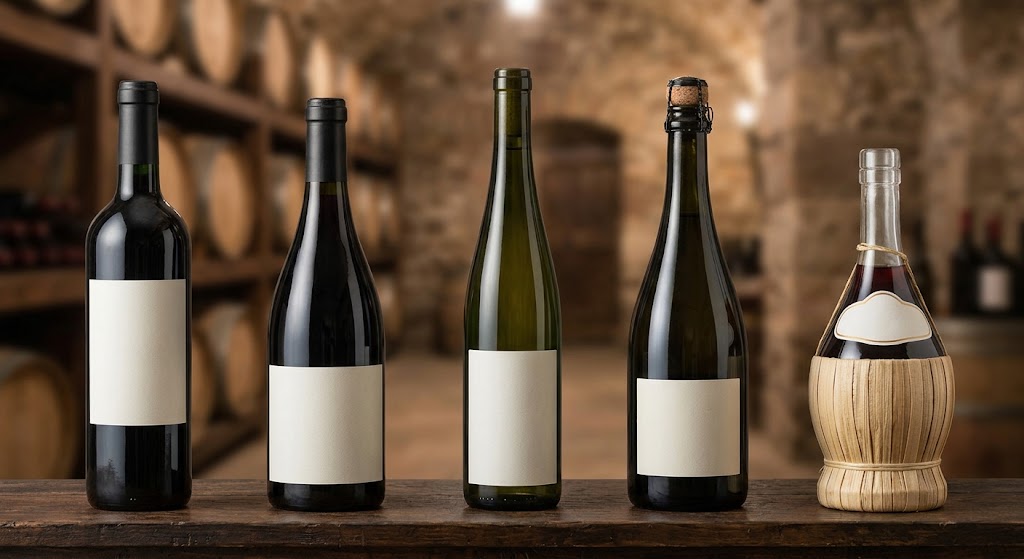
Understanding different wine bottle shapes can help wineries select packaging that supports both product positioning and brand identity.
Liquor Bottle Shapes
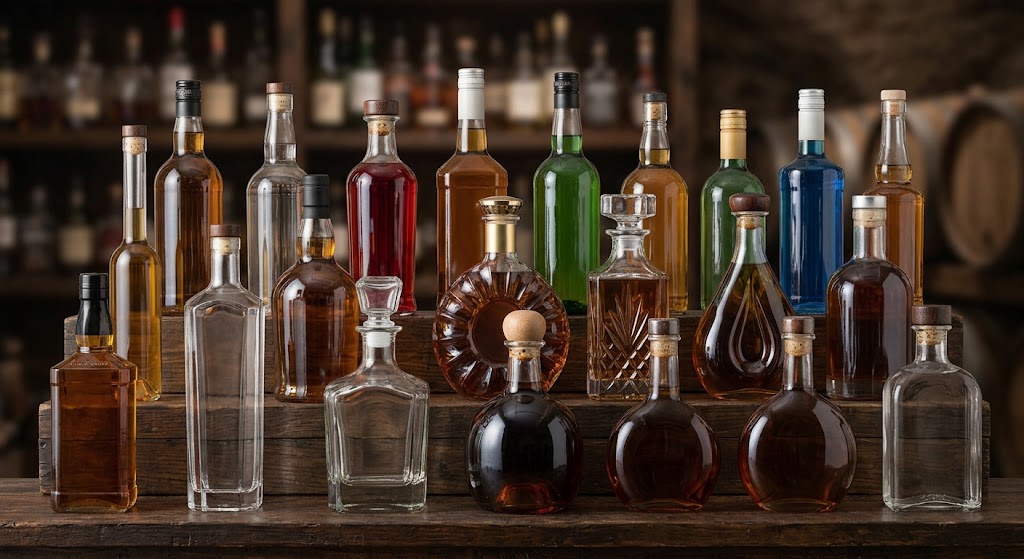
Compared with wine bottles, liquor bottles generally offer more freedom in shape and structure.
Common designs include:
- Tall and narrow bottles
- Short and wide bottles
- Square bottles
- Rectangular bottles
- Rounded bottles
- Custom-shaped bottles
For spirits brands, bottle shape can become an important part of the product’s visual identity.
For example, high-end whiskey brands may choose bottles with thicker glass and heavier bottoms to enhance the premium feel of the product. Gin brands may choose tall and distinctive bottle shapes to make their products more eye-catching on the shelves.
This makes liquor bottle shapes an important consideration when developing packaging for a new spirits product.
Wine Bottle Sizes vs Liquor Bottle Sizes
Capacity is another important difference when comparing wine bottles and liquor bottles.
Common Wine Bottle Sizes
Wine bottles are commonly available in:
- 375ml
- 750ml
- 1.5L
- Larger formats for selected products and occasions
The 750ml wine bottle is one of the most widely used formats for retail wine.
Common Liquor Bottle Sizes
Liquor bottles can commonly be found in:
- 375ml
- 500ml
- 700ml
- 750ml
- 1L
The appropriate capacity depends on the target market, product positioning, sales channel, and local packaging requirements.
Bottle Neck and Closure Design
The bottle itself is only one part of the packaging system. The neck finish and closure must also be compatible.
Wine bottles commonly use:
- Natural cork
- Synthetic cork
- Screw caps
Liquor bottles may use:
- Cork
- T-top closures
- Screw caps
- Specialty closures
The choice of closure can influence both functionality and appearance. A spirits brand may use a decorative cork closure as part of its premium packaging, while a wine producer may prioritize a traditional cork or convenient screw cap.
When ordering custom glass bottles, buyers should confirm the complete specification rather than selecting the bottle body alone.
This includes:
Bottle design + bottle capacity + neck finish + closure compatibility
Glass Weight and Thickness
Glass weight is another factor that can vary between wine and liquor bottles.
Wine bottles need to withstand handling, storage, filling, transportation, and distribution. Depending on the wine type and bottle design, manufacturers may use different glass weights and base thicknesses.
Liquor bottles can also vary significantly in weight. Some premium spirits use heavier glass and thicker bases to create a substantial feel in the hand and strengthen their premium positioning.
However, heavier glass does not automatically mean better quality. The appropriate glass weight depends on the bottle design, filling requirements, transportation conditions, and target positioning.
For business, the goal should be to find the right balance between durability, appearance, shipping weight, and production cost.
Branding and Customization
One of the most important differences between wine and liquor packaging is the role of bottle design in branding.
Wine brands commonly build their visual identity through a combination of:
- Bottle shape
- Glass color
- Labels
- Embossed details
- Closures
- Capsules or foils
The bottle may follow a traditional shape while the label and finishing details create differentiation.
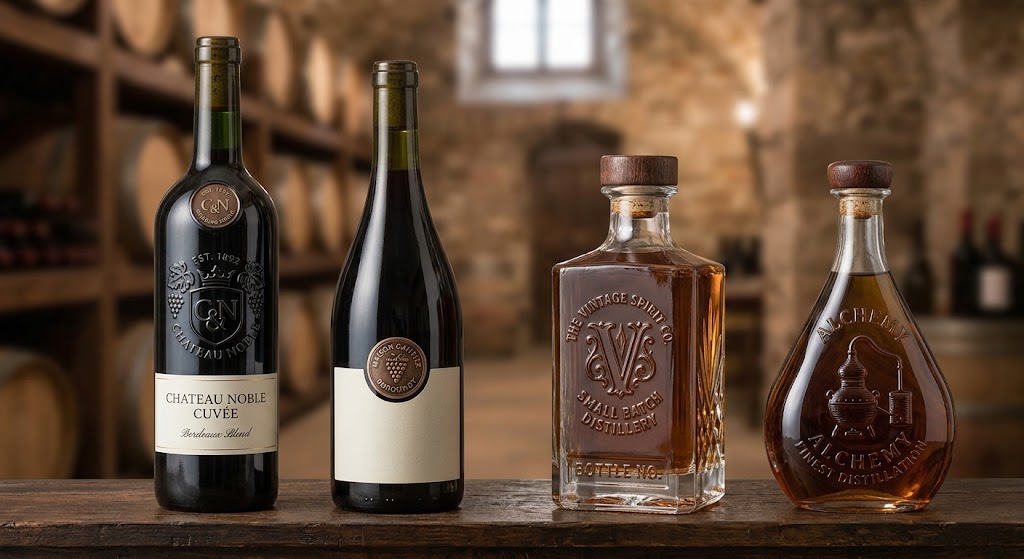
Liquor brands often have more freedom to make the bottle itself part of the branding strategy. Custom shapes, embossed logos, distinctive bases, colored glass, and specialty closures can all be used to create a recognizable product.
For premium spirits, a distinctive bottle can help a product stand out before the customer even reads the label.
Are Liquor Bottles More Customizable Than Wine Bottles?
Not necessarily, but liquor packaging often provides more opportunities for highly distinctive bottle designs.
Custom wine bottles can be developed with different shapes, capacities, colors, embossed logos, and finishing details. However, many wine brands prefer recognizable bottle styles that fit established expectations within their market.
Custom liquor bottles may have more freedom in overall shape and structure because spirits brands often use packaging as a stronger differentiation tool.
The right level of customization depends on the product, target market, brand positioning, production volume, and budget.
Custom molds can also involve additional development costs and minimum order requirements, so these factors should be considered before production begins.
What Should Buyers Consider When Ordering Wine or Liquor Bottles?
Before placing a bulk order, beverage brands should confirm several specifications.
- Bottle Capacity
Choose the appropriate volume for the product and target market. Common options include 375ml, 500ml, 700ml, 750ml, and 1L. - Bottle Dimensions
Height, diameter, shoulder shape, and neck dimensions can affect packaging, filling equipment, labels, cartons, and transportation. - Glass Color
Clear, green, amber, and other glass colors can be selected according to product requirements and brand identity. - Neck Finish and Closure
Make sure the bottle neck is compatible with the intended cork, screw cap, T-top, or other closure. - Customization
Depending on the supplier and production requirements, customization may include bottle shape, embossed logos, glass color, capacity, and packaging. - Minimum Order Quantity
Custom bottle development may require a higher minimum order quantity than standard bottle designs. Buyers should confirm MOQ before starting the design process. - Packaging and Transportation
Glass bottles require appropriate protective packaging, particularly for international shipping and large-volume orders.
Custom Wine Bottles and Liquor Bottles for Beverage Brands
Standard bottle designs can be a practical choice for many businesses, but custom glass bottles can provide more opportunities for brand differentiation.
For custom wine bottles, brands may customize the bottle shape, glass color, embossed logo, capacity, and finishing details while maintaining a style that fits the wine category.
For custom liquor bottles, there is often greater freedom to develop distinctive shapes, heavier bases, embossed details, and specialty closures.
A custom bottle project typically involves several stages:
Concept → Bottle Design → Specification → Mold Development → Sample → Production → Packaging
Working with an experienced glass bottle manufacturer can help buyers evaluate design feasibility, production requirements, MOQ, packaging, and bulk production before placing an order.
Wine Bottles vs Liquor Bottles: Which Is Right for Your Brand?
The difference between wine bottles and liquor bottles comes down to more than appearance. Wine bottles often use established shapes and capacities that are closely connected to traditional wine packaging, while liquor bottles generally provide greater flexibility for distinctive designs and premium branding.
For wineries and wine brands, the priority may be finding the right combination of bottle shape, capacity, closure, and label presentation.
For distilleries and spirits brands, custom bottle design, glass weight, closure style, and shelf presence may play a larger role.
Whether you need standard wine bottles, bulk liquor bottles, or fully customized glass packaging, the best choice should balance product requirements, brand positioning, production feasibility, and total packaging cost.
Custom Glass Bottles for Wine and Spirits
Hengjing Glass provides glass bottle solutions for wineries, distilleries, beverage brands, and other customers. From standard bottle formats to customized designs, specifications can be developed around capacity, bottle shape, glass color, neck finish, branding, and packaging requirements.
If you are looking for wine bottles or liquor bottles in bulk, discuss your required bottle size, design, quantity, and customization requirements with our team to find a suitable glass packaging solution.