
Wine bottles are more than just containers for your favorite wine. When selecting wine bottles or decanters, understanding wine bottle sizes and shapes is crucial for storage, serving, and presentation. In this article, we’ll explore what you need to know about wine bottle size and shape.

What are Normal Wine Bottle Sizes
Wine bottle capacities are measured in milliliters (ml) or ounces (oz). The international standard size of a wine bottle is 750 ml(25.4 oz), also commonly referred to as A Bottle (Standard Bottle). In addition, wine bottles come in a variety of sizes. Here is a common wine bottle size chart:
| Size Category | Volume | Common Usage |
| Mini Bottle | 187 ml (6.3 oz) | Perfect for those who want to try new wines but don’t want to buy large bottles. Travel-size wines are also popular. |
| Half Bottle | 375 ml (12.7 oz) | Suitable for drinking alone or for sampling different wines. Commonly served on airplanes. |
| Standard Bottle | 750 ml (25.4 oz) | This is the most popular size for most wines on the market. It’s perfect for sharing at a dinner party or for everyday drinking at home. |
| Double Bottle (Magnum) | 1.5 L (50.7 oz) | Often used for high – end wines that benefit from a slower oxidation process during aging. It’s also a popular choice for gifts. |
| Large Format Bottles (Double Magnum) | 3 L (101.4 oz) | Typically seen at large celebrations, these bottles make a statement and are designed for big gatherings. |

How many glasses can normal size wine bottle hold?
In most cases, we will decide the size of the wine bottle to buy for entertaining friends or sharing according to the number of people who need to drink, so that we can prepare the wine more accurately to avoid waste or insufficient.
The capacity of the wine glass will affect the number of glasses of wine poured. The following is an example of a common wine glass (150 ml/5 oz) and a liquor glass (45 ml/1.5 oz):
| Wine Bottle Capacity | wine glass(150 ml/5 oz) | liquor glass(45 ml/1.5 oz) |
| 187 ml | About 1 cup | About 4 cup |
| 375 ml | About 2 cup | About 8 cup |
| 750 ml | About 5 cup | About 17 cup |
| 1500 ml | About 10 cup | About 33 cup |
What are the common wine bottle shapes?
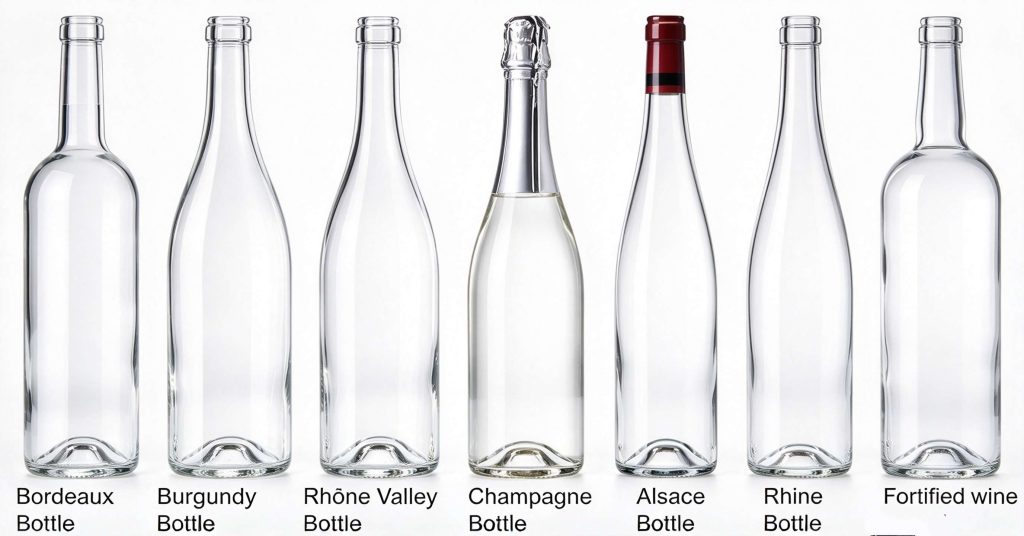
Bordeaux Bottle: Characterized by its straight sides and high, squared shoulders. This design helps to trap sediment at the bottom of the bottle, making it easier to pour a clear glass of wine. Wines made from Cabernet Sauvignon, Merlot, and other Bordeaux – style blends are usually bottled in this shape.
Burgundy Bottle: It features a wider, rounder body and sloping shoulders. The broader surface area of the bottle allows the wine to interact more with the air, enhancing the expression of the wine’s delicate flavors. Pinot Noir and Chardonnay from Burgundy are typically bottled in this style.
Rhone Valley Bottle: The bottle is slender and tall, with a long neck and sloping shoulders. Most bottles are printed with the winery’s exclusive emblem to increase recognition. It is mainly used to hold wines made from grape varieties such as Grenache, Syrah, and Mourvèdre, as well as white wines made from varieties such as Viognier.
Champagne Bottle: The bottle wall is thicker and can withstand up to 5-6 atmospheres of pressure inside the bottle, preventing it from bursting due to excessive pressure during secondary fermentation. The concave design at the bottom of the bottle helps to precipitate yeast during the disgorging process, making it easier to remove. Commonly used for champagne and sparkling wine.
Alsace Bottle: It has a slender body, a long neck and almost no groove at the bottom. It is mainly used to store Riesling white wine. The color of the bottle is mostly light green or colorless. The Alsace bottle is protected by special regulations to ensure that it is the exclusive bottle type for wines from the Alsace region.
Rhine Bottle: also called Hock Bottle. The bottle is slender with a long neck, giving it an elegant appearance. It is usually brown, which helps protect the wine from UV rays. Riesling, Gewürztraminer, and other white wines from Germany and Alsace are commonly bottled in this shape.
Fortified Wine Bottles: Fortified wine bottles are generally thicker and taller than regular wine bottles, especially at the neck. There may be a noticeable bulge at the neck, a typical feature of fortified wine bottles, used to help keep sediment in the bottle. If the bottle has a specific region of origin, such as Port, Madeira, or Sherry, then it is usually a fortified wine bottle.
Some special wine bottle sizes and shapes
In addition to these common wine bottle sizes, there are also innovative businesses in the wine industry who design different size wine bottles for their brands. These wine bottles of different sizes and shapes give consumers a refreshing and impressive experience.
Size
Jeroboam Bottle: With a capacity of 3 liters, it is usually used for packaging champagne or sparkling wine. This bottle is suitable for large parties or celebrations.
Rehoboam Bottle: With a capacity of 4.5 liters, it is suitable for large parties or celebrations and high-end venues.
Methuselah Bottle: Also known as the imperial bottle, it has a capacity of 6 liters. This bottle is suitable for large parties or special occasions, or rare collections.
Salmanazar Bottle: With a capacity of 9 liters, this bottle is generally used for auction-level wines
Balthazar Bottle: With a capacity of 12 liters, the large capacity makes it very suitable for celebrations and special occasions.
Nebuchadnezzar Bottle: With a capacity of 15 liters, the wine in this bottle has a high collection value and display value.
Shape
| Name | Features |
| Chianti Straw Bottle (Fiasco) | Round, chunky bottle wrapped in woven straw (traditional anti-collision design). |
| Skull Bottle | The bottle is in the shape of a skull, with a dark style design. |
| Handprint Glass Bottle | The bottle usually has one or more depressions or bumps in the shape of a handprint. |


How to Choose the Right Size Wine Bottle for Your Brand
Determine the target market
First, determine what scenarios your product is suitable for. For example, 750 ml is the mainstream retail channel and the standard choice for the mass market; 375 ml is suitable for high-end tasting sets or aviation supply; 1.5 L is suitable for celebrations and professional wines in restaurants.
Cost (only in milliliters)
Comprehensive glass usage, mold flattening costs, and storage costs
The cost of a 750 ml wine bottle is $1.20/bottle
The cost of a 375 ml wine bottle is $1.40/bottle
The cost of a 3 L wine bottle is $1.05/bottle (because the packaging box logistics efficiency is higher, the overall cost is reduced)
Consumer psychology
Visually, the same capacity of wine bottles, but Bordeaux bottles will look larger than Burgundy bottles. The short-necked bottle will increase the height of the wine and look fuller.
Conclusion
Wine bottle size and shape play a vital role in the wine industry, from production and aging to consumption and marketing. Understanding wine bottle dimensions can help maximize value, storage and enjoyment.
In addition, it will help merchants who need to design containers suitable for their products have a clear structure to judge and choose. No matter how many sizes and shapes there are, only the one that suits you is the best.
About Us
As a glass manufacturing expert, Hengjing Glass always takes excellent quality and innovative technology as the core, and is committed to providing customers with the best glass products. We accept customization according to drawings. Whether you need special size, unique shape, or personalized glass solution, we have a one-stop service system from product research and development to production and delivery to precisely meet your needs.