
In the highly competitive wine market, consumers often form their first impression of a wine before they even open the bottle. Trying to pick the right glass. It can get confusing. You see the terms whiskey glass vs bourbon glass thrown around. They sound like two separate categories. Honestly? They are not. Not in the strict sense. There is no law that says a bourbon must be poured into a specific type of glass. No industry standard that dictates “this shape is for bourbon, that shape is for everything else.”
What we are really talking about here is function. Open rims versus tapered rims. Glasses that hold ice well versus glasses that concentrate aroma. It is about how you drink. And what you want to get out of the pour. For buyers, bar owners, or just someone who enjoys a good pour at home, knowing these distinctions matters. You want a glass that fits the drinking style. Not the other way around.
Are Whiskey Glasses and Bourbon Glasses the Same?
Let us step back for a second. The relationship between the two spirits is pretty straightforward. All bourbons are whiskey. But not every whiskey out there qualifies as bourbon. That is a hard line.
The US federal regulations make this clear. Bourbon has to be produced in the United States. The grain mash must be at least 51% corn. Distillation happens at or below 160 proof. And the aging process? New, charred oak barrels only. No exceptions.
That production process gives bourbon its signature flavor. Spice, vanilla, caramel, toasted oak. Big, bold notes. Because of that intensity, drinkers have developed preferences for specific glass shapes. It just makes the experience better.
But here is the catch. The law does not specify a “bourbon glass.” There is no official designation. “Whiskey glass” is a broad umbrella term. It covers a lot of ground. The real difference between a whiskey glass and a bourbon glass, in practice, is about use. It is about whether you are prioritizing aroma or accommodating ice.
Whiskey Glass vs Bourbon Glass: What Really Differs?
Here is the core of it. There is no dedicated spirit glass shape exclusive to bourbon. So when people talk about “bourbon glasses,” they are really talking about one of two things. Either an open, rocks-style glass. Or a tapered, aroma-focused nosing glass.
These are totally different tools for different jobs. Understanding the structure helps. It helps bar managers stock the right inventory. It helps procurement buyers make informed decisions. And it helps enthusiasts pick the right glass for the right moment.
Let us put the two categories side by side. Keep this comparison in mind.
| Feature | Open / Rocks-Style Glass | Nosing / Tasting Glass |
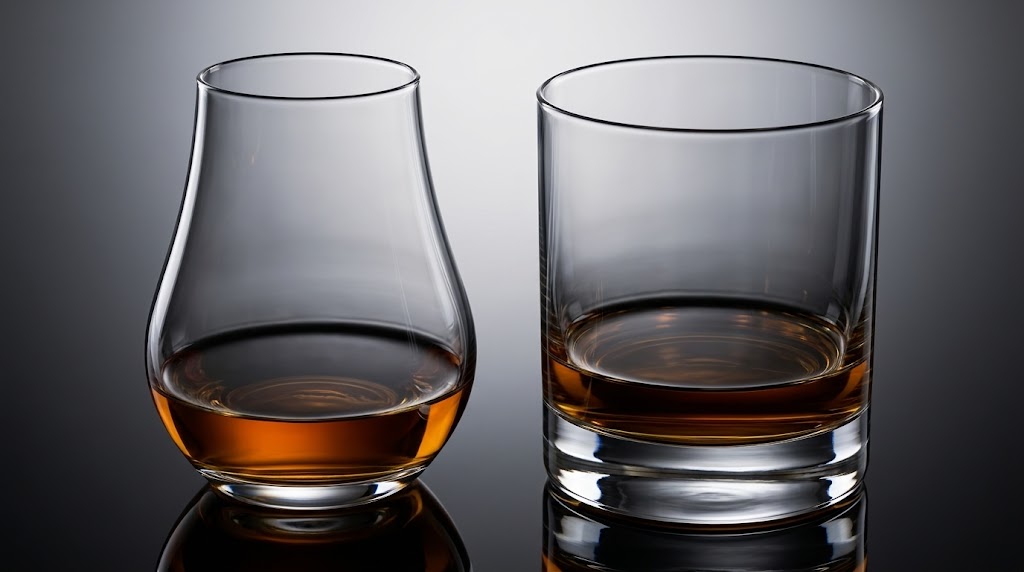
| Primary Shape | Straight or wide cylinder. Rim is open. | Tulip-shaped. Rim narrows inward. |
| Aroma Delivery | Aromas and alcohol vapors disperse quickly. | Aromas concentrate and get trapped near the rim. |
| Serving Style | On-the-rocks. Cocktails. Casual drinking. | Neat tasting. Professional flavor evaluation. |
| Base & Design | Thick, stable bottom. Handles ice and muddling. | Short stem or heavy base for swirling. |
Now, let us get into the specifics. Four key areas where these glasses differ in real, practical ways.
1. Shape and Rim
Start with the most obvious difference. The rim.
A wide-rimmed glass, like your standard rocks glass, has a large opening. That means aromas escape. Quickly. They dissipate into the air around you. It is fine for casual sipping. You are not missing out on much if you just want a relaxing drink.
A tapered glass, though. That is different. Tulip shape, narrow rim. The design traps the aroma inside. When you swirl the liquid, the scent gets channeled upward. Right to your nose. That is the whole point. It makes you catch all those subtle notes.
2. Aroma Concentration and Nosing
Think about a high-proof bourbon. Pour it into a wide tumbler. The complex flavors? They evaporate. They just disappear into the room. You lose the nuances.
Switch to a tapered glass. Now the design channels those vapors. It concentrates them. And it does something else. It reduces the harsh ethanol burn. The alcohol vapor does not hit your nose as aggressively. Nosing becomes manageable. You actually smell the caramel and vanilla instead of just the sting of the alcohol.
3. Ice and Cocktail Use
This is the practical side. The part that matters for daily drinking.
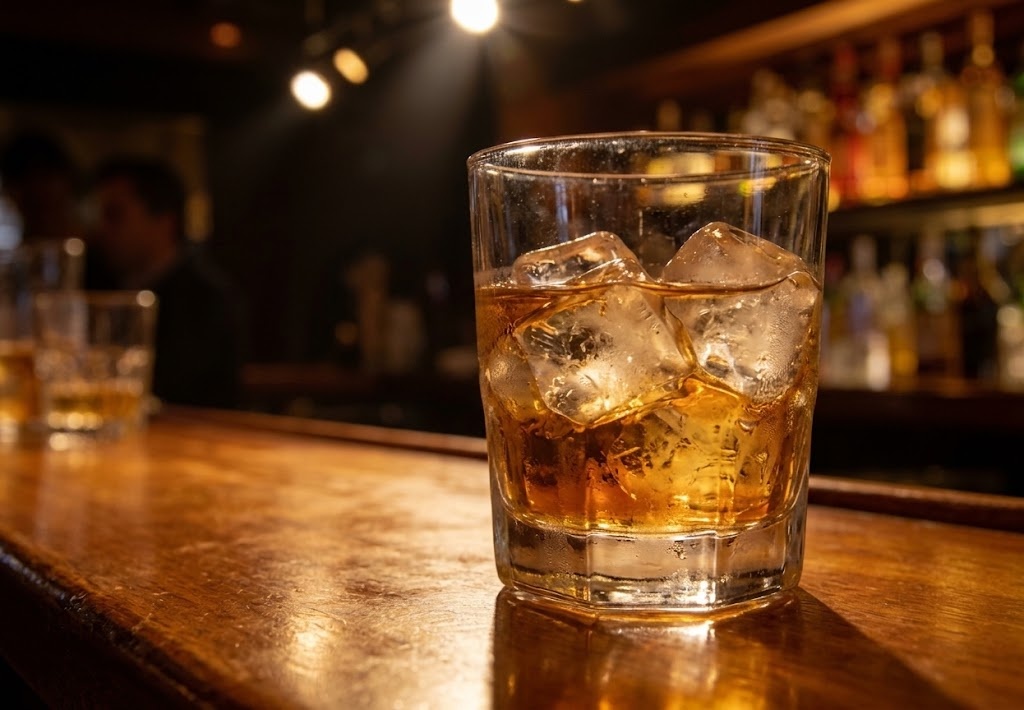
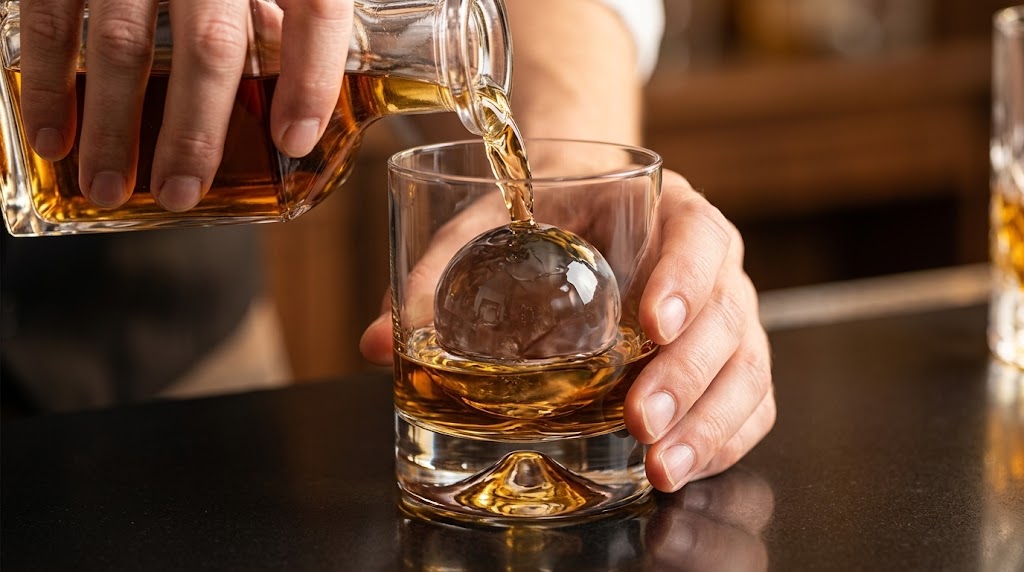
Most people like their bourbon with ice. A big cube. A sphere. It is a ritual. A wide, straight-sided rocks glass handles that perfectly. Plenty of room. No struggle to fit the ice in. There is also space for stirring. Old Fashioneds, for example. You can work the drink without spilling.
A narrow nosing glass? It is not designed for ice. It is for neat pours. You could maybe squeeze a small cube in there, but you would ruin the aroma concentration anyway. Different tool for a different job.
4. Base Weight and Handling
The base matters. Not just for looks.
A heavy base lowers the center of gravity. That makes the glass stable. Less likely to tip over. It also feels substantial in your hand. A nice weight. Good tactile experience.
But here is a nuance. If keeping the drink cool is your priority, a heavy base does not help much. A stem does. A stemmed glass, like a Copita, keeps your hand away from the bowl. That means no heat transfer. The liquid stays cooler for longer. Professional tasters care about that. Casual drinkers might not.
5 Popular Whiskey and Bourbon Glass Types
So we have talked about the science of shape. Now let us look at the actual glasses. The ones you will see in bars, in stores, and in brand packaging. Five common types. Each with a specific purpose.
Rocks Glass / Tumbler
The classic. Wide mouth. Heavy base. You have seen it a thousand times. It is the workhorse of the bar. Good for a big ice ball. Great for Old Fashioneds. It is also durable. That makes it a top choice for commercial buyers. It handles daily wear and tear.
Glencairn Glass
This is the industry favorite for tasting. Tulip shape. Short, solid base. It is designed to concentrate aroma. You pick up those vanilla, caramel, and oak notes much more clearly. It is also practical. Not too fragile. It gets used in distilleries and tasting rooms across the spirits bottle industry.
Snifter Glass
You might recognize this as a brandy glass. Large bowl. Narrow rim. The wide bowl gives you room to swirl. That releases the complex aromas trapped in the liquid. And the shape allows you to cup the bowl. Palm warmth gently heats the liquid. That opens up more flavor. Good for older, more complex bourbons.
Highball Glass
Tall. Straight. This one is for long drinks. Whiskey Highball. Whiskey Soda. Lots of ice. Lots of mixer. The high capacity keeps the drink cold. You can sip it over a longer period without it getting watered down too fast.
Copita and NEAT Glasses
These are specialized. Think of them as professional tools. The Copita has a long, tulip shape that concentrates aroma. The NEAT glass has a unique flared rim. That flare pushes harsh ethanol vapors away from your nose. You get the flavor without the burn. These are used by master blenders and sensory analysts. Not really for cocktails. Not for casual sipping.
How to Choose the Right Glass for Your Need
Everyone has a different drinking style. That is fine. The key is matching the glass to the habit. Here are some practical guidelines. Use them as a starting point.
If you drink neat: Go for a Glencairn. Or a Copita. Or a Snifter. Tapered glasses maximize the aroma. You get the full flavor experience. That is what neat drinking is about.
If you drink on the rocks: A wide-rimmed Rocks Glass is your best bet. You need space for that ice sphere. You do not want to force it in. The heavy base also handles the weight of the ice well.
If you run a bar or restaurant: Durability matters. Heavy-based tumblers are your workhorse. They withstand impact. They are stable. And they survive commercial dishwashers. Always follow the manufacturer’s cleaning guidelines to extend their life.
If you are a brand owner or procurement manager: Think beyond the individual drinker. Plan your packaging strategy. For gift sets, consider a two-glass combination. A custom heavy-based tumbler for daily use. A professional tasting glass for the enthusiast. This covers both user groups. It adds perceived value to the set.
Custom Whiskey and Bourbon Glasses for Brands
For brands, distilleries, and wholesale buyers, custom glassware is a different game. It is not just about picking a pretty shape. You have to think about capacity. Bowl geometry. Base thickness. Material clarity. Surface decoration. Shipping logistics. Production costs. These all factor into the final decision.
Hengjing Glass works with spirit brands on these exact challenges. We supply glass containers and barware to distilleries and wholesale buyers globally. Our OEM and ODM services cover the full production cycle.
We offer material choices. High-white glass. Crystal white glass. We handle custom mold development. Heavy-base designs. We also do logo printing and engraving. Plus a range of decorative finishing processes.
Say you are launching a new bourbon. You need a custom tasting glass that reflects the brand identity. We can develop that. Or you need a rocks glass for a gift set. We can produce that too. We work from the initial concept through to bulk manufacturing. No surprises.
Conclusion
So here is where we land. The whiskey glass vs bourbon glass discussion is not about setting a rigid rule. It is about matching the glass to the occasion. Neat drinker? Nosing glass. On the rocks? Wide, heavy rocks glass. Cocktail lover? A tumbler works great. Professional evaluation? Specialized tasting glass.
For brands, the decision should follow the product’s positioning and the customer’s expectations. Choose a glass that fits the drinking style. Match the glass to the moment. That is what matters.