Glass bottle quality inspection is basically a full body check for every bottle that leaves the factory. The goal? To make sure each one is safe, looks good, and has the right dimensions. If you are a business that relies on glass packaging, this process directly affects your customer’s safety, your filling line efficiency, and your brand image. One missed defect could lead to a very expensive recall. But a thorough inspection saves you from a lot of headaches. Let’s walk through the seven most important inspection areas. You will see how professional factories actually achieve “zero defect” delivery.
Why Quality Inspection Matters for Your Business
Investing in strict glass container inspection is not just a formality. It brings real value to your business in three key ways.
Safety first. By checking for mouth chips and internal foreign objects, you prevent glass fragments or contaminants from ending up in the product. This is a legal red line for food and pharmaceutical packaging. It is also the foundation of your brand’s reputation. For brands that demand high safety standards, learning how to Choose Food Grade Glass Bottle is the very first step to protecting consumers.
Line efficiency. A bottle that is out of round or has a crooked body will jam your filling line. Then the whole line stops. A solid inspection system removes these troublemakers before they cause trouble. That saves you tens of thousands of dollars per hour in lost production.
Brand premium. When every bottle looks consistent (no scratches, no color differences, clean seam lines), your product looks more premium on the shelf. And consumers are happy to pay a higher price for that “finished look.”
The 3-Step Quality Inspection Lifecycle
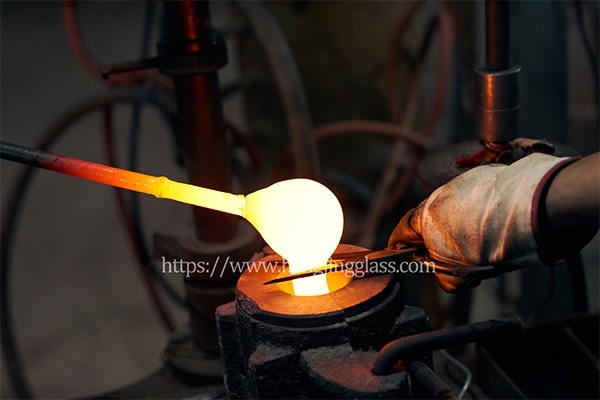
A complete quality control in glass production process covers three stages: raw materials, production, and finished goods. If you want to compare how different process stages affect glass structural stability, check out our detailed guide on the Glass Bottle Manufacturing Process Explained. It goes deep into each step. One thing to remember: small deviations in temperature or pressure during forming and annealing will directly cause defects.
Step 1: Raw Material Check
We test raw materials like quartz sand for impurities (for example, iron ions). This ensures the molten glass is clear and bright from the start.
Step 2: In-Production Monitoring
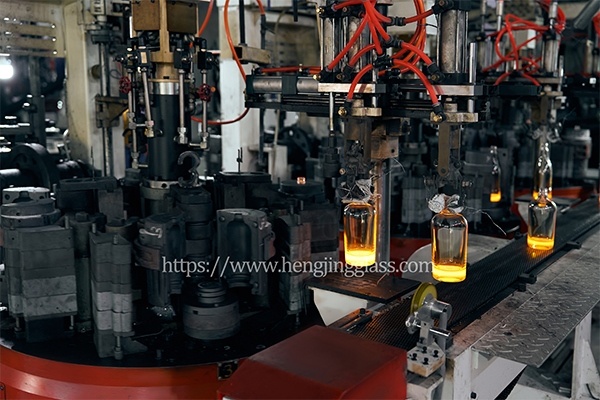
We monitor furnace temperature (usually above 1500°C) and glass viscosity in real time. If the temperature is too high, bottles deform easily. If it’s too low, the glass becomes too thick, which leads to bubbles or internal stress. We also keep an eye on forming pressure and mold closure.
Step 3: Finished Product Testing
This is the most complete checkpoint. It covers the seven critical areas below.
7 Critical Areas of Glass Bottle Quality Inspection
Think of this as your practical purchasing checklist. Every high quality glass bottle must pass all seven areas.
| Inspection Area | What We Check | Simple Explanation / Example |
| 1. Body Inspection | • Cracks, scratches, inclusions • Air bubbles, stones, or embedded particles • Cosmetic defects (scuffing, discoloration) | It is like checking a phone screen. No scratches allowed. No “dead pixels” (bubbles) inside. |
| 2. Neck and Finish Inspection | • Chips or cracks at the mouth • Thread profile accuracy (affects sealing) • Out-of-roundness or deformation | The mouth is like the bottle’s lip. If it is uneven, liquid will leak. For wine glass bottle quality inspection, the fit between thread and cork is absolutely critical. |
| 3. Base Inspection | • Cracks or “bird swing” defects (fine thread-like inclusions) • Proper embossing/marking if applicable • Bottom cleanliness | Bottom cracks are often hidden. They can break under pressure. A “bird swing” looks like a thin glass thread. It is a potential starting point for breakage. |
| 4. Dimensional Control | • Height and diameter within tolerance • Wall thickness uniformity • Volume verification (for specific applications) | We use calipers and thickness gauges. Uneven wall thickness is like a cup that is thick on one side and thin on the other. It breaks easily and messes up filling volumes. |
| 5. Contamination & Foreign Matter Detection | • Embedded foreign particles • Internal cleanliness before filling • Detection of wash residues (for reused bottles) | Spin the bottle under a bright light. Any black spot or glass fragment will show up. This is a must for food grade packaging. |
| 6. Labelling Surface Check | • Smooth surface for label application • No grease, scratches, or dust | Imagine trying to stick a label on a greasy or bumpy surface. The label will bubble or fall off. Learn more about Surface Finishing and Decoration Explained. |
| 7. Mold Identification & Traceability | • Reading mold number or code • Mapping defect trends back to specific mold cavities or machines | Every mold has its own ID number. If bottles from one mold suddenly show heavy seam lines, we can lock onto that mold and fix it immediately. |
Professional standards reference: For sampling frequency and acceptance criteria, you can refer to ASTM C1606 (standard practice for glass container sampling) or AQL (Acceptable Quality Limit). For example, AQL 0.65 means no more than 0.65 serious defects per 1000 bottles.
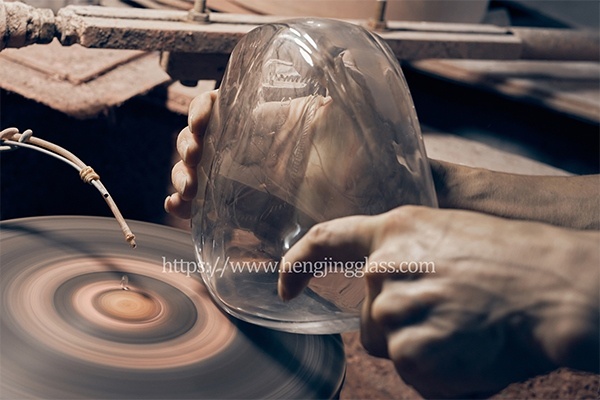
Common Glass Defects and How to Fix Them
When inspection finds a defect, a professional factory does not just throw the bottle away. We use a defect troubleshooting matrix to find the root cause and adjust the production parameters. This matrix goes deeper than what most competitors show. It directly links defects to temperature and pressure settings.
| Defect Name | How to Identify | Root Cause (and how to adjust parameters) |
| Bubbles | Visual or light transmission: bright or white dots. | Root cause is melting temperature. Temperature too low or time too short. Gas did not escape. Fix: Raise furnace temperature (for example from 1500°C to 1520°C) or extend melting time. |
| Seam Lines | Touch + visual: obvious raised edge or scratchy feel. | Root cause is mold wear or forming pressure. Worn mold or too much closing pressure. Fix: Replace the mold and precisely lower the forming pressure (for example from 6 bar down to 5.5 bar). |
| Checks (fine cracks) | Polariscope test: under polarized light, internal stress shows up as bright colored patterns. | Root cause is annealing stress. Cooling too fast during the annealing stage. Temperature difference inside and outside is too high. Fix: Follow the annealing curve strictly. Increase cooling zone time and slow down the cooling rate. |
| Bird Swing | Light transmission: a thin glass thread inside the bottom. | Root cause is forming movement. The take-out mechanism stretches a glass thread that sticks to the bottom. Fix: Adjust the timing and temperature of the take-out plunger. |
Advanced Inspection: How AI Makes It Faster
Traditional visual inspection relies on human eyes. People get tired. Standards vary. That is why AI vision inspection is completely changing glass bottle quality inspection. It has become the industry standard across different sectors because it solves real problems.
Why does every industry need AI glass bottle inspection?
Food and beverage: A cracked bottle can cause leakage or spoilage. That leads to customer complaints and even recalls.
Pharmaceuticals are even stricter. A tiny crack in a glass container could break the sterile environment of a medicine. That puts patient safety at risk. AI catches these risks early. It only lets perfect bottles go to filling and packaging.
Adapts to diverse production lines. No matter if you make thin perfume bottles, round pickle jars, or dark beer bottles, AI handles them all. It works with any shape, size, or color. Traditional fixed threshold algorithms cannot do that.
What makes AI smarter than traditional equipment?
Classifies defects by type and severity, not just pass/fail. Old systems use fixed thresholds for brightness or size. But an AI engine can recognize “this is a bubble, severity medium” or “this is a crack, severity high.” It counts them separately. That lets quality managers focus on truly fatal issues instead of getting buried in false alarms.
Drastically reduces false rejects. That saves you money. Glass texture, normal mold marks, and bottle color gradients are not defects. But traditional machines often kick them out as waste. AI deep learning can tell the difference between a real defect and a harmless surface variation. False reject rates can drop by more than 50%. That means hundreds or even thousands more usable bottles per batch. Direct cost savings for you.
Three real benefits for buyers
24/7 operation, zero fatigue, lower compensation risk. AI never gets tired. It keeps the miss rate far below what human inspection can achieve. That avoids recalls and compensation claims caused by missed defects.
Real time closed loop correction. When AI sees a sudden increase in a certain defect (like bubbles), it sends an alert to the production system. It might say “furnace temperature may be too low” or “glass viscosity needs adjustment.” The problem gets fixed before a whole batch becomes waste. That reduces scrap losses for you.
Automated mold traceability. AI reads the mold number on each bottle base or body. It then calculates defect rates and defect types per cavity. Engineers can instantly see “which mold has a problem” instead of waiting for customer complaints to start investigating.
Final Thoughts
So, glass bottle quality inspection is not just about picking out bad bottles. It is a systematic process covering seven critical areas, from raw materials to finished products. It combines traditional process control (temperature, pressure) with advanced AI vision. The goal is zero defect delivery. That keeps your filling line running smoothly and protects your brand reputation.
For professional buyers, knowing standards like ASTM C1606 or AQL gives you more leverage when you accept deliveries. Whether you are evaluating your current supply quality or planning a new Custom Glass Bottle Manufacturers project, understanding these inspection principles is the first step to success. At Hengjing Glass, we follow or exceed these standards at every inspection stage. We guarantee that every bottle we deliver to you can pass the strictest tests.