
Glass bottles are one of the oldest containers used by humans. Their history can be traced back to ancient Egypt around 1500 BC. At that time, artisans had mastered the basic technique of melting quartz sand to form shapes. Although the production process was primitive and the products were much rougher than today, the core advantages of glass as a container material – chemical inertness, transparency and good sealing – had already emerged. To this day, glass bottles remain an indispensable packaging form in industries such as food and beverage, pharmaceutical and chemical products, and perfume and cosmetics. Compared with plastic, glass does not release harmful substances to the contents; compared with metal, its transparency allows consumers to clearly understand the product. It is these natural properties that have enabled glass bottles to evolve through thousands of years in the modern industrial system and still maintain vitality.
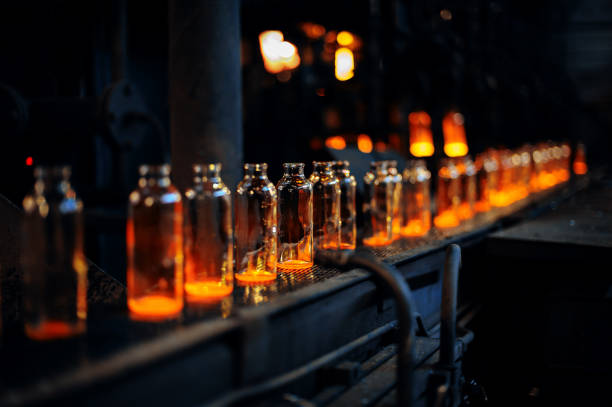
How To Make Glass Bottles: From Raw Materials To Finished Products
Core raw material composition
The main ingredient required to produce glass bottles is silicon dioxide (SiO₂) which manufacturers obtain from high-purity quartz sand. Pure silicon dioxide has a melting point of over 1700°C and is difficult to use directly in actual production. Therefore, soda ash (sodium carbonate, Na₂CO₃) serves as a fluxing agent which reduces the melting temperature into a range between 1400°C and 1550°C. The glass becomes soluble in water when soda ash is added, so limestone (calcium carbonate, CaCO₃) must be mixed in to provide chemical stability and increase mechanical strength. The three materials combine in a ratio of approximately 70% quartz sand 15% soda ash and 10% limestone to create the fundamental sodium-calcium-silicon glass composition.On this basis, the factory will also add various functional additives according to product requirements. Aluminum oxide (Al₂O₃) can improve the heat resistance and hardness of the glass; barium oxide (BaO) is used to produce optical glass with high refractive index; borax is often used in laboratory glassware to enhance heat shock resistance. For colored glass, corresponding metal oxides are added as colorants: iron oxide produces green, cobalt oxide gives deep blue, manganese oxide can produce purple or colorless (for desaturation), sulfur oxide combined with carbon forms brown, which is also the reason for the common color of beer bottles.
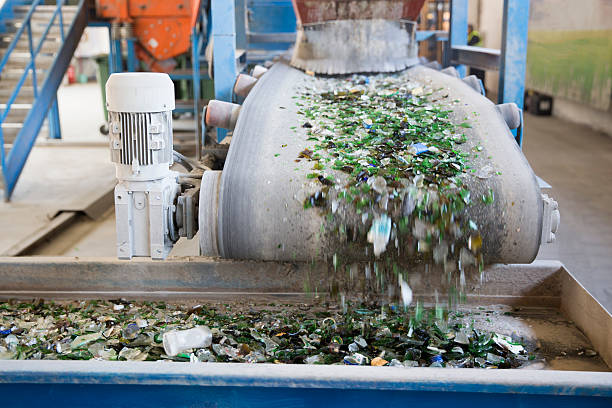
Modern glass manufacturing processes utilize crushed glass as a vital material which accounts for 20% to 60% of their total production materials. Crushed glass can be obtained from either factory waste materials or from recycling operations in the marketplace. The direct melting properties of crushed glass enable production facilities to achieve higher efficiency through reduced melting temperatures and shorter melting durations while extending kiln operational lifespan.
High temperature melting and forming process
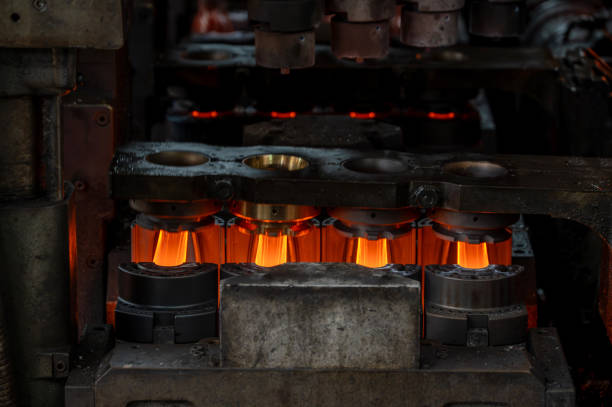
Ingredient mixing → high temperature melting (1500-1600°C) → molding (blowing/pressing)
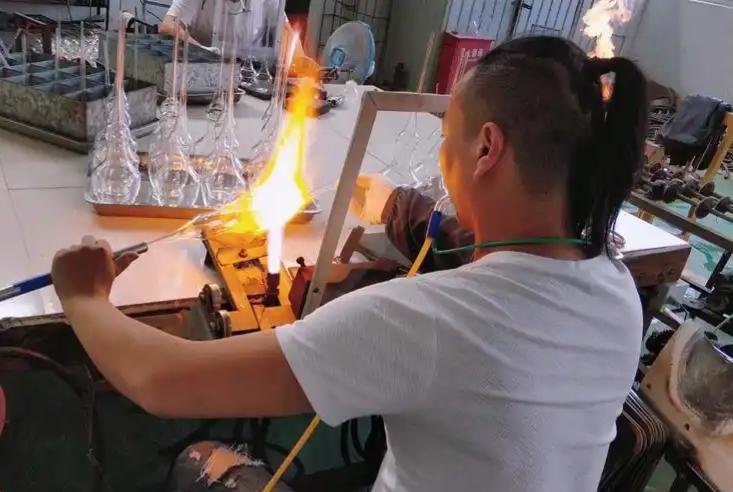
Blow molding: suitable for wine bottles, medicine bottles and other special-shaped bottles
Compression molding: suitable for wide-mouth bottles, canned bottles, higher production capacityHengjing Glass has a modern automated production line that can produce hundreds of glass containers per minute with high efficiency. At the same time, it also retains the blow molding process and can customize glass bottles of various sizes and shapes.
Annealing treatment eliminates internal stress
The glass bottle which just exited the mold displays two temperature extremes because its outer part reached room temperature while its inner part maintained a higher temperature. The glass will suffer lasting thermal damage because of the uneven cooling process which renders the bottle unable to endure ordinary handling and transportation weight. The annealing process creates a vital procedure which protects against this potential hazard.
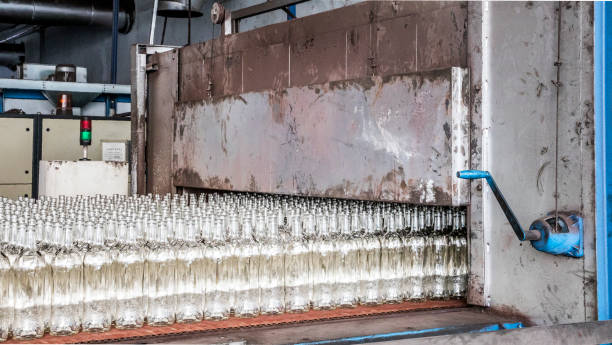
The dedicated annealing furnace (lehr) serves as the equipment which accomplishes annealing. A conveyor belt operates to move the glass bottle through the annealing furnace which uses this method to advance glass. The furnace temperature begins at approximately 550-580°C which represents the glass annealing point and it proceeds to cool down to room temperature through a controlled mechanism. The whole procedure requires 30-90 minutes to complete which varies according to the thickness of bottle walls and the specific product requirements. The glass molecules demonstrate enough fluid movement to discharge remaining stress at the annealing point because the slow cooling method maintains equal cooling throughout the material which stops new stress from developing. The glass bottle achieves better mechanical strength and thermal stability through annealing which enables it to satisfy requirements for coating and testing and filling and other procedures.
Surface Treatment and Coating
The procedure for glass bottle enhancement requires two distinct surface coating applications which improve the bottle’s strength and visual appeal after the bottle undergoes its post-annealing stage. The hot end coating process applies the coating when a bottle reaches a temperature of 500°C which occurs before the bottle enters the annealing furnace. The process uses tetrachlorostannic acid or organic tin compounds which chemically react to create a tin oxide film that protects against micro-cracks while enhancing the material’s resistance to scratches and its overall strength. The cold end coating process starts after a bottle completes its journey through the annealing furnace and reaches a temperature below 100°C. The process uses polyethylene emulsion or stearic acid salts to create a protective lubricating film that decreases friction and collision damage during transportation while increasing the product’s glossiness. The two coatings work together to improve the overall performance of the glass bottles. High-humidity environments require an additional anti-mold coating for products which will be stored at the exit.
Quality Inspection
Strict quality inspection is the final guarantee for the qualification of glass bottles upon leaving the factory. Modern factories employ fully automatic online inspection systems to conduct 100% comprehensive inspections of the products, ensuring the stability and reliability of the high-speed production line.
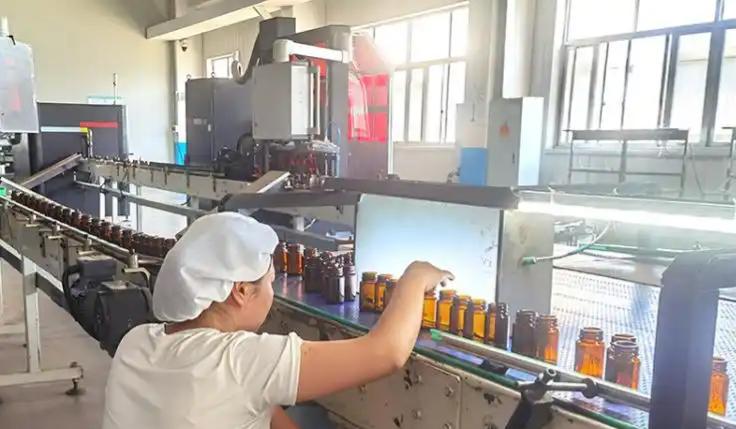
Inspection items:
- Appearance and dimensions: Check the height, diameter, and diameter of the bottle, ensuring compliance with tolerance requirements.
- Uniformity of wall thickness: Conduct inspections through ultrasonic or optical methods to prevent cracking during filling.
- Defect detection: Identify bubbles, stones, cracks, inclusions, and other flaws.
- Verticality and flatness of the bottle mouth: Ensure stable upright position and good sealing.
- Pressure resistance test: Simulate the internal pressure of carbonated beverages to test the anti-bursting ability.
Unqualified products are automatically removed, and the broken ones are recycled and reused.
Packaging and Transportation
The qualified glass bottles that have passed all tests will eventually enter the packaging section, preparing for the final transportation. Due to the brittle nature of glass, the packaging design must fully consider the two key elements of shock absorption and stability in stacking.
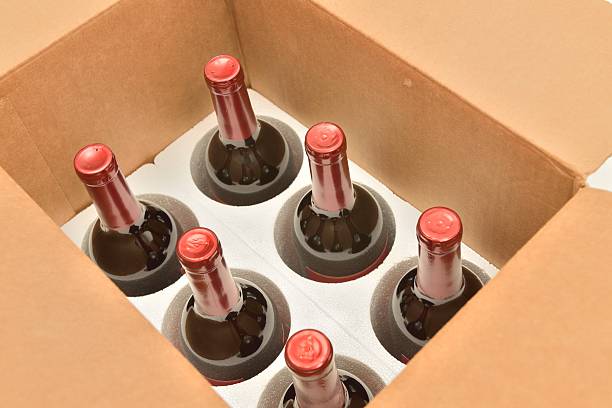
The glass bottles are stacked on standard pallets, with paperboard or plastic sheets separating the layers, and the entire stack is reinforced with shrink film. For high-end products, they are lined with corrugated paper to be separated independently. The storage needs to control temperature and humidity, and before transportation, it is necessary to check and ensure the stability of the packaging.
Conclusion
The manufacturing of glass bottles is a complex system project that integrates materials science, thermodynamics, mechanical engineering and precise testing. From the mixing of quartz sand ingredients to the final packaging, every step is closely linked. Any oversight could lead to a decline in product performance or potential safety hazards. It is precisely this complete and rigorous process system that has enabled glass bottles to continuously serve human life over thousands of years.