The food packaging industry requires businesses to select appropriate packaging materials which protect their products while maintaining their brand reputation and customer confidence. More brands are choosing food-grade glass bottles as their main packaging option because these bottles guarantee safety and environmental protection while delivering a high-quality product appearance.
However, the question remains: how do you choose the right food-grade glass bottle for your product?
This article will systematically outline a practical selection method, considering factors such as material, structure, sealing performance, and customization options.
What are Food Grade Glass Bottles?
Food-grade glass bottles refer to glass containers which comply with food contact safety standards. The containers are designed to store and package food products without releasing any toxic substances which would change the flavor and quality of the food.
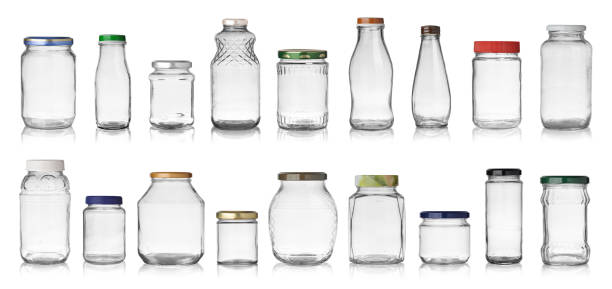
Its core features include:
- Strong chemical stability, does not react with food
- Does not absorb odors, preserving the original flavor of food
- High temperature resistance, suitable for hot filling or sterilization processes
- 100% recyclable, in line with environmental trends
Glass Material Selection
When choosing food-grade glass bottles, the first step is to determine the glass material, as this directly determines safety and applicable scenarios.
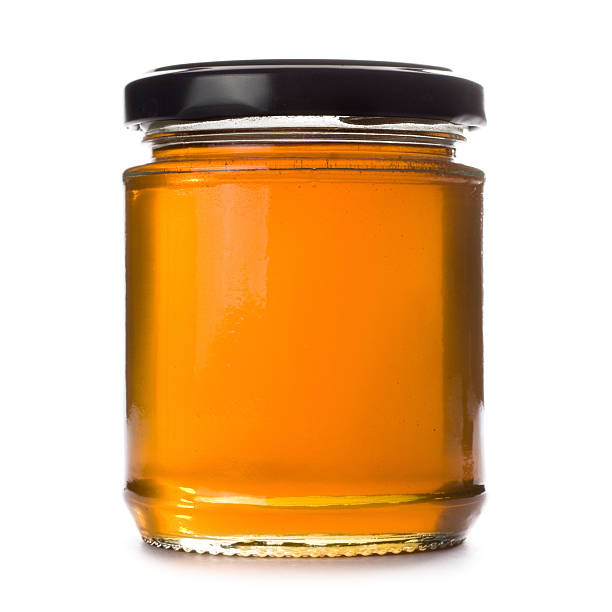
1. Soda-lime Glass
This is the most common food packaging glass and dominates the market.
Advantages:
- Low cost, suitable for mass production
- Good chemical stability
- Suitable for most foods
Applicable Scenarios:
- Beverages (such as juice, carbonated drinks)
- Sauces (such as ketchup, chili sauce)
- Condiments
2. Borosilicate Glass
A high-end glass material with superior performance.
Advantages:
- High temperature resistance, strong thermal shock resistance
- Suitable for microwave ovens and ovens
- More suitable for high-temperature filling
Applicable scenarios:
- High-temperature foods
- Infant food
- Foods that require repeated heating
Bottle Shape and Structure Design
The structure of glass bottles not only affects production but also directly impacts the consumer experience.
1. Bottle Neck Types
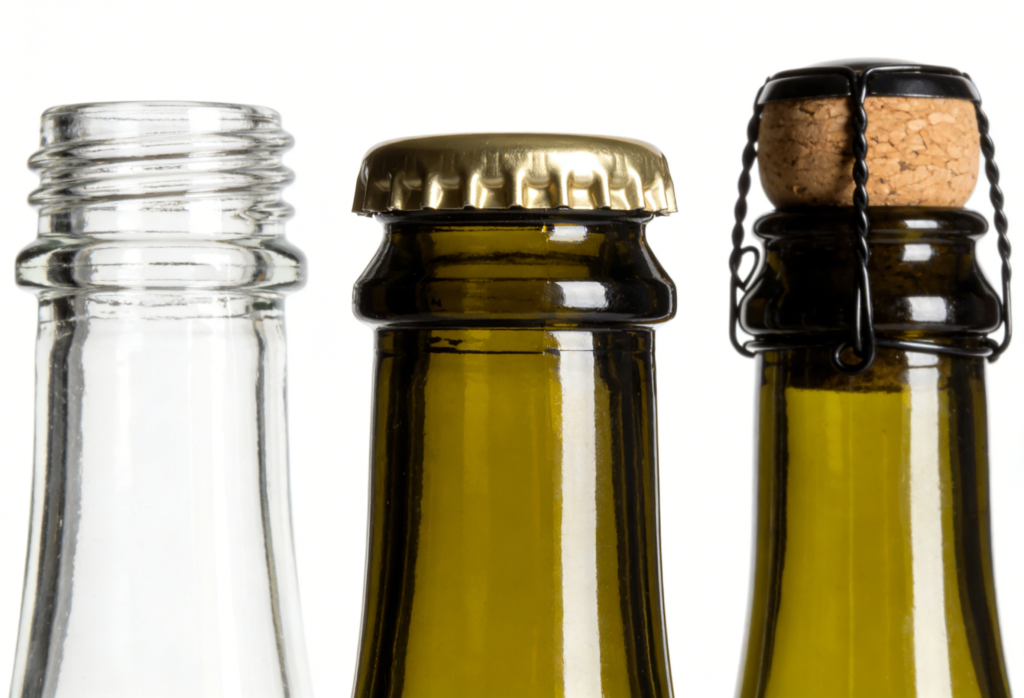
Different bottle necks are suitable for different sealing methods:
- Screw cap: Suitable for most foods, provides a stable seal.
- Crown cap: Commonly used for beer or carbonated beverages.
- Cork: Mostly used for alcoholic beverages.
2. Bottle Design
- Wide-mouth bottles: Suitable for sauces and honey, easy to dispense.
- Narrow-mouth bottles: Suitable for beverages, prevents spills.
- Thick-bottomed bottles: Enhance the sense of luxury (commonly seen in alcoholic beverages).
3. Size Selection
- Small Size (100ml-250ml): Condiments
- Medium Size (300ml-750ml): Beverages
- Large Size (1L and above): Storage Items
Sealing Performance
Many people overlook a crucial point: while glass itself is airtight, the sealing structure determines everything.
Key Considerations:
- Leak-proof
- Whether it supports vacuum sealing
- Whether it is suitable for hot filling
- Whether it prevents oxidation
Recommended pairings:
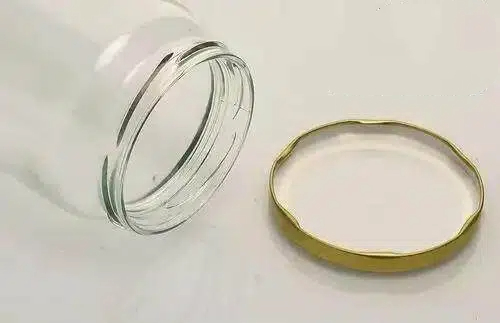
- Metal screw cap (universal type)
- Cap with sealing gasket (high seal)
Durability and Transportation Safety
The fragility of glass is a major pain point in the industry, therefore the following factors must be considered:
- Impact resistance (whether it needs to be thickened)
- Whether it needs tempering
- Whether it is suitable for long-distance transportation
Methods to reduce breakage rate:
- Use divider packaging
- Pallet securing
- Strengthen outer packaging protection
Color and Surface Treatment
Glass bottles are not only containers, but also important mediums for brand display.
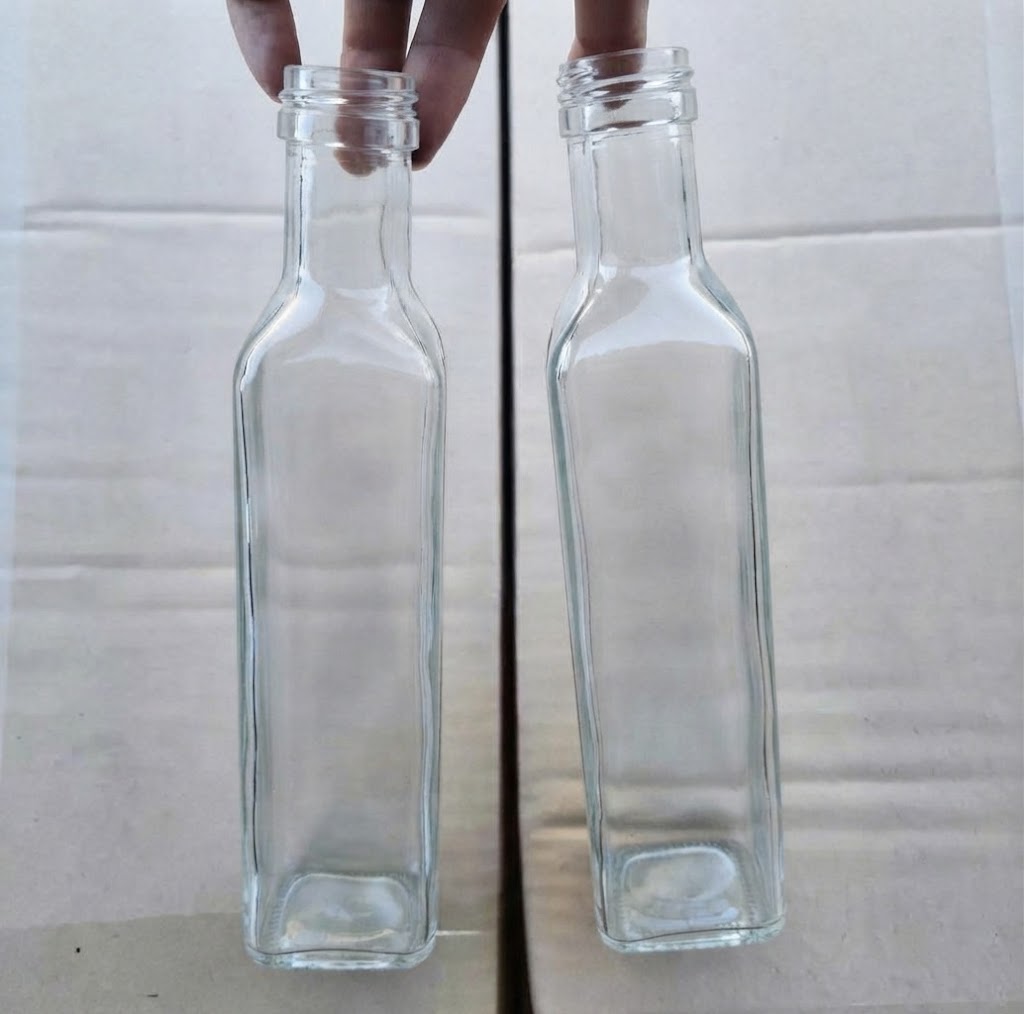
1. Color Selection
| Glass Colors | UV Protection | Reference Cost | Applicable scenarios |
| Clear (White) | None | Lowest | Jelly, honey, sauces, etc. – visual display type products |
| Amber | Strong | Slightly Higher | Beer, oils, light-sensitive beverages |
| Emerald Green | Medium | Medium | Olive oil, red wine, premium seasonings |
| Cobalt Blue | Medium | Higher | Premium mineral water, craft beverages, gift packages |
| Frosted/Spray-coated | Depends on base color | Highest | Premium brand premium-priced products |
2. Surface Finishes
- Silk screen printing (logo printing)
- Hot foil stamping (high-end packaging)
- Spray coating/matte finish (enhancing texture)
Three Questions to Consider Before Purchasing
Question 1: What are the product’s process requirements?
This is a decisive factor in material selection. It needs to be confirmed:
- Is hot filling (filling temperature above 85°C) required?
- Is pasteurization or high-temperature sterilization required?
- Will the end consumer use a microwave or oven for heating?
Question 2: What are the physicochemical properties of the contents?
The bottle shape and color selection process depends on three factors which include acidity/alkalinity and oil content and light sensitivity.
Highly acidic foods (fruit vinegar, acidic beverages): The risk of long-term storage corrosion to the inner glass wall needs to be assessed; borosilicate or thick-walled soda-lime glass is preferred.
Oil-containing products (olive oil, sesame oil): Amber or dark green glass is recommended to effectively block ultraviolet rays and delay oil oxidation.
Photosensitive products (fermented beverages, beer, some condiments) need both colored glass and light-proof packaging.
Question 3: What are the packaging positioning and procurement scale?
This determines whether to pursue standard stock or custom mold making:
Startups/Testing Phase/Small to Medium Batch (less than 10,000 units) should select standard stock bottles because this choice provides them with shorter lead times and eliminates mold fees and decreases operational danger.
Mature Brands/Large Batch (Annual Demand over 100000 units) should develop custom molds to produce exclusive bottle designs which will improve their market presence.
Export customers with special appearance requirements face a single workable solution for their needs because custom mold making serves as the only suitable option which requires them to include the mold cycle duration of 30 to 60 days within their project schedule.