
If you are looking for the right packaging for food, beverages, cosmetics, candles or health supplements, understanding the different types of glass jars is the first step. Glass jars not only protect the products but also enhance the brand image and consumer experience. There are numerous types of glass jars available in the market, ranging from the classic Mason Jar to modern straight-sided jars, each with its own unique purpose. This article will introduce the most common types of glass jars, the applicable industries, and how to choose the appropriate glass jar based on product requirements.
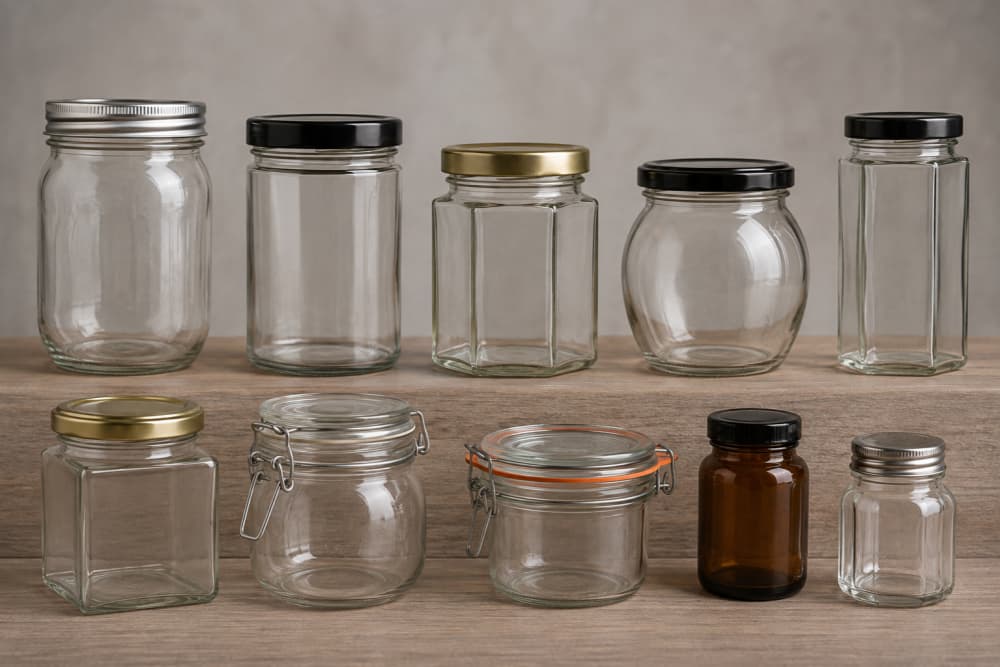
Why Are There So Many Different Types of Glass Jars?
Glass jars are widely used in industries such as food, cosmetics, medicine and household goods. Different industries have different requirements for packaging, so there are various types of glass jars available in the market.
For example, food packaging focuses more on sealing performance and durability, while cosmetic packaging pays more attention to appearance design and brand display effect. For products like honey, jam or sauce, glass jars need to be easy to fill and suitable for long-term storage; for skin care products like face cream and body lotion, they need to be both aesthetically pleasing, portable and have a high-end feel.
In addition to product usage, different filling methods, transportation requirements, shelf display and brand positioning all affect the design of glass jars. Therefore, choosing the right glass jar not only relates to product protection, but also directly influences the purchasing experience of consumers.
Different Types of Glass Jars
Straight-Sided Jars
These types of cans have a basically uniform diameter from the bottom to the top, with almost no shoulder. They have a very regular shape, which is convenient for filling, taking out, attaching labels and stacking. They have become one of the most popular packaging options in the food and cosmetics industries.
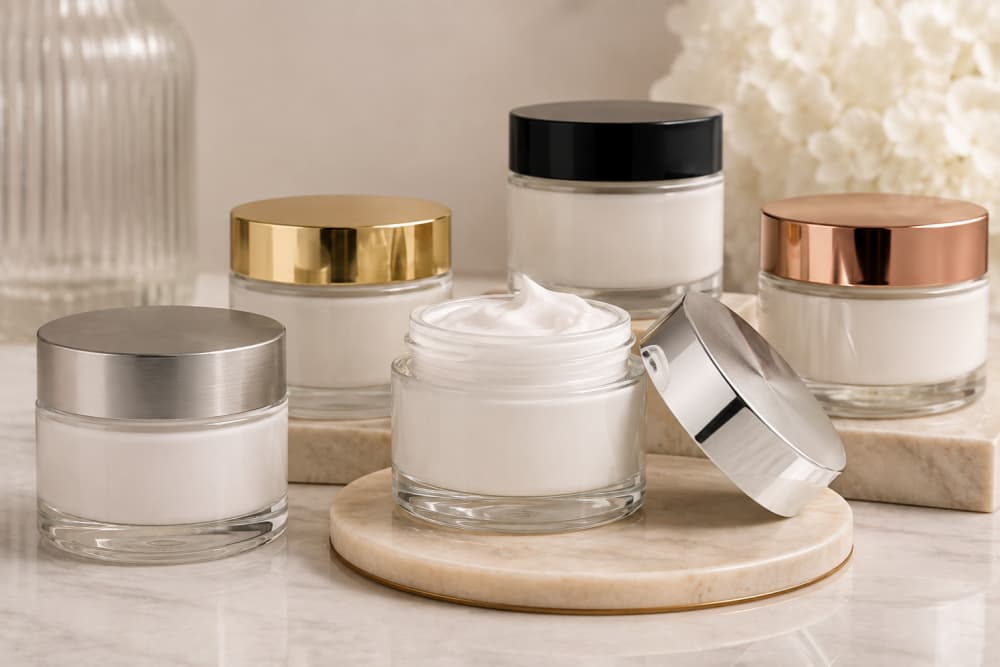
Main features:
- Wide-mouth design, convenient to use
- Suitable for thick products
- Easy to clean and label
- Due to the absence of a shoulder, it is usually more suitable for freezing
Best for: nut butter, face cream, body butter, candles, and any product that needs to be scooped with a spoon. It is very popular in both food and cosmetic packaging.
Mason Jars
The Mason jar is a classic choice for home canning and food preservation. Invented in the 19th century, it features a two-piece lid system: a metal flat-bottomed lid with sealing glue + an independent spiral ring.
Key features:
- There are two types: regular mouth and wide mouth
- Common capacities: 4 oz, 8 oz (half pint), 16 oz (pint), 32 oz (quart), 64 oz
- After proper handling, it can form an excellent vacuum seal
- Durable and reusable (the flat-bottomed lid needs to be replaced each time for canning)
Best for: jam, jelly, pickles, sauces, dry goods storage, as a water cup, and various DIY projects.
Hexagon / Hex Jars
The hexagonal jar has six flat sides, presenting a strong geometric appearance. It stands out prominently on the shelves and is highly suitable for packaging high-end foods.
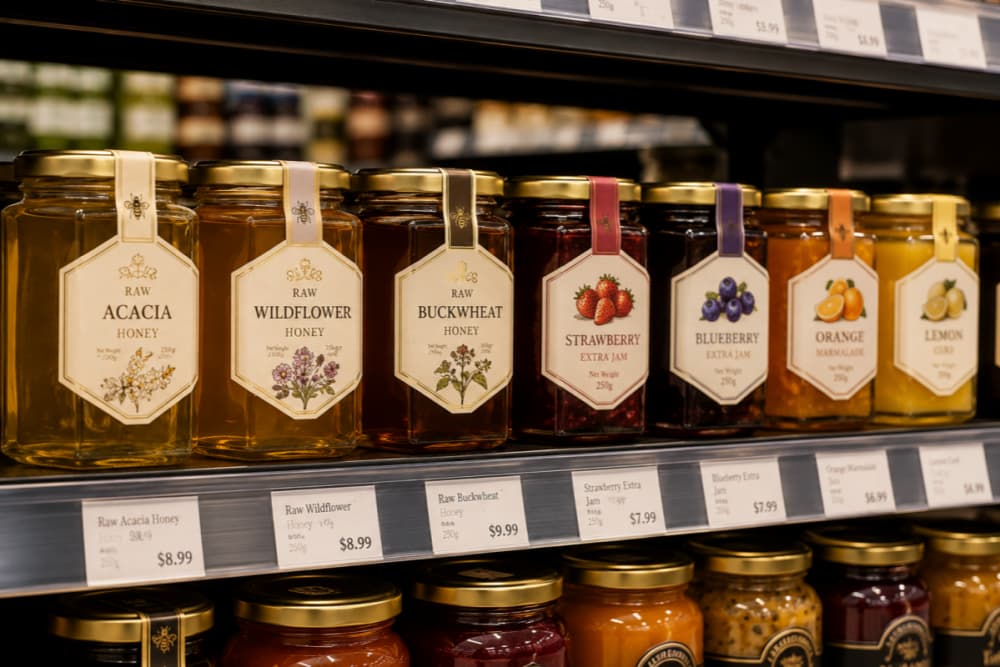
Key features:
- High-end and exquisite appearance
- Flat surface makes it easy to attach labels and is less prone to rolling
- Good grip
Best for: honey, bouquets, chutneys, bath salts, candles and gift wrap. Its elegant shape is highly favored by artisan and premium brands.
Economy Round / Wide-Mouth Round Jars
This is the most common “workhorse” in the food industry. The body is round and the opening is wide. Usually, it uses continuous thread caps or twist caps.
Main features:
- Lower cost
- Wide mouth is convenient for filling and taking out
- Extremely versatile
Best for: mayonnaise, sauces, pickles, dry snacks and everyday storage. The classic “mayonnaise jar” you see is of this shape.
Paragon Jars
Paragong cans are tall and slender, with distinct vertical lines.
Key features:
- Elegant vertical shape
- Makes the contents appear more abundant
- Small footprint
Best for: olives, capers, asparagus, specialty sauces, and decorative storage for slender objects.
French Square / Victorian Jars
These containers are close to square or cubic in shape, with four flat sides.
Key features:
- Good stability of the shelves and high space utilization rate
- The flat surface is very suitable for multi-sided labeling
- Classic and exquisite appearance
Best for: herbs, spices, honey, bath salts and cosmetics. They look neat and beautiful when placed on the shelves.
Kilner / Clamp / Bail-Lid Jars
These types of jars are sealed airtight using rubber gaskets and metal clasps or hinges as the lifting handle. The lids are mostly reusable glass or metal.
Key features:
- Excellent sealing performance and reusable
- Traditional vintage appearance
- Easy to operate the switch
Best for: dry goods (flour, sugar, pasta, coffee), fermented foods, and locker finishing.
Weck Jars
The Weck jars from Germany feature a combination of a glass lid, an elastic ring, and a stainless steel clamp.
Key features:
- All-glass structure (food does not come into direct contact with the metal lid)
- High transparency, excellent display effect
- Components can be reused and recycled
Best for: canning, storing leftovers, displaying dry goods, and creating a clean, modern kitchen aesthetic.
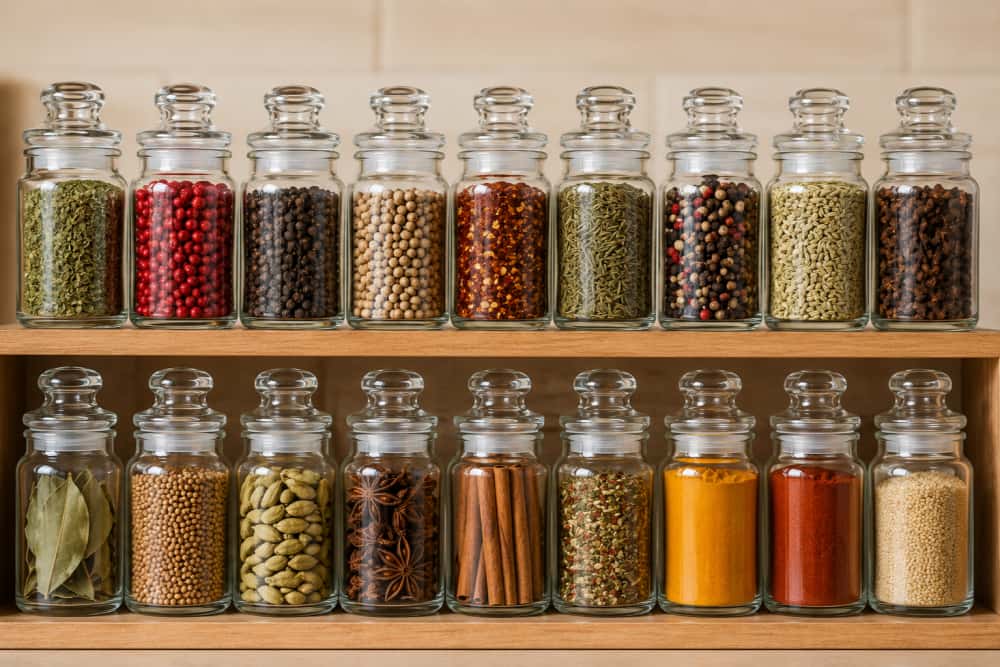
Apothecary and Spice Jars
The medicine jars are usually taller and wider, equipped with glass stoppers or cork stoppers. The spice jars, on the other hand, are smaller versions, mostly cylindrical or slightly square in shape.
Key features:
- Combines both decorative and practical functions
- Easily displays the contents
- Available in options such as transparent, amber, or frosted finishes
Best for: cotton balls, bath salts, cotton swabs, dried herbs, spices, and bathroom or kitchen storage.
Quick Reference Table
| Jar Shape | Main sealing methods | Best Uses | Key Advantages |
| Straight-Sided Jars | Screw cap or twist cap | Face creams, nut butters, candles | Easy to scoop and label |
| Mason Jars | Two-piece metal cap | Canned goods, jams, pickles | Reliable vacuum seal |
| Hexagon / Hex Jars | Twist cap or continuous thread | Honey, gifts, boutique products | High-end appearance |
| Wide-Mouth Round Jars | Twist cap or screw cap | Sauces, everyday storage | Economical and versatile |
| Wide-Mouth Round Jars | Twist cap or screw cap | Olives, long and thin items | Elegant and tall design |
| Victorian Jars | Screw cap or twist cap | Spices, cosmetics, shelf display | High space utilization and easy labeling |
| Kilner / Clamp / Bail-Lid Jars | Rubber ring + metal clip | Dried goods, fermented products | Reusable airtight seal |
| Weck Jars | Glass cap + clip | Canned goods, display storage | All glass, aesthetically pleasing |
| Apothecary and Spice Jars | Glass stopper or lid | Display, spices, bathroom storage | Highly decorative and practical |
How to Choose the Right Glass Jar
When choosing glass jars, one should take into account the product characteristics, packaging requirements and brand positioning, rather than just focusing on the appearance.
Firstly, the product type needs to be determined. For example, liquid foods, granular foods, skin care products and health supplements have different requirements for the capacity, diameter and sealing performance of glass jars. Secondly, the appropriate size and structure should be selected based on the filling process and transportation method to improve production efficiency and reduce transportation losses.
For enterprises that aim to establish a brand image, custom glass jars are also a worthy consideration. By customizing the bottle shape, logo, screen printing, spraying, frosted or embossed and gold stamping processes, a packaging with brand recognition can be created and the product value added can be enhanced.
Collaborating with experienced glass jar manufacturers can also provide suggestions on sizes, capacities and packaging solutions based on market demands, helping enterprises obtain more competitive packaging solutions.
Summary
Understanding different types of glass jars enables you to make precise choices based on your actual needs – whether it’s for preserving summer harvests, organizing storage cabinets, packaging homemade products, or adding style to your home. Mason jars remain the gold standard for canning, while straight-sided jars, hexagonal jars, and various specialty jars perform well in other scenarios.
Glass is durable and recyclable, and it avoids many of the problems associated with plastic. By choosing the right type and maintaining it properly, your glass jars can last for many years.