
The choice of the vase becomes very important in deciding the ambience created in home decorations and flower arrangements. Ceramic and glass vases are the two most common types of vases used nowadays. People usually find themselves in trouble making a choice whether to go for a ceramic vase or a glass one while buying. The ceramic vase is popular due to its durable design and colorful texture, whereas the glass vase is famous for its transparent appearance.
So, what is better – ceramic vase or glass one? In fact, there is no one and only universal answer to this question. Everything will depend on the flowers, design of the interior, stability of the vase, and other factors.
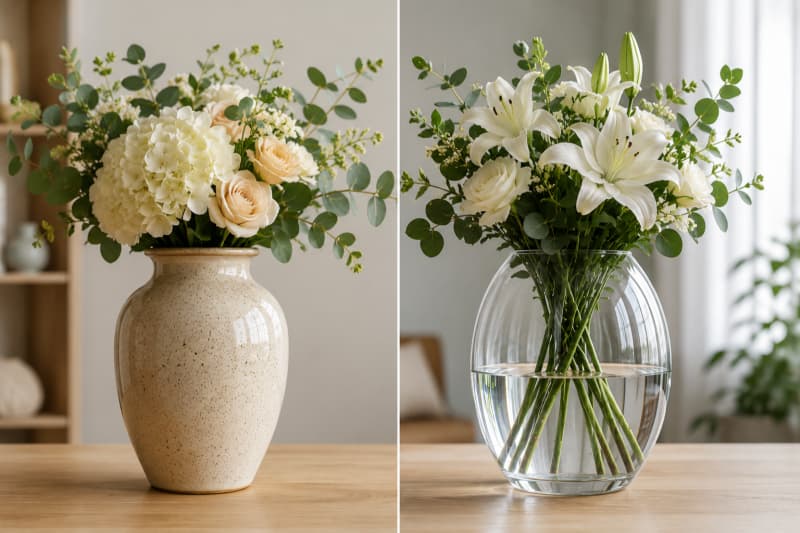
Ceramic vs Glass Vases Material and Manufacturing Overview
Vases made of ceramics usually consist of clay and fired in high temperatures. There are several types of ceramic vases such as earthenware, stoneware, and porcelain. Various types of glazing can be used for the surface of the vase, making them matte, glossy, crackled glaze, or hand-painted. The major qualities of ceramic vases are their opaqueness and thickness that creates warmth and artistic feeling of the space.
Vases are made of glass by blowing or pressing. These can be made of common soda-lime glass, more heat resistant borosilicate glass, and blown by hands glass. Glass vases are mainly transparent or translucent with high light transmission and modern appearance.Difference in raw material and process of production determines the difference in look and purpose of these objects.
Ceramic vs Glass Vases at a Glance
In order to make the comparison more intuitive, we first use a table to present the main differences:
| Comparison Dimensions | Ceramic vase | Glass vase |
| Appearance and Style | Warm, artistic, with a strong sense of vintage or traditional style, capable of hiding the stem and fixing the structure | Transparent, modern, and simple, it can perfectly display the flower stems and the water surface. |
| Weight and Stability | Heavier, with a stable center of gravity, less likely to tip over | Lightweight, easy to move, but slightly less stable. |
| Durability and Safety | More resistant to impact, with fragments being relatively less sharp when broken, but may have chipped edges | More prone to cracking, especially for ordinary glass; high-quality borosilicate glass is better at withstanding thermal shock. |
| Impact on Flowers | Good at blocking light, reducing algae growth, and having good heat retention; ensure the inner wall is glazed | It allows you to observe the water level and water quality at any time, is easy to clean thoroughly, but the transparency is prone to causing algae growth. |
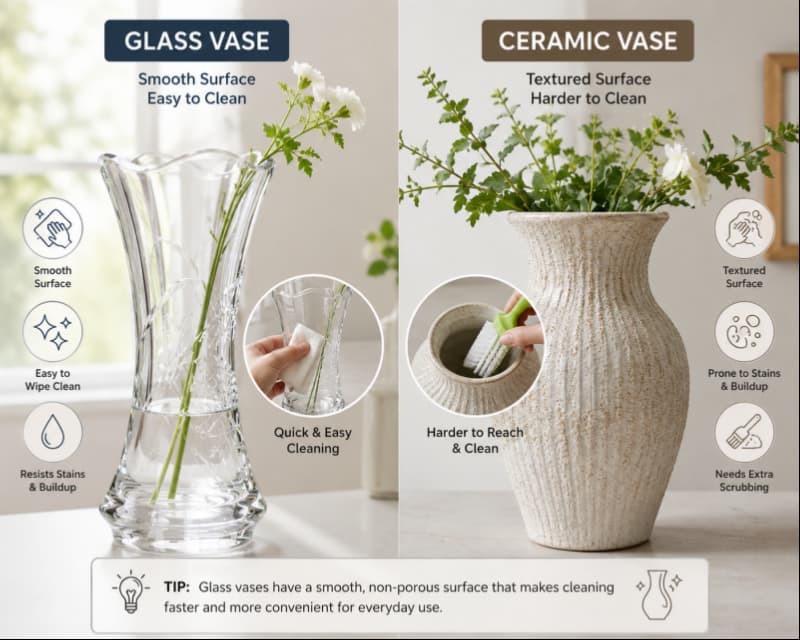
| Cleaning and Maintenance | The inner wall with textures or not fully glazed is more difficult to thoroughly disinfect | The surface is smooth, easy to clean, and stains are clearly visible. |
| Price Range | Handcrafted art models are higher, while ordinary models are in the upper-middle range | The regular model is more affordable, while the hand-blown model can be very expensive. |
1. Aesthetic and Style Compatibility
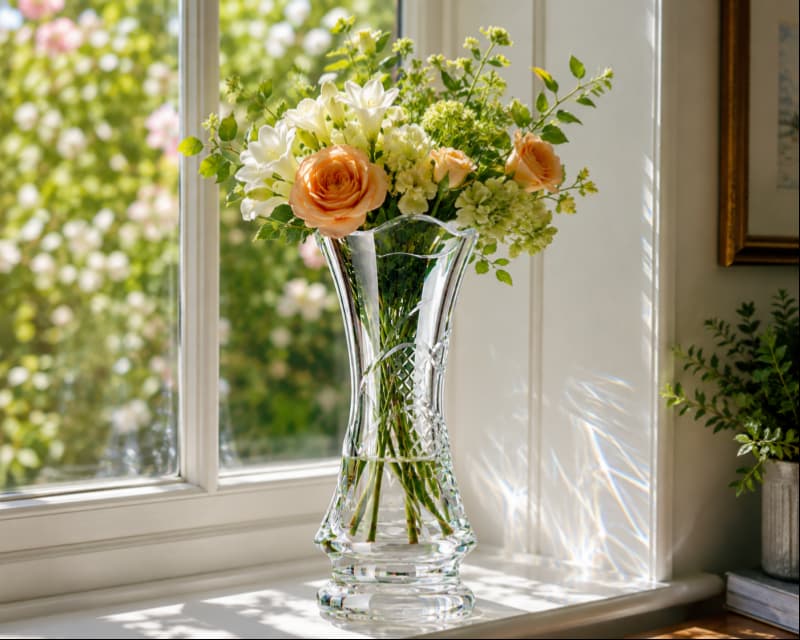
With its varied glaze colors, textures and hand-made markings, the ceramic vase is appropriate for the creation of a warm, artistic or traditional ambience. It is capable of concealing untidy flower stalks and fastening materials, thereby improving the appearance of the flower arrangement. The glass vase is focused on being transparent and light. Light rays that pass through the bottle generate a refraction effect; hence, this type of vase is appropriate for modern and minimalist designs or simply highlighting the flowers themselves.
2. Function and Flower Preservation
The impermeable characteristic of glass flower vases prevents any development of bacteria within it and enables easy observation of water-levels, thus, providing timely water renewal, which will be more useful for flower conservation. The flower vase made from ceramics has good light-proofing quality, minimizes the development of algae, and maintains a more stable water temperature. Nonetheless, only the vases with the entirely glazing inside should be selected because otherwise, the water might leak out or develop any bacteria.
3. Durability and Daily Use
Ceramic vases are kind of heavy, and they feel more stable too, so they are less likely to get knocked over during everyday use. Glass vases, on the other hand are lighter, but they break more easily, particularly in homes with kids or pets, so you really need that bit more carefulness. In both cases, you should keep them away from strong impacts and sudden shifts in temperature, no matter what.
4. Cleaning and Maintenance Costs
Glass vases are kinda the easiest to clean since the scale buildup and even those stains are visible, like right there. With ceramic vases though it is a bit more tricky especially if the inside walls are patterned or sort of unglazed. And yeah, after extended usage, disinfection turns into a really important task, not just a quick step.
5. Price and Value for Money
Ordinary glass vases are usually a bit cheaper, and often more suitable for everyday use, like, daily life. Ceramic vases though, they can sit in a wider price bracket, from budget-friendly mass produced kinds to high end handmade art pieces, and there‘s also a higher artistic value overall.
Which Vase Is Better for Different Uses?
When choosing a vase, the context is often more important than simply comparing materials. Here are some recommendations for common usage scenarios:
- Fresh-cut flowers: Glass vases are the first choice, allowing for easy monitoring of water levels and quality, timely water changes to maintain freshness, and highlighting the natural appearance of the flowers; ceramic vases should have a fully glazed interior for frequent cleaning.
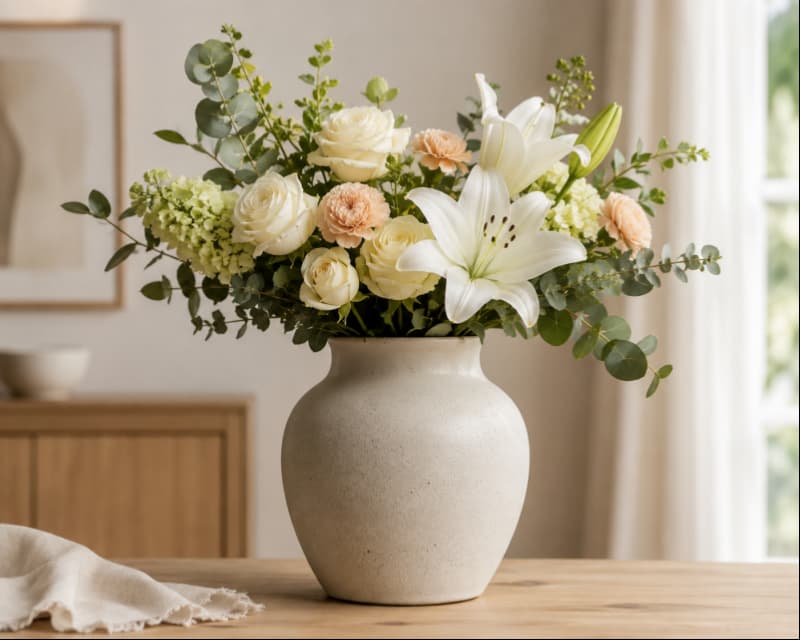
- Dried flowers/artificial flowers: Ceramic vases are the first choice, as their opacity conceals stems, foam, and wires, preventing any visible flaws and giving a high-end feel; glass vases easily expose the internal structure, resulting in a less appealing look.
- Modern/Nordic/Minimalist home decor: Glass vases are preferred, offering transparency and simplicity, suitable for windowsills and open kitchens, maintaining a light and airy feel in the space.
- Areas with children, pets, or high foot traffic: Ceramic vases are the best choice, as their weight and stability make them less likely to tip over, reducing the risk of breakage; glass vases should be placed at a higher position.
- 360° floral display on the dining table: Ceramic vases are the first choice, concealing the fixed structure at the bottom and maintaining a clean look from all angles; glass vases are suitable for highlighting the light and airy feel of the flower stems.
- High-light locations on windowsills and balconies: Glass vases offer excellent light refraction, but direct sunlight can easily lead to algae growth, requiring frequent water changes; ceramic vases provide shade and temperature control, resulting in less algae growth and making them suitable for long-term display.
- Commercial/Event/Retail Displays: Glass vases are ideal for weddings and pop-up stores, emphasizing a transparent and modern feel; ceramic vases are suitable for high-end art settings, concealing complex floral arrangements.
- Frequent relocation and temporary placement: Lightweight glass vases are preferred for easy transport and storage; ceramic vases are heavier and better suited for long-term, fixed-location displays.
Quick mnemonic: If you want to “see the flowers,” choose glass; if you want to “see the bottle” or hide the structure, choose ceramic; if you prioritize stability and texture, choose ceramic; if you prioritize transparency and ease of cleaning, choose glass.
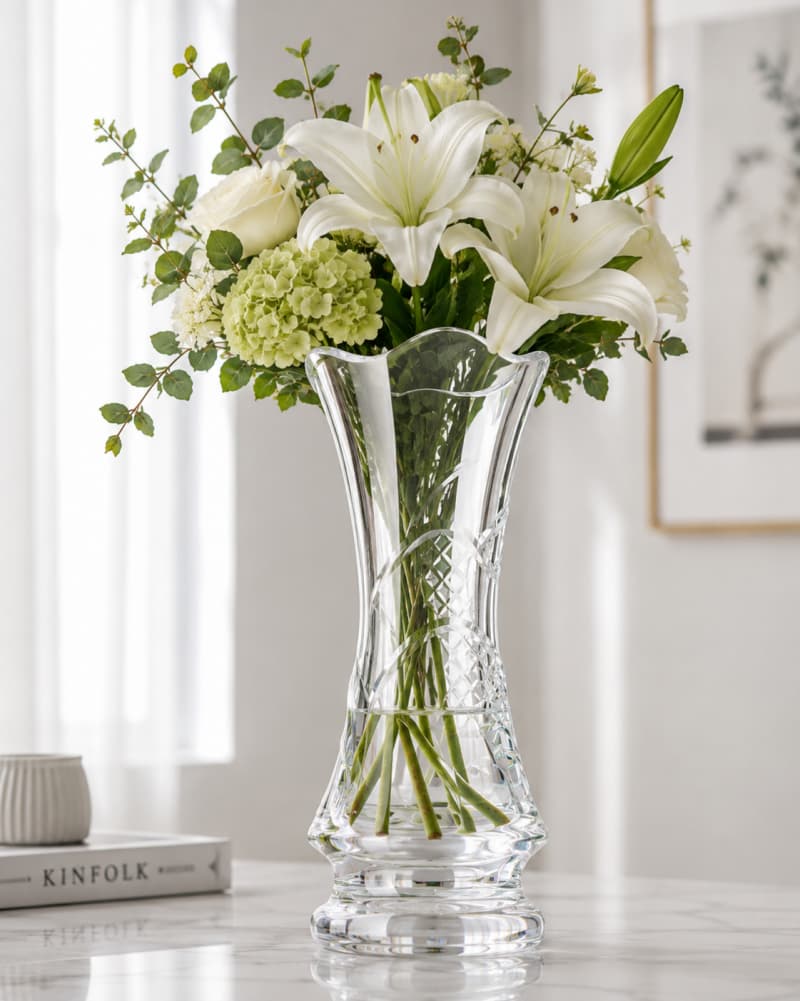
How to Choose Between Ceramic and Glass Vases
If your home has a modern minimalist style, you frequently display cut flowers, and you prefer easy maintenance, glass vases are a more practical choice.
If you prefer a traditional or artistic atmosphere, use more artificial flowers, or need more stable placement, ceramic vases are more suitable.
For families with children or pets, prioritize the safety and stability of ceramic vases.
When on a limited budget and needing to have several vases, ordinary glass vases offer better value.
Ideally, have some of both: glass for everyday fresh flowers and ceramic for decoration or special occasions, switching flexibly depending on the flowers and your mood.
Regardless of your choice, please note: Ensure ceramic vases are glazed inside to prevent water seepage; avoid sudden temperature changes for glass vases; and ideally, place a protective pad at the bottom to prevent scratching furniture.
Conclusion
There is no absolute superiority or inferiority between ceramic vases and glass ones, it‘s more like they’re both good , just in slightly different ways. In a sense ceramics bring warmth, texture, and that little artistic touch , while glass gives transparency, lightness and a pretty practical feel. So the best vases are the ones that really fit you—your home style, how you use them, and what kind of look you prefer.