
You pick up a red wine glass and a white wine glass. They look almost identical, right? Same stem, same basic silhouette. But pour a wine into each, and something interesting happens. The way the aroma hits you, the way the temperature holds, even the way that first sip lands on your tongue, all of that shifts. It’s not magic. It’s geometry.
If you’re shopping for home, or if you’re a buyer for a restaurant, a winery, or a beverage brand, this isn’t just trivia. The right glass doesn’t make a bad wine good, but it does let a good wine show its best self. And in a commercial setting, it also telegraphs that you care about the details. So understanding the real differences between red wine glasses vs white wine glasses is worth your time.
Red Wine Glasses vs White Wine Glasses: What’s the Difference?
Let’s cut to the chase. Here are the 8 core differences, laid out side by side. No flavor chemistry yet, just the physical facts.
| Feature | Red Wine Glasses | White Wine Glasses |
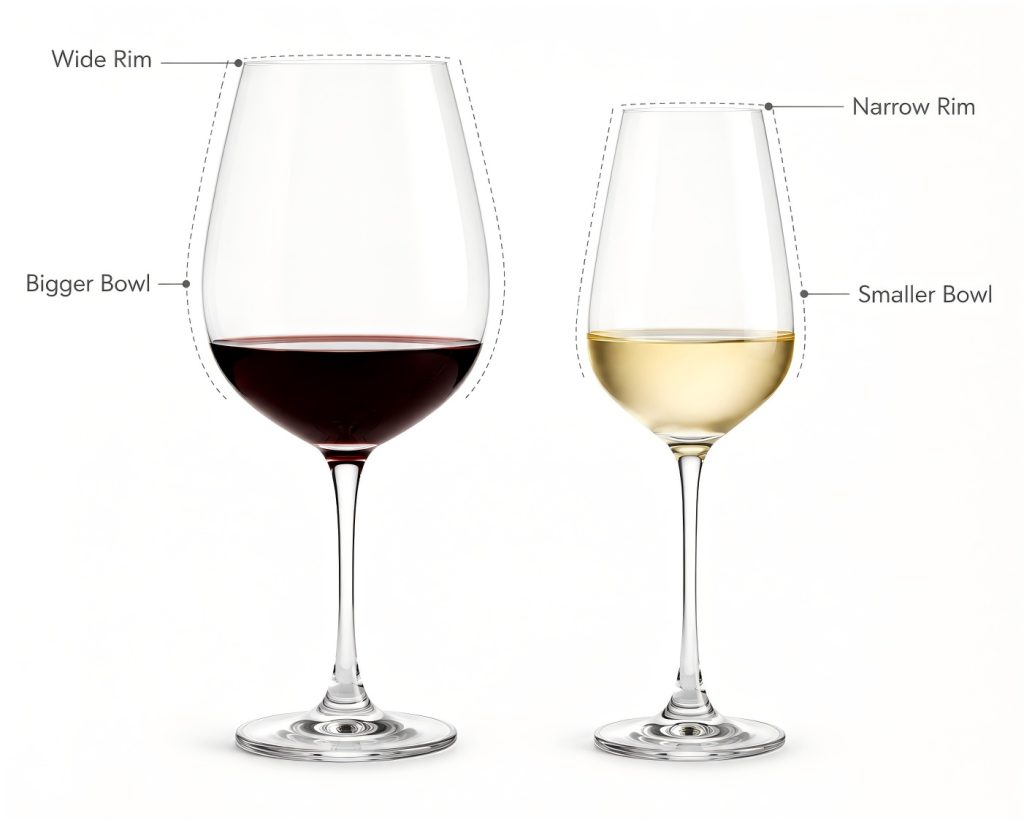
| 1. Bowl Size | Large, wide, rounded – like a small globe | Smaller, narrower, more U-shaped – like a tulip bud |
| 2. Rim Diameter | Wider, more open | Narrower, curving inward |
| 3. Rim Shape | Fairly straight edge, lets vapors escape freely | Slightly tapered, traps delicate aromas |
| 4. Headspace | Roomy – lots of air above the wine | Compact – less air, slower dissipation |
| 5. Serving Temperature | 60°F–65°F (15°C–18°C), cool cellar temp | 45°F–55°F (7°C–12°C), properly chilled |
| 6. Best Wines | Cabernet, Merlot, Pinot Noir, Syrah, etc. | Chardonnay, Sauvignon Blanc, Riesling, Rosé |
| 7. Typical Capacity | 18–24 oz | 8–12 oz |
| 8. Typical Feel | Generous, substantial in hand | More delicate, refined |
Why Are Red and White Wine Glasses Designed Differently?
You might think it’s all about tradition, but there’s actual science behind every curve. Red and white wines are chemically different, and the glass is there to handle those differences.
The Big Bowl: For Bold Reds and Tannins
Most red wines ferment with the skins. That’s where the tannins and color come from. So reds tend to be bigger, bolder, and packed with complex aromatic compounds that need room to stretch out.
That’s where the big bowl comes in. More surface area means more air contact. Those volatile molecules get space to evaporate and gather. And if you’ve ever looked at wine glass sizes, you’ll notice red glasses are consistently larger – and that’s not a coincidence. They’re also built to work with specific wine bottle design size and shape, like the classic Bordeaux bottle, which pours a certain way. And that extra air? It doesn’t change the tannins chemically, but it does soften their grip on your palate. The wine feels rounder.
The Small Bowl: Keeping Whites Cool and Fresh
White wines are a different animal. They’re pressed off the skins before fermentation, so they have little to no tannins. What they do have are delicate esters – those bright, floral, citrusy notes that are incredibly fragile. Too much heat or too much oxygen, and they’re gone.
So the small, narrow U-shaped bowl isn’t an accident. It limits air exposure, which slows down warming. It keeps that crisp chill locked in. At the same time, it stops those light aromas from blowing off before you even get your nose in the glass. You actually smell the wine, not just the alcohol.
Wide vs. Narrow Rim – A Small Detail That Matters
Let’s talk about the rim, because it changes how you experience the wine.
A wide red wine rim balances airflow. It lets alcohol vapor escape sideways, so you don’t get that harsh burn straight up your nose. It’s a comfort thing.
A narrow white wine rim works like a funnel. It traps those subtle scents and channels them right where they need to go. Without that, the delicate citrus and floral notes might never reach your nose at all.
Why Both Have Stems (and Why That’s Not Just for Show)
You’ve probably noticed both types have a stem. That’s not a stylistic quirk. It’s practical.
One: holding the stem keeps your hand heat (around 36°C–37°C) away from the bowl. Two: it gives you a proper pivot for swirling, so you don’t slosh wine everywhere. Three: no fingerprints on the bowl, so you can actually see the wine’s color clearly. Smudges ruin that.
How Glass Shape Changes the Taste of Wine
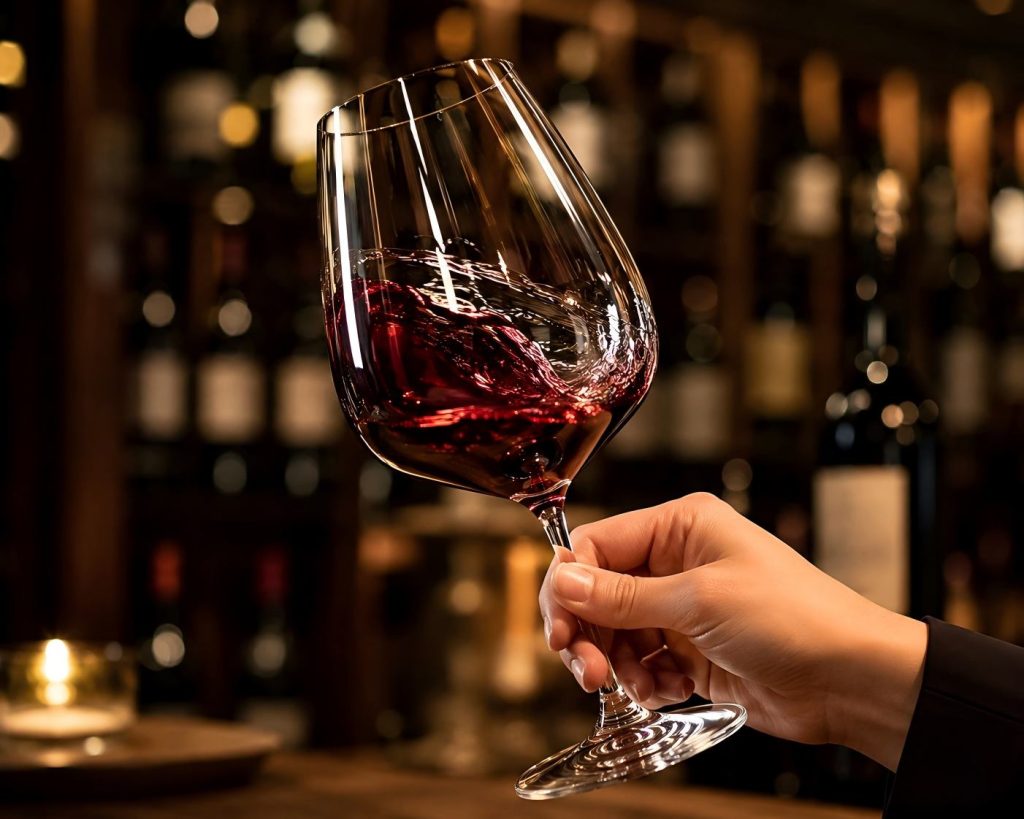
Okay, so we know the shapes differ. But how does that translate to the actual drinking experience? It happens in three stages: smell, breathe, sip.
Step 1: Headspace and Aroma Buildup
Headspace is the air between the wine and the rim after you pour. Simple as that.
When you hear people say a red wine “opens up,” they’re talking about headspace. That big bowl creates a big pocket of air. So all those oak, smoke, leather, and dark fruit aromas have room to layer up. Each compound rises at its own speed, so you get a complex, evolving scent.
White wine glasses keep headspace tight. Less air means those fragile floral and citrus notes stay concentrated. Instead of scattering, they get delivered straight to your nose in a focused burst. Intense and precise.
Step 2: Air Exposure and How It Changes Perception
A bigger bowl means more oxygen contact. That helps full-bodied reds show their full aromatic range. It’s like letting the wine breathe.
Now, a myth: people think oxygen changes tannins. It doesn’t. Tannins are stable. What actually happens is that the extra air shifts your perception of them. The wine feels less astringent, more rounded, because the aromatics and texture balance differently.
White glasses do the opposite. They limit oxygen, which slows unwanted oxidation. That keeps the zesty fruit and crisp acidity intact, exactly the qualities that make whites so refreshing.
Step 3: Fluid Dynamics – How the Wine Hits Your Tongue
Ever notice how some wines spread out and others hit a specific spot? That’s the rim shape at work.
With a wide red glass, you barely tilt your head. The wine comes in as a flat, broad stream. It spreads across your whole palate, which distributes tannins evenly and avoids that puckered, dry feeling in one spot.
With a narrow white glass, you tilt a bit more. The wine flows as a narrower, faster stream, landing toward the front and middle of your tongue. That direct hit really highlights sweetness and acidity, which are the main attractions in most whites.
Which Wines Match Each Glass?
Rule number one: reds go in red glasses, whites go in white glasses. That’s your starting point.
| Wine Type | Best Glass | The Reason |
| Cabernet / Merlot | Red Wine Glass | Needs the bowl and headspace to develop aroma and soften tannin feel. |
| Chardonnay / Sauvignon Blanc | White Wine Glass | Smaller bowl keeps it chilled and limits oxygen exposure. |
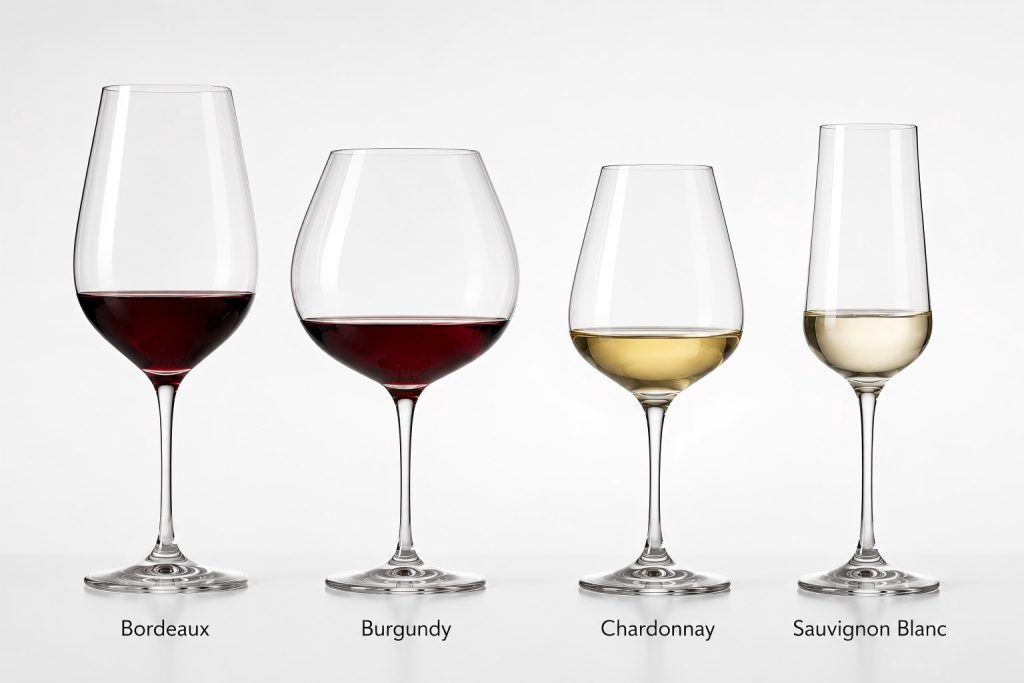
Once you’ve got that, you can go deeper. Here are a few classic sub-styles.
Bordeaux Glass – This tall tulip-shaped red glass offers large capacity. The height prolongs the path from wine to lip for more gentle alcohol and tannin delivery; perfect for Cab and Merlot wines.
Burgundy Glass – Another red glass, but this time with an extra-wide bowl and narrow rim. Pinot Noir is well known for being light-bodied, low tannin and highly aromatic – and this wide bowl captures all those delicious aromas with ease! Strawberries, cherries and earth are held by its narrow rim until sip time!
Chardonnay Glass – Chardonnay wines require wider-than-usual white glasses in order to showcase its array of aromas such as vanilla, butter and toast.
Sauvignon Blanc / Riesling Glass – Tall, narrow and nearly upright to preserve cold temperatures while dispensing citrus and green apple aromas upward.
And yes, there are flutes for sparkling and tulips for dessert wines – but that’s another conversation.
Can You Use One Universal Glass for Both?
Absolutely. If you’re only buying one set for home, a good universal glass is often the smartest, most practical choice.
It’s positioned somewhere between a Bordeaux and a white glass. Medium bowl, slightly tapered rim. The idea isn’t to maximize any one wine, but to perform decently across many.
At home and restaurants alike, the advantages are clear: fewer glasses to store and no need to change out every time a different bottle opens; for restaurants it reduces breakage, inventory costs and dishwasher cycles.
Serious wine tastings or blind competitions require glasses with distinctive bowl shapes, as they produce the necessary layers of intensity in a high-end vintage wine. Otherwise, their physics won’t give off enough visual drama.
Most people find their ideal solution is one which balances performance, space, and cost considerations.
How to Choose the Right Wine Glass
Your choice really depends on who you are and what you need. Here’s a breakdown.
1. For Everyday Home Use
Go for durability. Medium-thickness glass, slightly sturdier stems, or even stemless. They don’t tip over easily, and they can survive the dishwasher without drama.
2. For Wine Enthusiasts and Tastings
If you’re serious, invest in lead-free crystal. It’s clearer, so you can appreciate color and clarity. Plus, you can get it thinner – especially with laser-cut rims. That seamless lip feel adds a lot to the ritual.
3. For Restaurants and Hotels
This is operational gear. It needs to look premium but hold up under constant use. Look for tempered glass, especially around the stem-base joint – that’s where breakage usually happens. Also, high-purity glass that resists water spots will look sharp under your lighting.
4. For Wine Brands and Wineries
Custom glassware is about more than just looks. Ask your manufacturer about:
OEM & ODM – can they make a custom mold for your wine?
MOQ flexibility – do they handle both bulk and small test runs?
Decoration – laser engraving, high-temp decals, pour lines?
Lead time – are they reliable on delivery?
5. For Wholesale, Retail, and Gift Markets
Packaging is your added value. Look for suppliers who offer complete gift box solutions – custom rigid boxes, two-glass sets, holiday themes. Those sell especially well during wedding season and Christmas.
Conclusion
One last thought. Although glass shape can influence aroma concentration and wine presentation, the wine itself remains the primary factor determining overall flavor quality. No glass can turn a mediocre wine into a great one. But the right one can definitely help a great wine express itself better.
Two simple rules cover 90% of your decisions:
- Big bowl → more air, more aroma space → great for bold, tannic reds.
- Small bowl → cooler temperature, tighter aroma focus → great for crisp, aromatic whites.
At the end of the day, the ideal glass is one that perfectly encapsulates both your tastes and wine consumption habits.
Commercial buyers understand that shape is only one consideration – consistent quality, flexible customization, and reliable production are equally as essential – so having the right partner makes all the difference.
If you’re seeking suppliers for your restaurant, winery, or retail brand, it is wise to work with manufacturers who understand both art and science in terms of production. Hengjing Glass offers a full range of services – from 3D design and laser decoration to precision mold making – all aimed at helping your brand stand out in a crowded market.