In the cosmetics and skincare products industry, packaging plays a very important role. Compared to ordinary daily items, skincare product packaging usually needs to meet multiple requirements such as product protection, ease of use, and brand image presentation. The right glass bottle not only helps protect the product formula but also improves the user experience and strengthens the brand positioning.
Customized glass bottles are not just about “looking good enough”. Choosing the wrong material, bottle mouth or process can, at the very least, affect the user experience, and at the worst, cause the contents to deteriorate or reduce production efficiency. This article will systematically summarize the selection key points for customized glass bottles for the three most common products – essence, cream, and essential oil – to help brand owners and purchasers make more accurate decisions.
Choosing Glass Bottles Based on Product Type
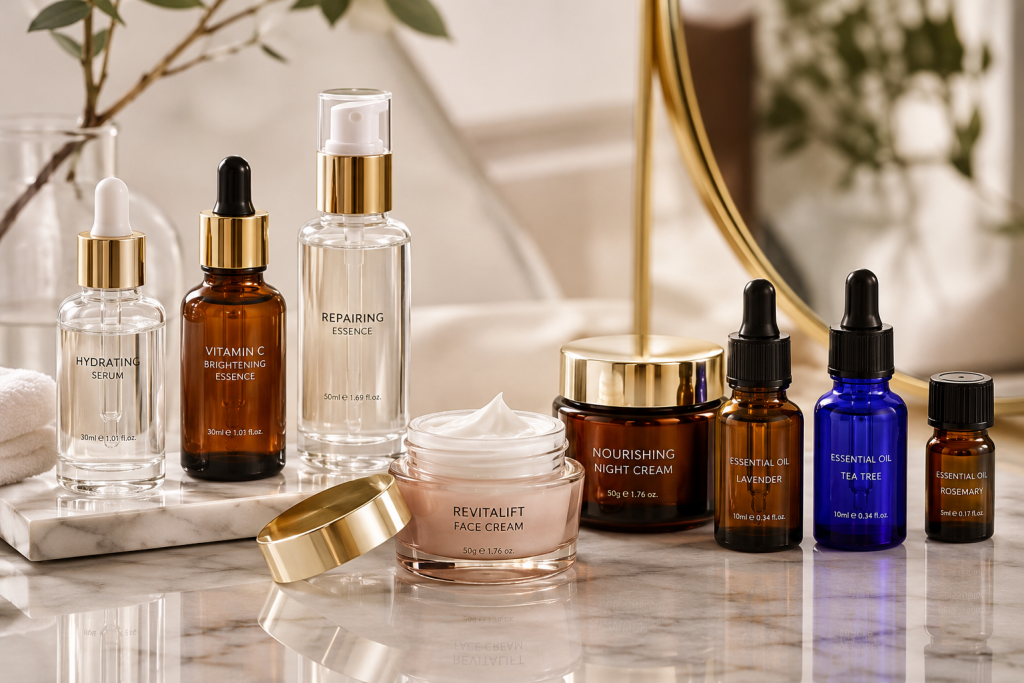
Different cosmetics have different packaging requirements. A glass bottle suitable for an essence liquid may not be suitable for essential oil or face cream.
Serum Bottles
Essence liquid usually has a high concentration and a small single usage amount, so it has high requirements for the sealing property of the packaging and the convenience of taking it out.
- Common capacities: 15ml, 30ml, and 50ml are the most common.
- Matching methods: Dropper or press pump are the most common, and the precision of the bottle mouth must be perfectly matched with the dropper/pump head.
- Color selection: Transparent bottles can display the texture of the essence liquid and enhance the sense of sophistication; if the ingredients are sensitive to light, consider using a brown color or a partial light-blocking design.
For high-end skincare brands, the weight, proportion, surface texture and grip feel of the glass bottles also influence consumers’ perception of the product’s value.
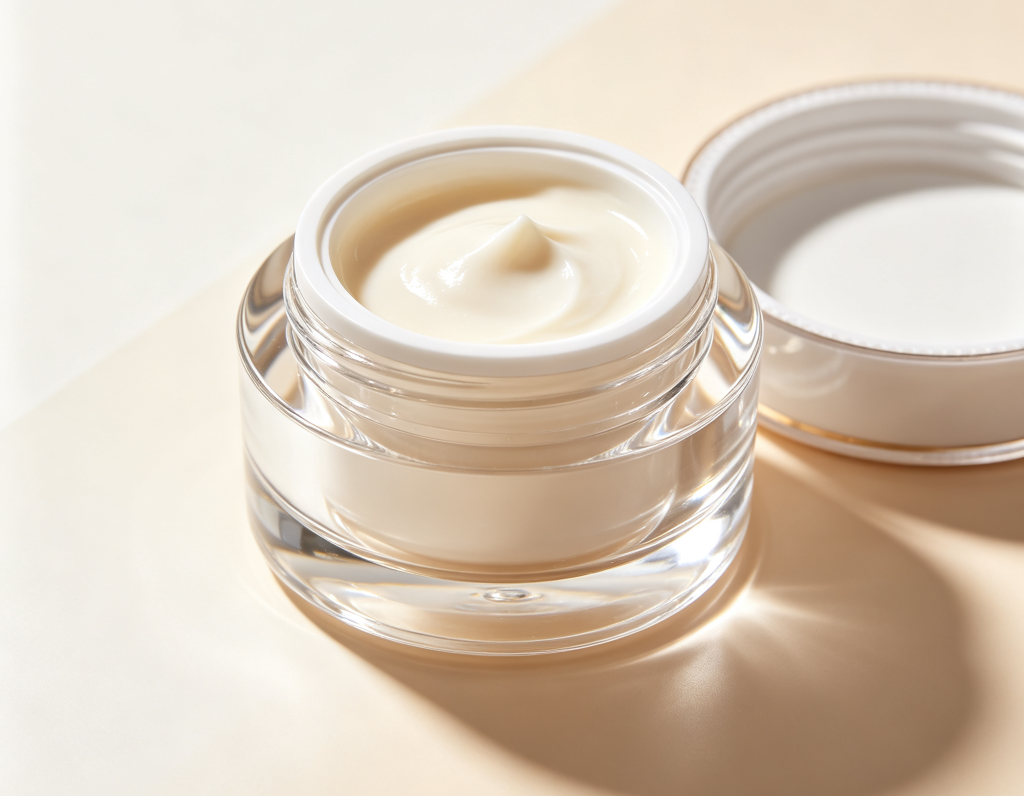
Cream Jars
Moisturizing cream needs to be easily accessible for application with fingers or a spatula, so the wide-mouth design is the prevailing choice.
- Common capacities: 30g, 50g, 100g.
- Structural highlights: Double-layered cap (outer cap + inner cap) or design with sealing gasket, which can effectively prevent the cream from oxidizing and drying out.
- Wall thickness and weight: Appropriate wall thickness can enhance the sense of heaviness and pressure resistance, aligning with the positioning of high-end face creams.
- Usage experience: The center of gravity of the bottle should be stable, the opening should be smooth, and the inner wall should be as smooth as possible for easy scraping.
For high-end skin care products, thick glass bottles can be used in combination with processes such as sandblasting, spraying, embossing or metal decoration, to create a distinctive appearance without the need for complex and irregular-shaped bottles.
Essential Oil Bottles
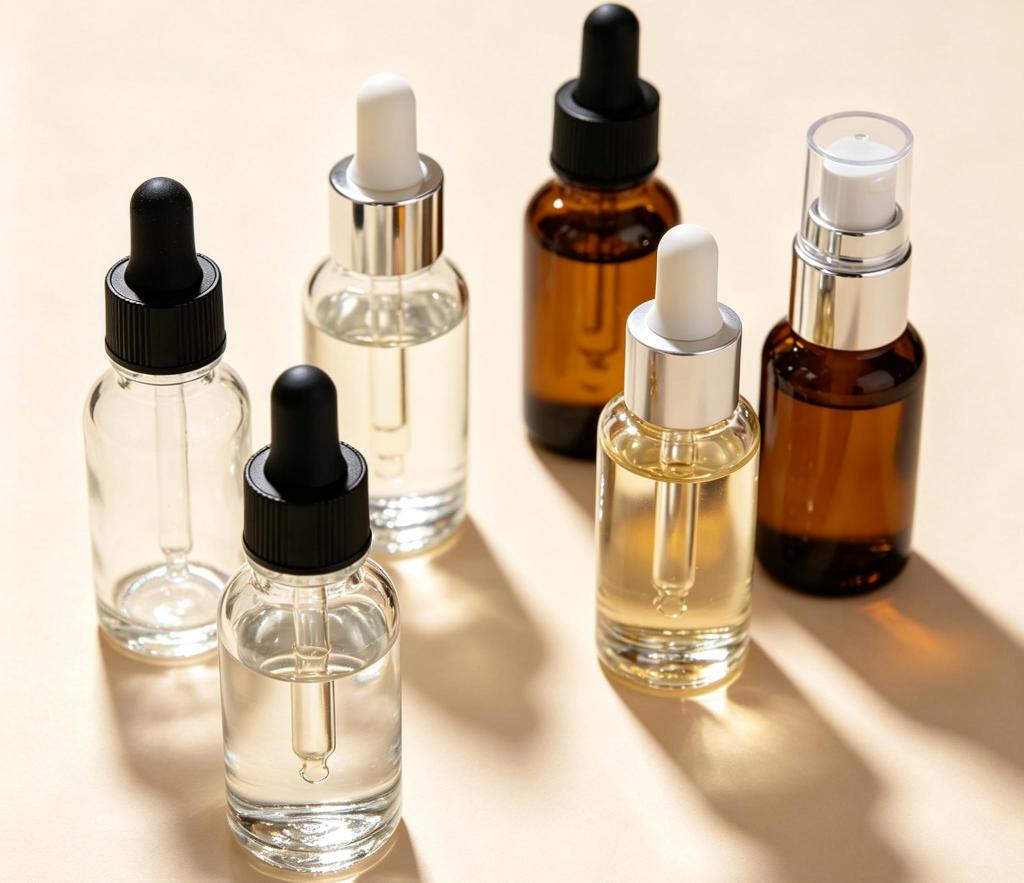
Essential oils are sensitive to light and oxygen, and their chemical composition is complex. They have the strictest requirements for the light-blocking performance of glass.
- Common capacities: 5ml, 10ml, 15ml, 30ml.
- Light-blocking is crucial: Brown (amber) and cobalt blue are the mainstream choices, which can effectively filter ultraviolet rays.
- Material requirements: Preferentially choose high-white material or neutral borosilicate glass with better chemical stability to reduce the risk of reaction with essential oils.
- Companion items: Dropper or ball-shaped tip are the main options, and the bottle mouth sealing must be reliable to prevent evaporation.
Key Factors When Choosing Custom Glass Bottles
Beyond the product category, several general factors should be evaluated before selecting a custom glass bottle.
1. Material Selection
- Sodium calcium glass: Low cost, acceptable transparency, suitable for most ordinary cosmetics.
- High white material glass: Higher transparency, better texture, commonly chosen for mid-to-high-end skincare products.
- Borosilicate glass: Superior thermal stability and chemical stability, suitable for products that are sensitive to contents or require higher heat resistance.
Cosmetic-grade glass must ensure compliance with relevant safety contact standards to avoid the risk of heavy metal leaching.
2. Capacity and Bottle Design
The capacity should be in line with the product’s positioning and usage habits. The proportion of the bottle body directly affects the visual effect and grip: overly tall bottles tend to appear unbalanced, while overly flat ones may lack refinement. Irregular-shaped bottles can enhance recognition, but they will increase mold-making costs and production difficulties, and their cost-effectiveness needs to be carefully evaluated.
3. Matching of bottle mouth with accessories
This is the most prone-to-error step in customization. Common standard bottle mouths include 18/410, 20/410, 24/410, etc. It is necessary to confirm in advance:
- Bottle neck type and compatibility with cap/pump head/dropper
- Thread precision and sealing method
- Whether a security ring or special sealing structure is required
It is recommended to test the accessories simultaneously during the sample production stage to avoid discovering matching issues after the production of the final goods.
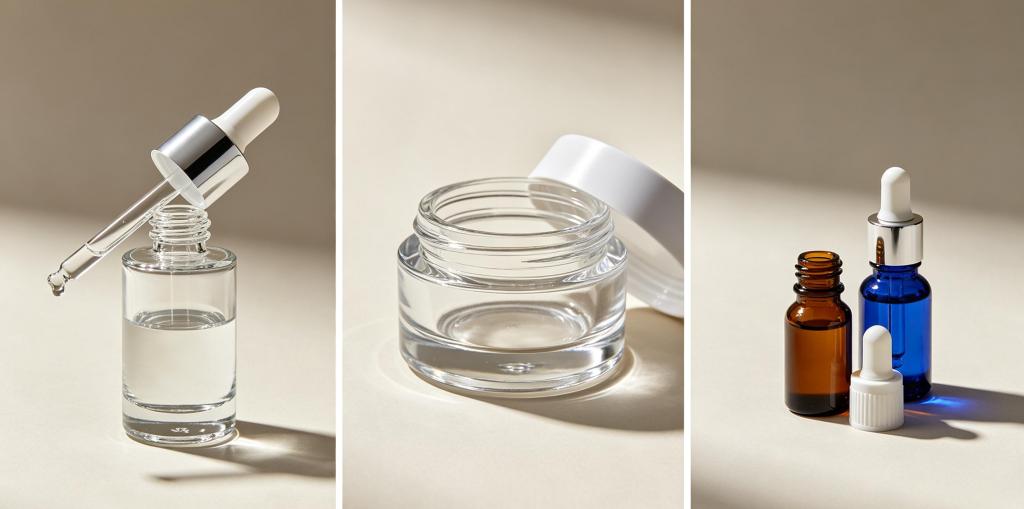
4. Color and Light-Blocking Performance
- Transparent bottles: Suitable for products that aim to showcase the color and texture of the contents.
- Brown/ green/blue bottles: Primarily used for essential oils that require light protection, as well as some sensitive serums.
- Surface treatments (sandblasting, spraying) can also assist in light-blocking to a certain extent, while enhancing the texture.
5. Surface Treatment and Brand Presentation
Printing, gold stamping, silver stamping, spraying, embossing and other techniques can enhance brand recognition. When choosing, a balance needs to be struck between:
- Visual effect and brand tone
- Order quantity requirements (complex processes usually have a higher MOQ)
- Actual production yield and cost
- Simple and precise techniques are often more visually appealing and controllable than overly complex decorations.
Factors That Affect Cost and Production
MOQ and Mold Development
One of the first considerations in a custom glass bottle project is whether to use an existing mold or to create a new one.
Using an existing mold usually reduces development costs and shortens the prototyping cycle. If the brand only needs to adjust the color, decoration, or some accessories, an existing mold may be a more economical solution.
Creating a new mold provides greater freedom in bottle shape and size design, but usually requires additional mold costs and development time.
For small batch orders, the cost of a new mold may have a significant impact on the price of a single product. Therefore, before deciding to fully customize, it is necessary to evaluate based on the expected order quantity.
Bottle weight, wall thickness and transportation
Glass bottle weight not only affects the feel of the product, but also affects the logistics cost.
Heavier glass bottles can provide a more substantial and upscale product experience, while lightweight design helps reduce material usage and transportation costs. But if excessive weight reducing glass, also may affect the strength of the bottle and packaging performance.
For export orders, it is also necessary to focus on the risk of damage during the transportation process. Protective partitions, appropriate cardboard boxes, and reasonable pallet packaging should all be designed in combination with the glass bottle itself.
Filling line adaptability
Customized glass bottles not only need to look good on the shelves, but also need to be able to adapt to actual filling and packaging production.
The bottle size, bottom stability, bottle mouth accuracy, and size tolerance can all affect the automated filling and capping processes.
For mass production, it is especially recommended to use the actual production line for testing before formal mass production, so as to detect problems such as unstable bottle positioning, inaccurate capping, or difficult transportation in advance.
A Simple Custom Glass Bottle Selection Process
- Clarify the product type (serum / cream / essential oil) and the core requirements.
- Determine the capacity, material, and color direction.
- Confirm the bottle mouth specifications and the matching component plan.
- Evaluate the surface treatment and brand presentation requirements.
- Based on the quantity, budget, and delivery date, decide whether to make a new mold or modify an existing one.
- Run a sample test and complete the tests for sealing, compatibility, and filling before proceeding to the production run.
Summary
Choosing the right custom glass bottle for cosmetics and skincare products is essentially about finding a balance between product protection, user experience, brand expression, and cost control. Serums emphasize precision and refinement, face creams prioritize ease of use and a substantial feel, while essential oils prioritize light protection and chemical stability.
Clearly defining your needs and then matching them with appropriate materials, bottle openings, colors, and manufacturing processes is crucial to ensuring that the packaging truly enhances the product rather than becoming a liability.
If you are selecting glass bottles for your serum, face cream, or essential oil, please provide your product type, capacity, and main requirements. Hengjing Glass can assist in assessing feasibility and provide targeted suggestions on bottle design and manufacturing processes.