
In the highly competitive wine market, consumers often form their first impression of a wine before they even open the bottle. How much does a bottle of wine weigh? A standard 750 ml bottle of unopened still wine. Full. Typically falls between 2.6 and 3.3 lbs. That is 1.2 to 1.5 kg.
The variation? It comes mostly from the glass. The tare weight of the bottle itself. Lightweight commercial bottles use less glass. Heavy-base premium bottles use a lot more. Knowing these ranges is not just trivia. For wine professionals, it matters for rack planning and handling. For wineries and packaging buyers, it is about shipping. Payload utilization. Freight costs. Accurate calculations depend on real numbers.
What Is the Average Weight of a Wine Bottle?
A standard full bottle. Average weight? Between 1.2 kg and 1.5 kg. The empty glass bottle is the biggest variable in that total.
Most standard bottles hold exactly 750 ml of liquid. But empty bottle weights? They vary. From 350 grams. Up to over 900 grams. Depends on brand positioning. Depends on structural design.
So a finished bottle using an eco-friendly lightweight design. That sits close to 1.2 kg. About 2.6 lbs. A heavy-base reserve bottle? Easily exceeds 1.5 kg. That is 3.3 lbs or more.
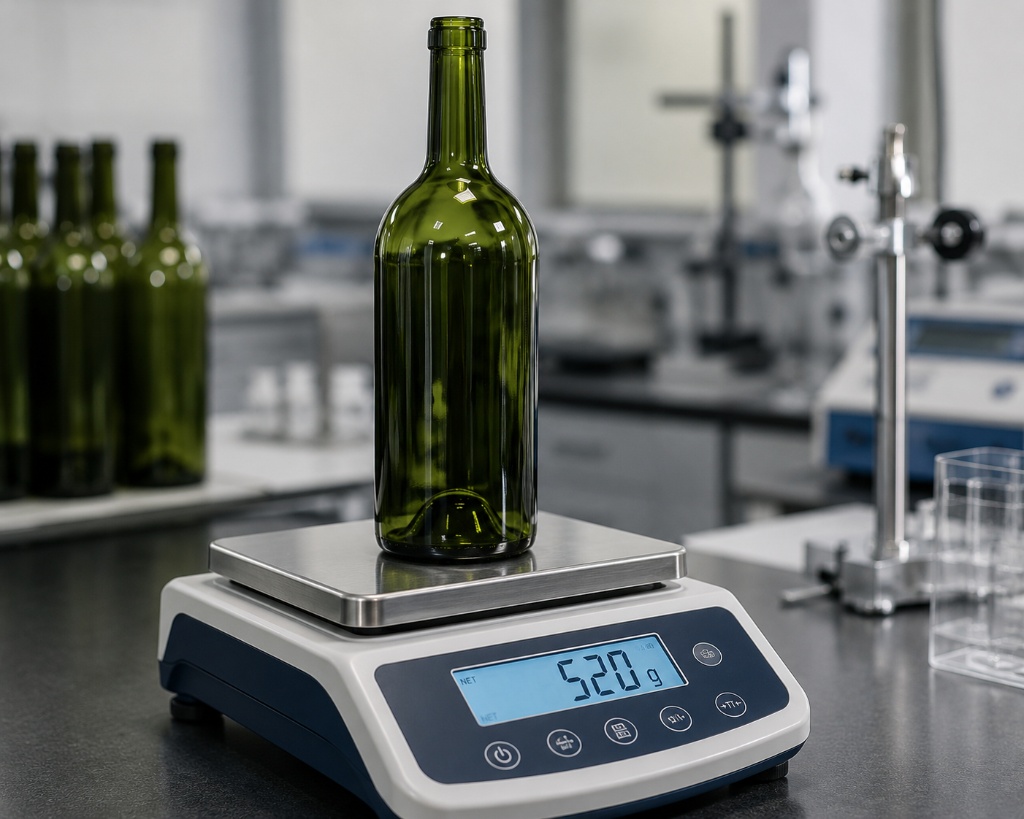
Here is how the weight breaks down. Piece by piece.
Liquid Wine: A 750 ml serving. Typically weighs around 740 to 750 grams. That is 1.63 to 1.65 lbs. Minor differences come from alcohol strength. Residual sugar. Temperature.
Lightweight Empty Bottle: Roughly 350 to 450 grams. 0.77 to 0.99 lbs. Ideal for high-volume commercial wines. Focus on carbon reduction.
Standard Empty Bottle: Around 450 to 550 grams. 0.99 to 1.21 lbs. One of the most common bottle formats worldwide. Still wine. Broadly used.
Heavy Premium Empty Bottle: 700 to 900+ grams. 1.54 to 1.98+ lbs. Frequently selected for reserve vintages. A heavy custom wine bottle design supports a premium presentation.
Closure and Capsule: Natural corks. Screw caps. Foil capsules. They add very little weight. Total? Just 10 to 15 grams per bottle. 0.02 to 0.03 lbs.
What Makes One Wine Bottle Heavier Than Another?
Wine bottles vary in weight. Why? Bottle geometry. Wall thickness distribution. Base design. Internal pressure requirements.
Some consumers assume heavier bottles mean better wine. That is not the case. Bottle weight is actually about structural engineering choices. Market positioning.
When evaluating weight differences, three core design factors play a major role.
Bottle Shape and Base Design: Wall thickness matters. Base thickness matters. Features like the punt influence how much glass is required. A deeper punt adds glass weight. But a deeper punt does not automatically mean higher wine quality. That is a common misconception.
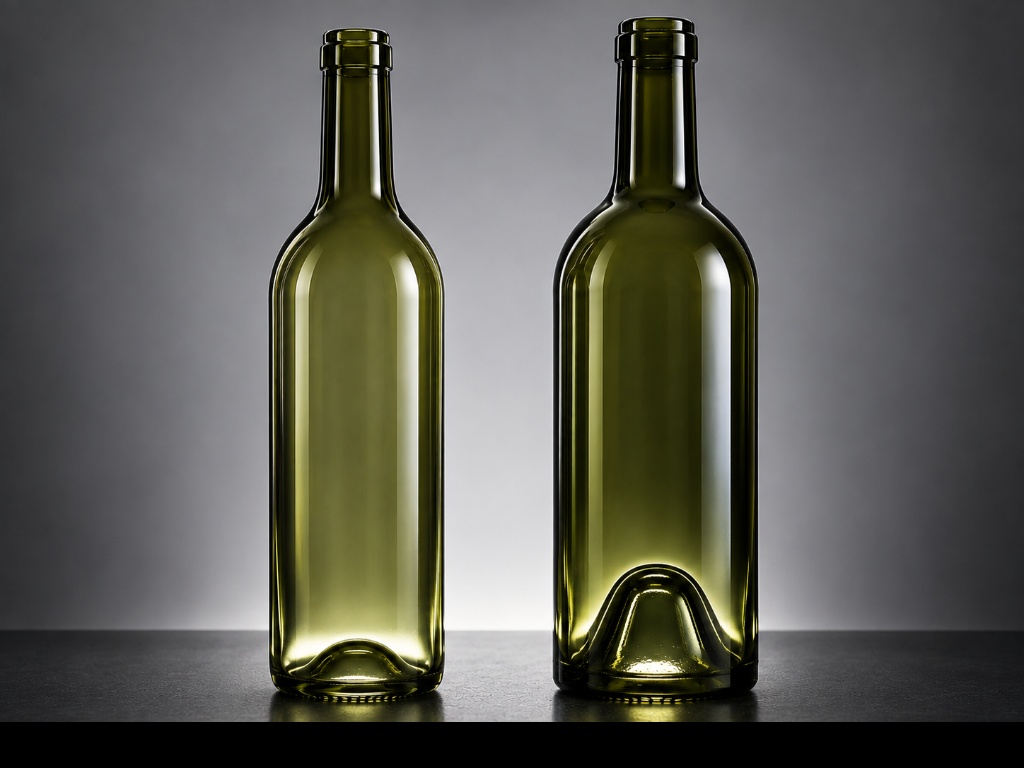
Internal Gas Pressure: Sparkling wine bottles. Champagne bottles. They must withstand substantially higher internal pressure. Compared to still wine bottles. The reinforced glass construction adds weight. Heavier bases add weight. It is a safety requirement.
Closures and Decorative Elements: Standard closures add minimal weight. But some premium wines use thick wax seals over the neck. That adds several extra grams. At the top of the bottle. Beyond weight, the seal choice matters. Cork versus screw cap. It influences neck geometry. It affects packaging line specifications.
Wine Bottle Weights by Size: From Mini to Champagne
Bottle weights increase with volume. Larger formats often use higher proportions of glass. This maintains structural integrity under load.
From single-serve mini bottles. To large-format party sizes. Knowing these physical weights helps. It informs purchasing decisions. It guides safe handling. It affects table presentation.
Here are the standard full weights. Common wine bottle formats. Used across retail and commercial markets.
Split / Piccolo (187.5 ml): A small bottle. Around 0.9 lbs. That is 0.4 kg. You see these in hotel minibars. Airline service too.
Half Bottle (375 ml): This one comes in at about 1.5 lbs. 0.7 kg. It holds half the wine of a standard 750 ml bottle.
Standard Still Bottle (750 ml): The most common format. Weight varies from 2.6 to 3.3 lbs full. In metric, 1.2 to 1.5 kg.
Champagne Bottle (750 ml): Same volume. Heavier though. Reinforced glass. Handles the pressure. Weighs roughly 3.5 to 3.7 lbs. That is 1.6 to 1.7 kg. You can compare how this format scales across larger volumes in our overview of the sizes of Champagne bottles.
Magnum (1.5 L): Double the volume. Double the weight. About 5.3 to 6.2 lbs full. 2.4 to 2.8 kg. That is two standard bottles worth of wine. For large-format bottles like Magnums, the choice between a wine decanter vs wine carafe can also affect serving.
3.0 L Large-Format Bottle (Jeroboam): Big bottle. Needs two hands. Weighs between 11.5 and 13 lbs full. That is 5.2 to 5.9 kg. Holds four standard bottles.
How Do Wine Bottle Weights Affect Storage and Wine Racks?
Wine bottle weight directly determines load-bearing safety limits. Home wine racks. Wall-mounted displays. Commercial cellars. All have limits.
When building storage. When assembling wooden shelving. Calculating total filled weight is essential. It prevents rack collapsing. It prevents bottle breakage.
Use these practical weight estimates for planning.
Full 12-Bottle Case Weight: Grab a standard case. Twelve filled bottles. You are looking at 32 to 38 lbs total. 14.5 to 17.2 kg. Depends on glass thickness.
Wine Rack Static Load: Think about a rack with 72 bottles. That is a lot of weight. Roughly 190 to 240 lbs of wine and glass. In kilos, 86 to 109. Keep in mind. That number does not include the rack itself.
Wall-Mounted Installation Safety: Do not trust drywall anchors. Not by themselves. Check the rack’s rated capacity. Use hardware that matches your wall. Solid studs. Masonry anchors. That is how you do it safely.
Why Wine Bottle Weight Matters for Shipping and Logistics
For wineries and international distributors, empty bottle tare weight matters. It affects shipping efficiency. Payload utilization. Total logistics costs.
Transport costs are rising. Global regulations push for lower carbon footprints. Many producers are switching. From 550 gram conventional bottles. To high-strength 410 gram lightweight glass bottles.
Consider the math. Reducing a 750 ml bottle from 550 g to 410 g. That cuts the glass weight by about 25%. Less non-product deadweight shipped with each bottle. At high shipment volumes, this reduction improves overall payload efficiency. Depending on pallet and container configurations.
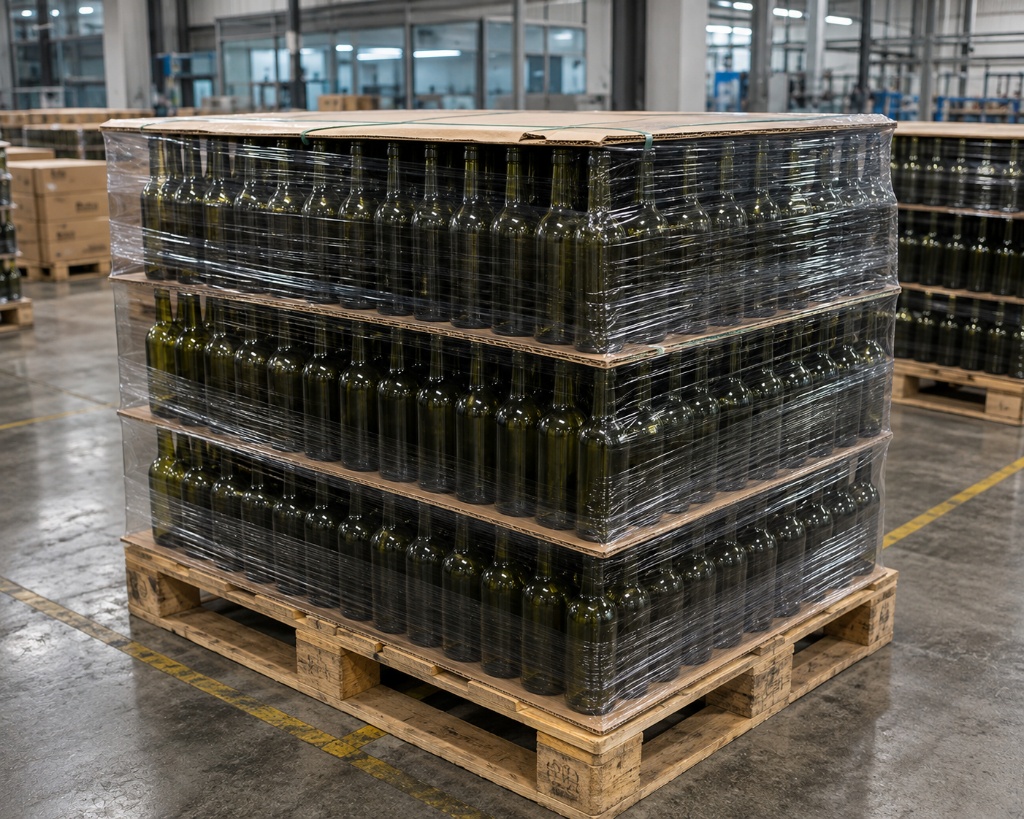
The table below compares full bottle weights and B2B shipping considerations. Across 600-bottle batch orders.
| Bottle Type | Empty Glass Weight | Approx. Full Bottle Weight | Approx. Product Weight for 600 Bottles | B2B Logistics Considerations |
| Lightweight Bottle | 350g – 450g | ~ 1.10 – 1.20 kg | ~ 660 – 720 kg | Reduces shipped glass deadweight. Lowers carbon footprint. Aligns with eco-friendly import standards. |
| Standard Bottle | 450g – 550g | ~ 1.20 – 1.30 kg | ~ 720 – 780 kg | High supply chain availability. Balances wall strength, bottling speed, and shipping costs. |
| Heavy-Base Bottle | 700g – 900g+ | ~ 1.45 – 1.65 kg+ | ~ 870 – 990 kg+ | Delivers a luxury hand-feel for reserve wines. Increases pallet shipping weight significantly. |
Note: Full bottle estimates include wine, glass, and typical closure weight. Actual weights vary by bottle design and fill level. Product weights in this table include glass and wine only. Total shipping pallet weight will include wooden pallets, corrugated cartons, dividers, and protective packaging.
In professional B2B packaging, bottle weight should not be evaluated as an isolated metric. Buyers need to evaluate glass weight alongside bottle capacity. Glass distribution uniformity. Closure compatibility. Pallet configuration. Transit pressure ratings.
When evaluating production options or customized bottle molds for bulk orders, buyers can contact us directly to review structural specifications and factory shipping plans.
Conclusion
Understanding how much a bottle of wine weighs. It helps consumers plan storage and handling. It gives wineries and packaging buyers a clearer basis for evaluation. Bottle design. Shipping efficiency. Logistics costs.
Whether you choose 400-gram lightweight glass bottles to cut transit deadweight. Or custom heavy-base bottles for reserve vintages. Matching bottle weight to your functional needs delivers the best balance. Safety. Cost control. Brand quality.