
Wine decanters and wine carafe are both elegant glassware used for holding and pouring wine, leading many to confuse the two. However, their design purposes and uses differ.
Decanters are primarily used for aerating wine and removing sediment, while wine carafe focuses more on serving and displaying the beverage.
If you are a wine fan , or maybe you run a restaurant , retailer, or wholesaler, getting to know the gaps in all this will help you pick the item, that’s most suited for what you actually need.
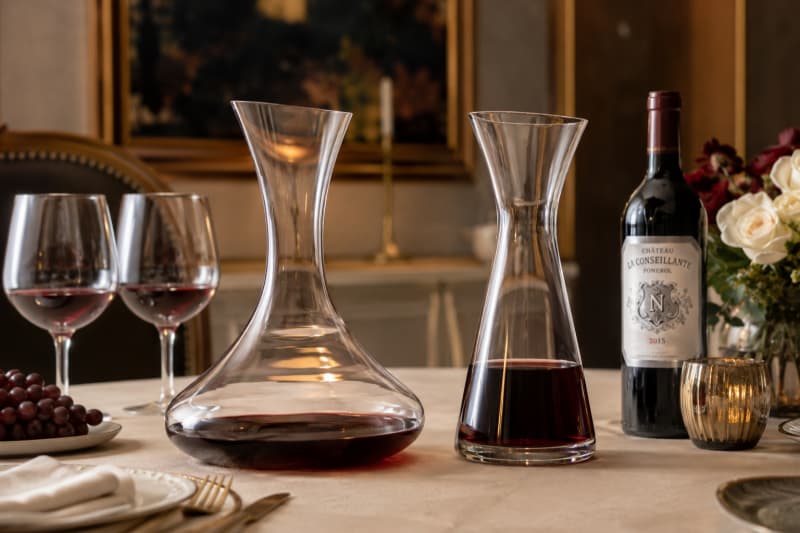
What is a Wine Decanter?
A decanter is a wine utensil sorta made to help the wine taste better. Its most obvious part is the wide base, which makes the surface area of the wine meet air more,so oxidation happens faster and then it can free up additional aromas and flavors.
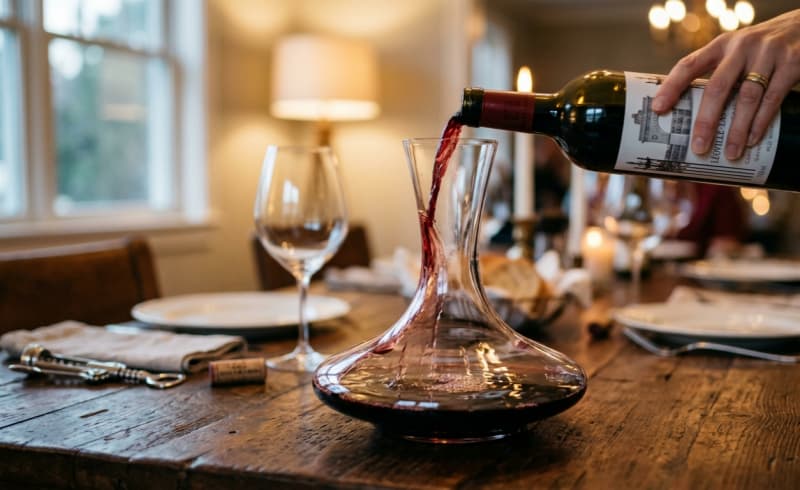
Decanters are particularly suitable for:
- Young red wines
- Aged wines
- Wine tasting events
- High-end restaurant service
Besides aiding in decanting, decanters effectively separate sediment from aged wines, resulting in a cleaner and smoother poured liquid.
Typical characteristics include:
- Wide body
- Narrow neck
- Hand-blown finish
- Highly transparent lead-free crystal or glass material
What is a Wine Carafe?
A wine carafe is primarily a glass container used for holding beverages. While it can hold wine, it’s not specifically designed for decanting.
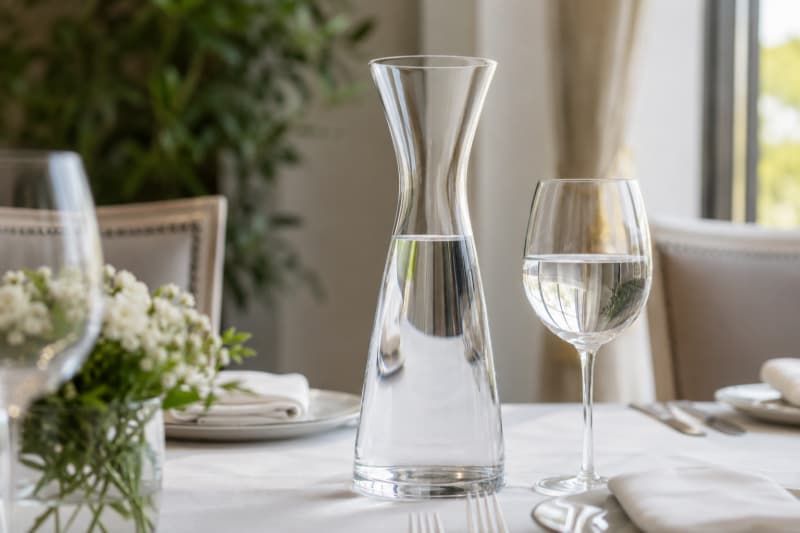
Besides wine, it’s widely used for:
- Drinking water
- Juice
- Sangria
- Cocktails
- Iced tea, etc.
Therefore, it’s widely used in:
- Hotels
- Restaurants
- Cafes
- Family dining tables
- Banquet service
Compared to decanters, wine carafes usually come with a more slender design, so they save some table space and make it easier to pour wine on a daily basis. Because of its versatility, this thing has turned into one of the most common glass containers you see in homes and in the catering industry, as well.
Key Differences Between Wine Decanters and Wine Carafe
Design
The biggest difference lies in their shape. Decanters typically have a wide base, allowing the wine to fully contact with air, accelerating the oxidation process and improving its aroma and taste. Wine carts, on the other hand, prioritize ease of pouring and therefore usually feature a slender, simple design.
If your goal is to improve the flavor of your wine, then a decanter is undoubtedly the better choice.
Different Functions
While both can hold wine, their functions are distinct.
Wine Decanter:
- Accelerates wine aeration
- Removes sediment
- Enhances aroma
- Improves taste
- Adds to the dining experience
Wine Carafe:
- Serves beverages
- Easy to pour wine
- Aesthetically pleasing to the table
- Suitable for a variety of drinks
In short: A decanter alters the wine itself, while a wine carafe alters how the beverage is presented.
Drinking Experience
For wine enthusiasts, decanters can significantly enhance the drinking experience.
After wine comes into contact with air:
- Tannins become softer
- Aromas become richer
- Body becomes smoother
- Flavors become more balanced
In contrast, wine jugs, due to their narrow shape and limited surface area exposed to air, have almost no significant impact on the wine’s flavor; they primarily serve a display and serving function.
Cleaning and Maintenance
Cleaning difficulty is also a concern for many consumers. Due to their wide bodies and narrow necks, decanters are relatively difficult to clean and typically require:
- A dedicated long-handled brush
- Stainless steel cleaning beads
In contrast, wine carafes typically have wider openings and simpler structures, making them easier to clean. Many modern wine carafes also support dishwasher cleaning, making them even more convenient for homes and the food service industry.
Wine Decanters and Carafes for Restaurants and Hospitality
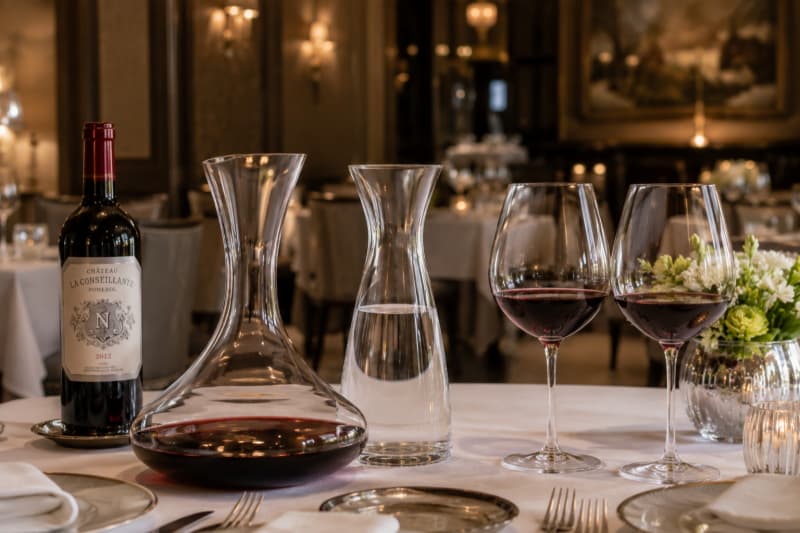
Restaurants, hotels, wine bars, and event venues often use both products for different purposes.
Wine decanters are commonly reserved for premium wine service, wine tastings, and fine dining experiences where presentation and aeration matter.
Wine carafes are more frequently used for serving water, house wine, juices, and specialty beverages during everyday service.
When purchasing glassware for commercial use, buyers often prioritize:
- Lead-free, food-safe materials
- Durable construction
- Elegant modern designs
- Consistent product quality
- Bulk ordering availability
- Custom logo engraving
- Gift-ready packaging
Selecting high-quality glassware enhances both customer experience and brand image.
How to Choose the Right Glassware Supplier
Whether you’re sourcing for a restaurant chain, retail brand, or promotional gift project, choosing the right supplier is just as important as selecting the right product.
Here are a few factors to consider:
- Food-grade, lead-free materials
- Consistent manufacturing quality
- A wide range of capacities and styles
- Custom engraving or decoration options
- Reliable export packaging
- Flexible bulk ordering
- Stable production and delivery schedules
A dependable supplier can help ensure product consistency while supporting long-term business growth.
Summary
Although wine decanters and wine carafes share some similarities in appearance, their design concepts and purposes are completely different.
If your goal is to enhance the aroma and taste of the wine, a wine decanter is a more professional choice; if you are more concerned about the storage and presentation of daily beverages on the table, a wine carafe is more practical and versatile.
For wholesalers, retailers, and hotel catering purchasers, choosing high-quality products made of lead-free glass or lead-free crystal not only improves the user experience but also brings higher value to the brand. Understanding the differences between the two helps to select more suitable glass wineware products according to different market demands.