
Have you ever stopped to ask yourself, why is alcohol in glass bottles?
I mean, think about it. You can grab a cheap beer for a couple of bucks at the corner store, or you can drop a small fortune on a vintage Scotch at an auction. Either way, they both come in glass. No exceptions.
I’ve been working in the glass manufacturing industry for years, and I can tell you straight up: this isn’t just about looking pretty on the shelf. It’s actually a pretty hard core mix of chemistry, safety, flavor protection, and even brand psychology. So today, let’s really dig into the real reasons behind this industry wide rule.
The History Of Glass Bottles For Alcohol
Before we had modern factories, humans spent thousands of years just trying to find a decent home for their booze.
The ancient Romans, for example, stored wine in clay amphorae. But those things had a fatal flaw: tiny microscopic pores. Over time, the wine would slowly seep out, and worse, air would sneak in and turn that lovely vintage into vinegar. Not great.
Then came hand blown glass bottles. Back then, glass was a luxury item, only for the rich folks who could afford the good stuff.
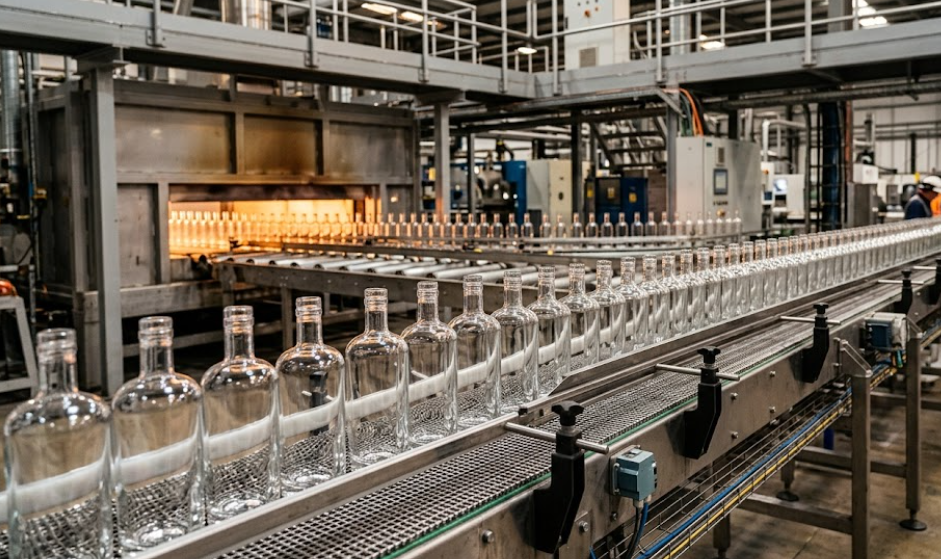
Everything changed during the Industrial Revolution. With the invention of automatic blowing machines, strong, uniform, and affordable modern liquor bottles suddenly became mass producible. Distilleries quickly realised that once they sealed their spirits in glass, the taste stayed exactly the same no matter how far the bottles travelled. From that point on, glass crushed clay and wooden barrels, and it became the undisputed global standard for alcoholic beverages.
Why Is Alcohol Stored In Glass Bottles? The Top 7 Reasons
Now let’s get into the nitty gritty. From a scientific and practical standpoint, here’s why even today, spirits rely 100% on glass.
1. Glass Is Safe For Alcohol Storage
Chemically speaking, glass has one superpower: it’s chemically inert. In plain English, that means it’s got a very mild temperament – it just doesn’t react with anything.
Here’s the thing: high proof alcohol, like ethanol, is actually a pretty aggressive organic solvent. It can be slightly corrosive. If you put a 50 plus percent spirit into a low grade container, that container’s own materials can slowly leach into the liquid. But glass? Its structure is so stable that when it meets high strength spirits, it doesn’t absorb, doesn’t release, and doesn’t react. Zero harmful substances get into your drink. Even with high proof vodka or rum, glass is completely safe.
2. Glass Keeps Alcohol Taste Pure And Unchanged
For quality spirits, flavour is everything. And glass has a surface that’s incredibly smooth at the microscopic level – almost like a mirror. That means it does not absorb any smells or flavours.
We’ve run tests in our industry. Take a glass bottle that once held a heavily peated whisky, wash it thoroughly, and it won’t leave a single trace of that previous batch. So glass perfectly preserves the original spirit profile that the distiller intended. Whether it’s the delicate oak notes from a master blender or the subtle fruitiness of a liqueur, glass gives you long term flavour stability. You never get that annoying “container taste.”
3. Glass Protects Alcohol From Light And Air
Alcohol has two sworn enemies: UV light and oxygen.
When sunlight hits a bottle, UV rays trigger chemical reactions with sulfur compounds in the drink. The result? A nasty skunky smell that the industry calls lightstrike. Beer and wine are especially vulnerable to this.
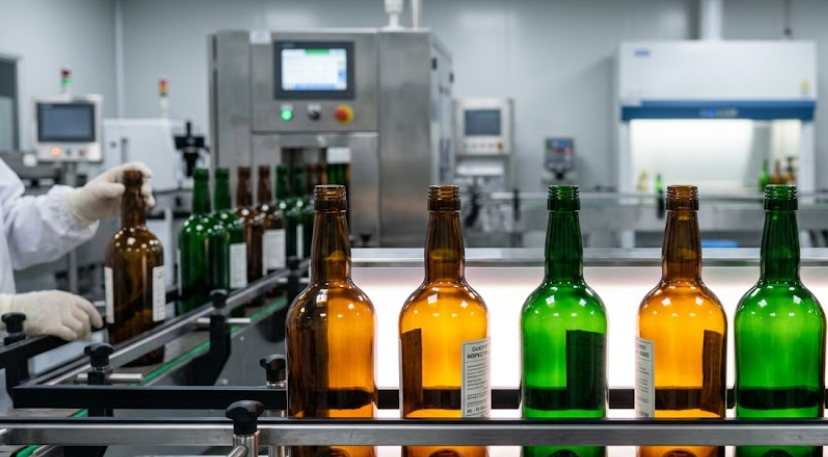
Colour as sunscreen: That’s exactly why you rarely see clear bottles for premium stuff. They use amber glass or dark green glass instead. Amber acts like a high SPF sunscreen, blocking over 90% of the damaging light.
100% airtight: Glass has a perfect airtight sealing advantage. It is 100% impermeable – oxygen simply cannot get through. Combine that with a tight closure, and you’ve got a bulletproof vest for your booze. Because once oxygen gets in, oxidation kicks in and your drink turns sour. Glass stops that cold.
4. Alcohol Bottles Look Premium When Made Of Glass
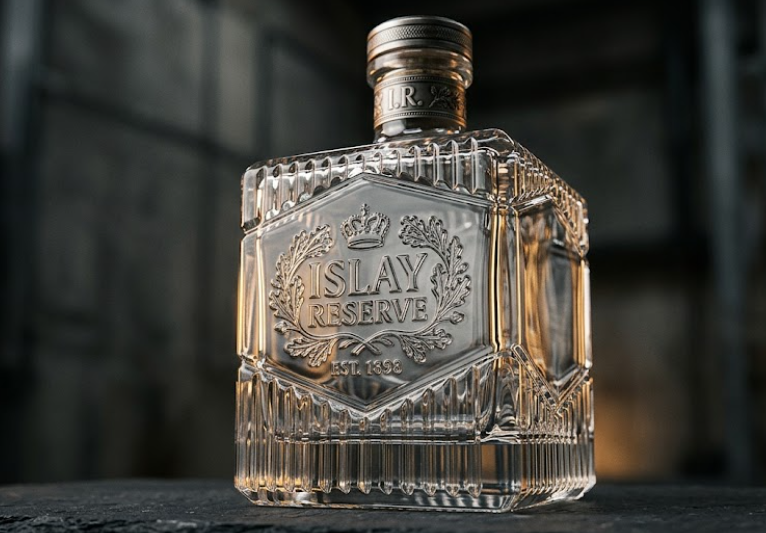
Packaging isn’t just a container; it’s a silent salesman. There’s a well known quirk in consumer psychology: we instinctively equate heaviness with high value. A heavy bottle signals “luxury and premium” without a single word.
Walk into a bar and pick up a thick, chilled glass bottle with an elegant embossed design. That solid weight immediately tells your brain: this is the real deal, this is authentic. Now imagine the exact same XO cognac in a flimsy plastic bottle. No matter how good the liquid is, you’d probably think it’s fake or cheap. Glass offers huge design flexibility, too. Brands can customise shapes, add embossing, or go for unique asymmetrical designs. That’s the ultimate weapon for shelf appeal and branding.
5. Glass Is Better For Long-Term Storage Of Alcohol
Some bottles are meant to age – really age. Think aged whiskies or top tier red wines that sit in the bottle for years, decades, or even a century.
Glass’s biggest win here? It stays stable over decades with no physical degradation. Plastic gets brittle over time. Metal cans have inner coatings that can peel off. Glass doesn’t. As long as you keep it in a cool, dark place, glass gives your spirit a perfectly stable time capsule, letting it mellow and develop gracefully over the years.
6. Glass Bottles Are The Industry Standard For Alcohol
In today’s commercial world, glass isn’t just a bottle – it represents a mature, global supply chain system.
Food safety regulations across every country have extremely strict testing standards for alcohol packaging. Glass has been used safely for centuries, so it’s effectively a legally recognised “no worry” material. On top of that, modern large scale bottling lines – from washing and high heat sterilisation to high speed filling and capping – are all designed around the physical hardness of glass.
And because glass is the iron rule of the beverage industry, any brand owner needs to understand how to choose a reliable glass bottle manufacturer for your business. That’s the only way to ensure your bottles won’t crack on the filling line and your supply chain stays steady.
7. Glass Bottles Are Better For The Environment
With sustainability being such a big deal these days, being eco friendly is a major plus for any brand.
Plastic bottles might be cheap, but they take centuries to break down, and recycled plastic is rarely allowed back into food grade packaging. Glass, on the other hand, is 100% recyclable, and you can do it over and over again, forever. In the glass factory, we take crushed glass called cullet, throw it straight into a 1500°C furnace, melt it down, and make brand new bottles with zero quality loss. That perfect closed loop system makes glass one of the most environmentally responsible packaging choices out there.
Glass Bottles Vs Other Packaging: The Ultimate Pk Tables
If you’re a new brand, you’ve probably asked yourself are glass bottles better than plastic, or what about metal cans? These two comparison tables make it crystal clear why glass dominates when it comes to long term spirit storage.
Glass Vs Plastic For Liquor
| Feature | Glass Bottle | Plastic / PET Bottle |
| Flavor Protection | Excellent – keeps the original taste | Poor – tends to develop a plastic taste over time |
| Chemical Stability | Excellent – completely inert | Moderate – high alcohol can attack the plastic |
| Premium Appearance | Excellent – natural weight and sophistication | Poor – feels cheap, not suitable for premium brands |
| Shelf Life | Very long – can last decades | Very short – usually not recommended beyond 6 months |
Glass Vs Metal Container (Cans)
Metal cans are popular for beer and ready to drink cocktails because they’re lightweight and chill fast. But for high value, high alcohol products like whisky, vodka, or fine wine, metal simply can’t replace glass.
The inner lining issue: Metal cans must have a polymer coating on the inside to keep the liquid away from the metal. However, high proof spirits or high acid wines can slowly corrode that protective film.
That awful metallic taste: Once that film breaks down, alcohol touches aluminium or iron directly. A chemical reaction kicks in, and your beautifully crafted spirit suddenly picks up a cheap, rusty metallic taste. That’s why premium, long aged drinks stay firmly in the glass camp.
How To Choose The Right Glass Bottle For Your Alcohol Brand
If you’re launching your own brand, picking the right glass bottle is the first step in building your identity. When you talk to manufacturers, you’ll usually need to nail down these three core details:
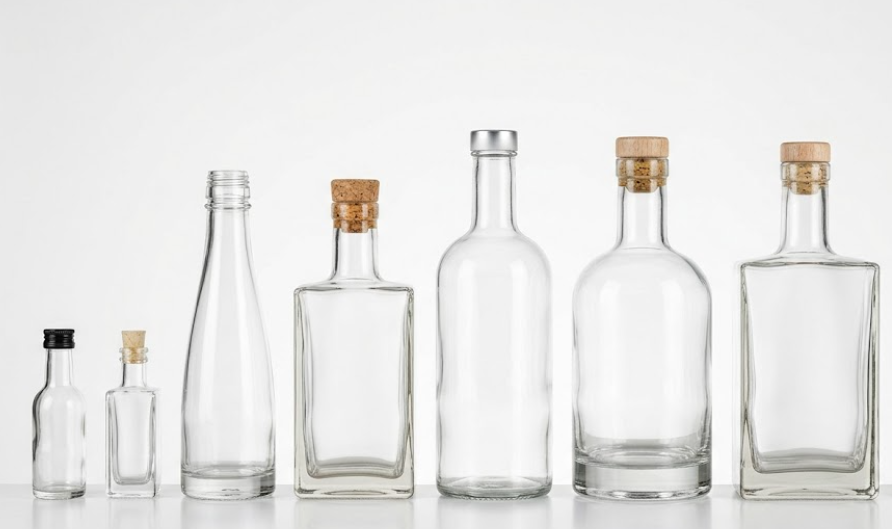
1. Bottle Shape
The shape is a silent identity card for your drink.
Round bottles – the classic, space saving choice. Works well for most white spirits and vodkas.
Square bottles – a favourite for whisky. They look bold and sturdy, and they stand out on the shelf.
Nordic minimalist style – clean, rounded lines with a thicker base. This has become a go to for craft gins and premium vodkas in recent years.
Brandy / Cognac shapes – often feature complex, flowing designs or artistic asymmetry to signal luxury.
2. Capacity Options
The volume you choose defines your consumption scenario.
50ml / 100ml – sample sizes, gift sets, or duty free travel bottles.
375ml – half bottles, perfect for trendy small bistros or solo evening drinks.
700ml / 750ml – the international standard for spirits and wine. This is also the sweet spot for large automated filling lines.
1000ml – large format, often used for bar well spirits or party sharing.
3. Closure Types
Different neck finishes match different capping machines and drinking experiences.
T bar cork / natural cork – the standard for premium whisky and cognac. That satisfying pop when you pull it out is part of the ritual.
Screw cap – excellent seal, lower cost, and super convenient for liqueurs or New World wines that you might want to reseal and take on the go.
GPI standard finish – an internationally recognised threaded neck that fits perfectly with closures from just about any supplier worldwide.
Why Is Alcohol In Glass Bottles? Final Answer
So, to wrap it all up: the answer to why is alcohol in glass bottles comes down to a triple threat combination of chemical safety, flavour preservation, and irreplaceable commercial value. Glass gives us an inert shield that keeps our drinks safe. It locks in the distiller’s artistry with absolute airtightness. And that solid, weighty feel gives every brand the dignity it deserves.
For any alcohol brand that’s serious about building a long term legacy, choosing a high quality custom glass bottle is where the journey really begins. If you’re on the hunt for beautifully designed, top tier glass bottles with full customisation options – from shape to capacity – check out Hengjing Glass. They offer one stop solutions to make your spirit shine on the shelf, literally and figuratively.