Choosing the right glass bottle manufacturer is one of the most consequential sourcing decisions a product-based business can make. Get it right and you gain a partner who protects your brand, meets your compliance requirements, and scales with your growth. Get it wrong and you risk delayed shipments, inconsistent quality, and costly product recalls that can set a launch back by months.
This guide breaks down exactly what to look for — from production capacity and certifications to red flags and final contract checks — so you can source with confidence.
Why the Right Manufacturer Matters
The glass packaging market is seeing continued growth, thanks to the rising demand for eco-friendly , premium wrapping across food and beverage, cosmetics , and also spirits markets. As more producers come into the space worldwide the pathways for obtaining glass bottles have widened a lot—yet at the same time the dangers of picking the wrong supplier have also gone up.
A poor supplier choice cascades across your entire operation: missed launch windows, safety recalls, high breakage rates in transit, or surface decoration that does not match your approved samples. Conversely, a manufacturer with genuine production depth and quality controls becomes an asset — consistently delivering products that protect your brand and your customers. The criteria below will help you identify that partner systematically.
Learn how Hengjing serves cosmetics, F&B, and home décor brands
Define Your Business Requirements First
Product Specifications
Before contacting a single manufacturer, document your bottle specs precisely: capacity, shape, color, neck finish, and wall thickness tolerance. Determine whether you need soda-lime glass (standard for beverages, spirits, and food packaging) or borosilicate glass (required for pharmaceutical and certain cosmetic applications). Vague specs generate inaccurate quotes and multiple rounds of sample revisions — costing time and money before production even begins.
For brands requiring unique shapes, embossed patterns, or specialty surface treatments — such as sandblasting, laser engraving, or electroplating — establish this upfront so you can filter for manufacturers with the right in-house capabilities.
Order Volume and MOQ
Minimum order quantities (MOQs) vary significantly by factory size, bottle capacity, and customization complexity. As a reference point, a typical structured MOQ schedule for custom glass bottles looks like this:
| Product Capacity | MOQ (Custom) |
| Above 1,000 ml | 3,000 pcs |
| 350 ml – 1,000 ml | 6,000 pcs |
| 100 ml – 350 ml | 10,000 pcs |
| 50 ml – 100 ml | 15,000 pcs |
| Below 50 ml | 20,000 pcs |
If you are testing a new product line, ask whether the manufacturer offers sample orders or trial runs before full production commitment. This is particularly important for custom mold projects, where up-front tooling investment is significant.
Hengjing MOQ details & customization options
Industry and Compliance Requirements
Different industries come with different regulatory asks. Food and beverage use cases usually end up needing compliance with FDA ,or EU food-contact requirements. Cosmetics packaging has to line up with the regional safety directives that apply. Spirits packaging really needs exact neck tolerances ,and it often also calls for custom mold work ,just so the brand can look more distinct. Before you commit, confirm upfront that any manufacturer you’re considering actually understands, and can document compliance that matters for your specific product category.
Key Criteria for Evaluating a Glass Bottle Manufacturer
Production Capacity and Facilities
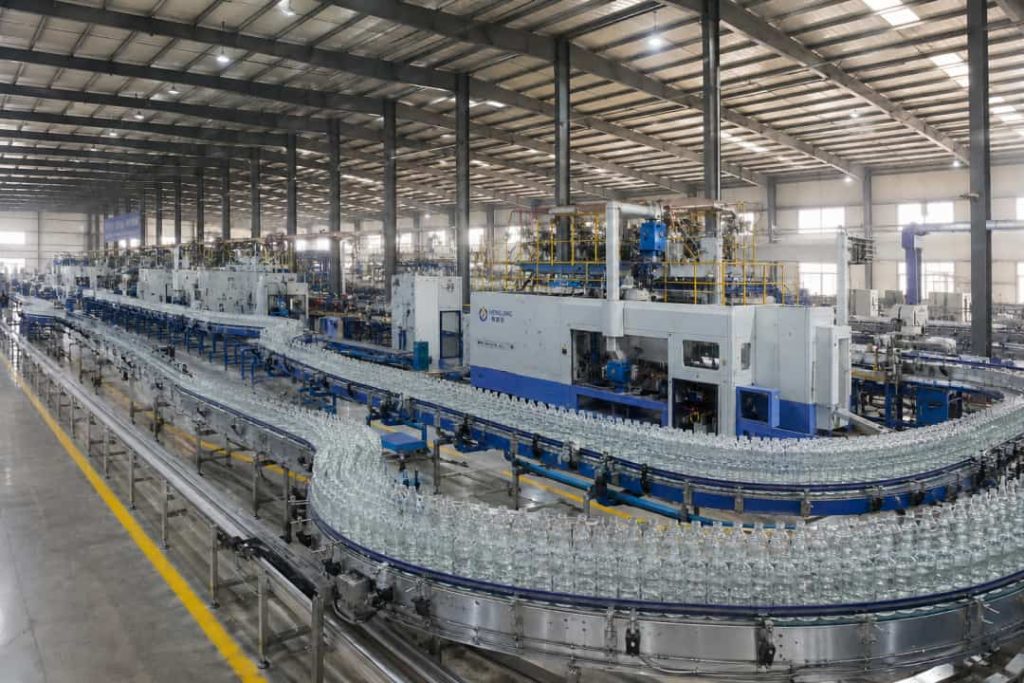
Ask about annual output, number of active production lines, and whether the factory operates automated, semi-automatic, or handmade processes — or a combination. A manufacturer running both fully automated lines and handmade or mouth-blown production offers far greater product flexibility than one operating a single process type.
First, as a standard, a well-equipped glass factory must have the capability to produce at least 100,000-150,000 units daily. In that way, they will have enough capacity to absorb your volume without affecting the time lead of other customers. The question is: Is the factory currently under-capacity? If yes, then they will easily accept rush orders and high-volume requirements when needed.
Quality Control Standards
Quality control should be evaluated at every stage of production, not just at final inspection. Ask specifically about:
- Raw material incoming inspection (glass composition, batch consistency)
- In-line checks during forming and annealing
- Dimensional tolerances on neck finish and bottle body
- Surface defect detection (bubbles, seeds, cracks, inclusions)
- Final outgoing quality audit (AQL sampling standard)
Request copies of quality certifications. ISO 9001 is the baseline for quality management systems. For pharmaceutical or sensitive cosmetic applications, additional certifications may be required. A manufacturer that cannot produce original certification documents on request — or that hedges on defect rate data — is a manufacturer to avoid.
Customization Capabilities
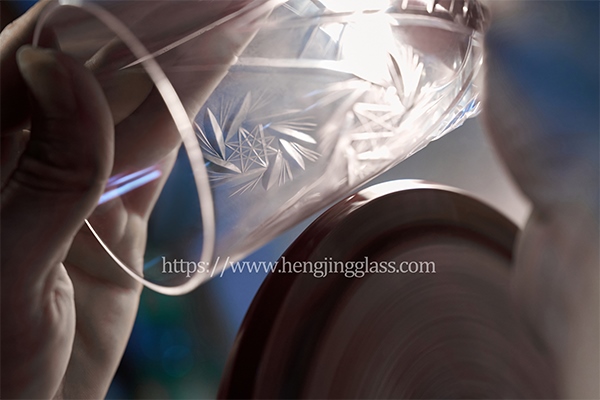
Surface treatment breadth is a meaningful differentiator among manufacturers. Beyond basic color and shape options, look for in-house capabilities that include:
- Spray painting and electroplating for premium color finishes
- Sandblasting for matte, frosted aesthetics
- Manual and laser engraving for intricate patterns and logos
- High and low-temperature baking labels (ceramic inks that will not peel)
- Grinding and polishing for optical clarity and surface smoothness
Confirm whether the manufacturer handles mold development in-house or outsources it. In-house mold capability shortens lead times, reduces communication errors, and gives you a clearer line on intellectual property ownership. Always verify that your custom mold designs are legally protected — reputable manufacturers will offer to sign a confidentiality agreement, with copyright of the customized design belonging 100% to you.
Sample turnaround is also telling: a manufacturer with genuine design and tooling capability should be able to produce a 3D prototype within three days of confirmation and a physical sample within 10 to 15 days — not weeks.
Experience and Industry Track Record
Years in business, breadth of product categories served, and the diversity of export markets are all credible signals of manufacturer reliability. A supplier that has been operating for over a decade, serving clients across spirits, cosmetics, food and beverage, and home décor, has stress-tested their processes across significantly different production demands.
Ask for references in a product category similar to yours — not just generic testimonials. If the manufacturer exports to multiple international markets (including regulated markets such as the EU or North America), that is further evidence that their quality and documentation standards meet a real-world bar.
Pricing Transparency
Request an itemized quote that separates mold tooling fees, per-unit pricing, sampling charges, packaging, and shipping. Total cost of ownership — not just unit price — should drive your decision. A manufacturer quoting abnormally low unit prices may recover margin through unexplained mold fees, thin packaging that increases breakage, or surcharges revealed later in the process.
The best manufacturers quote clearly and comprehensively from the first conversation. Ask whether pricing includes export packaging, pallet preparation, and container loading — or whether those are separate line items.
How to Vet a Manufacturer Before Committing
Request Samples
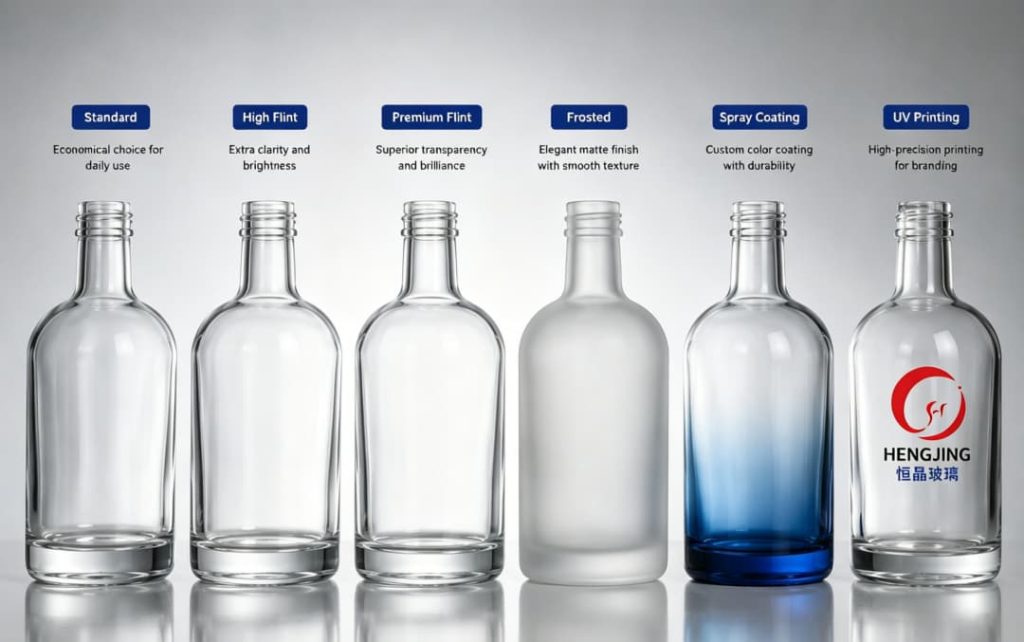
Never place a production order without first evaluating physical samples. When assessing samples, check wall thickness consistency, seam visibility, neck finish precision, color accuracy, and whether the surface decoration matches the approved artwork at full opacity and adhesion. Where possible, order samples from two or three candidate manufacturers simultaneously — direct comparison reveals differences that would otherwise be invisible.
For custom bottle projects, confirm that the sample you approve is produced using the same mold and process parameters as mass production. “Sample-to-mass-production consistency” is one of the most common failure points in glass bottle sourcing, and one of the most damaging to a brand launch.
Evaluate Packaging Standards
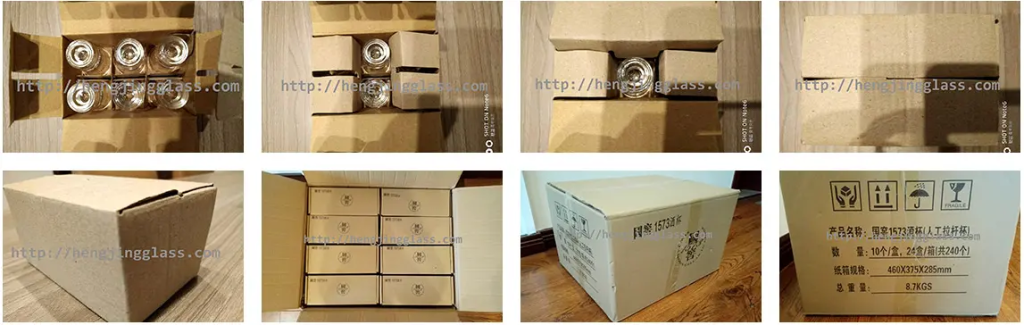
Transit breakage is one of the highest-risk cost drivers in glass supply chains. A manufacturer’s packaging specification should not be an afterthought — it should be a documented, engineered standard. Ask for specifics:
- What corrugated board grade does the outer carton use? (Five-layer, BC flute is the industry standard for glass)
- What internal cushioning structure is used? (Honeycomb shock-absorbing partitions significantly outperform plain foam)
- What is the documented breakage rate in transit?
- How are pallets secured for container loading? (Steel strapping with corner protectors and multi-layer stretch film)
A manufacturer operating to professional export packaging standards should be able to demonstrate a breakage rate at or below 0.1% in standard transit conditions, and container space utilization above 90% — both of which directly impact your landed cost per unit.
Assess Communication and Responsiveness
A supplier’s communication quality during the evaluation phase is the most reliable predictor of their service quality when problems arise mid-production. Measure average response time to inquiries, the precision of their answers, and whether they proactively flag potential design or production constraints rather than staying silent until issues escalate.
For international sourcing, confirm that a dedicated, English-fluent account manager will handle your order end-to-end. Fragmented communication across departments adds errors and delays.
Check References and Verified Reviews
Request direct references from clients in your product category or at comparable order volumes. Look for verified reviews on industry platforms, and ask specifically whether sample quality matched mass production, whether lead times were honored, and how the manufacturer handled the one or two issues that inevitably arise in any production run. How a supplier manages problems is as revealing as their track record of avoiding them.
Red Flags to Watch Out For
Even a professionally presented manufacturer can prove unreliable. Watch for these warning signs:
- Inability or reluctance to provide original certification documents
- No written confirmation of IP ownership or refusal to sign a confidentiality agreement
- Noticeable quality difference between samples and their stated mass-production standard
- Pricing that is significantly below market with no credible explanation
- Lead time commitments that do not account for mold development, sampling, or approval cycles
- Vague contract terms around defect liability, compensation, or reshipment conditions
Final Checklist Before Signing a Contract
Use this checklist as your final gate before committing to any glass bottle manufacturer:
- ☐ Product specifications confirmed in writing, and samples approved against those specs
- ☐ Original quality certifications received and verified as current
- ☐ MOQ, unit pricing, tooling fees, and lead times documented in the quotation
- ☐ Mold ownership and IP rights assigned to your business in the contract
- ☐ Confidentiality agreement signed if custom designs are involved
- ☐ Packaging specification reviewed, including breakage rate guarantee
- ☐ Dedicated account manager assigned with clear escalation contact
- ☐ Payment terms, inspection rights, and defect compensation clause in place
Conclusion
Selecting a reliable glass bottle manufacturer requires systematic due diligence across technical capability, quality systems, customization depth, and supply chain transparency. The manufacturers who stand out over the long term are those who invest in their processes, protect your intellectual property, and communicate proactively — not just when things go smoothly.
At Hengjing Glass, we have been manufacturing and exporting premium glass bottles and glassware since 2013. With a daily production capacity of 150,000 pieces across automated, semi-automatic, and handmade production lines, and a portfolio spanning spirits, cosmetics, food and beverage, and home décor packaging, we bring over a decade of manufacturing depth to every project.
Whether you need a stock bottle with custom surface decoration or a bespoke mold built to your brand’s exact specifications, our team can deliver design drawings within 48 hours, a quotation within 24 hours, and physical samples within 10 to 15 days — backed by a breakage rate of 0.1% or less in transit.