
Many essential oil brand owners have encountered the same problem when purchasing glass bottles in bulk for the first time: the bottles arrive, but the matching dropper heads don’t fit tightly, or they leak when inverted after being filled with essential oil. Returns, re-sampling, delayed launches… losses can range from thousands to tens of thousands of dollars.
The root cause of this problem is often not poor supplier quality, but rather a mismatch in neck specifications.
The European market has a relatively unified set of essential oil packaging standards, the core of which is the neck specification system corresponding to the “European standard dropper head.” Understanding these rules can help you eliminate 80% of compatibility risks during the bottle selection stage. This article will systematically explain the meaning of neck numbering, the matching relationship between various specifications and dropper heads, EU regulations on packaging, and the practical verification process for bulk purchases.
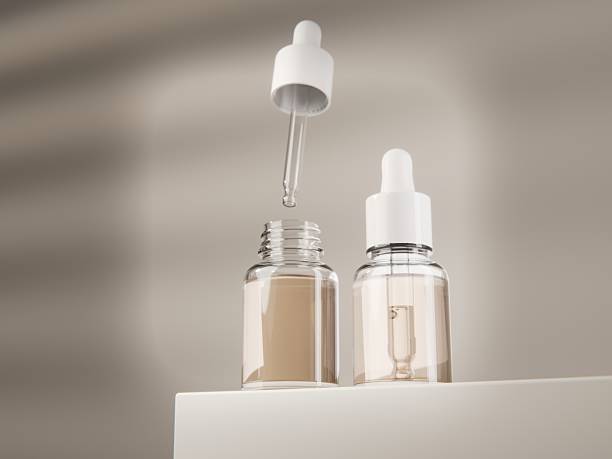
Understand the Meaning of Neck Number: 18/415, DIN 18, 18-400 Respectively?
When selecting bottles, supplier quotations often include parameters like 18/415, DIN 18, 18-400, and 18-410. It may seem confusing at first glance, but the logic is actually quite simple.
The neck designation consists of two digits:
- The first digit = the outer diameter of the neck, in mm. 18 means the outer diameter of the neck is approximately 18mm.
- The second digit = the thread type code, which determines the thread depth and whether it includes an anti-tamper structure.
DIN 18, derived from the German “Deutsches Institut für Normung”, is the de facto standard for the European essential oil and aromatherapy industry.
DIN 18 and 18/415 are essentially the same specification; the former is the European industrial terminology, while the latter is the naming convention of the American GCMI system. When placing orders with Chinese suppliers, both notations are generally understandable, but it is recommended to explicitly request confirmation of technical drawings in the contract.
The differences between the four common 18mm neck sizes are as follows:
| Neck specifications | Compatible Dropper Head Types | Common in the European Market | Applicable bottle capacity | Important Notes |
| DIN 18 / 18-415 | European Standard Vertical Dropper, Tamper-Etched Cap Dropper, EuroDrop® Series | ★★★★★Most Popular | 5ml – 100ml | Standardized design; any 18 DIN bottle can be used with any 18 DIN cap, offering the strongest compatibility. |
| 18-400 | Standard Screw Cap, Boston Round Matching Dropper | ★★★ Medium | 5ml – 30ml | No tamper-evident design; tamper-evident labels are required for European retail; not recommended as a primary choice. |
| 20-400 / 20-410 | 20mm Series Droppers, Metering Dropper Heads | ★★ Less Common | 30ml – 100ml | Commonly found in larger capacity bottles; not compatible with the 18mm series; must be managed separately during procurement. |
| 18mm (unthreaded/press-fit) | Push-in Reducer, Open-hole Flow Limiter | ★★★ Medium | 5ml – 30ml | Commonly found in Euro Round bottles; need to confirm that the inner diameter of the bottle neck matches the outer diameter of the push-in dropper. |

Neck size × European standard dropper head compatibility
Essential oil dropper heads in the European market are mainly divided into the following three categories:
① Euro Dropper (Vertical Dropper): This is the most widely used essential oil dispenser in Europe. It has a built-in vertical tube; after the consumer squeezes the rubber tip, the essential oil flows out drop by drop along the tube, ensuring precise measurement. Compatible neck: DIN 18 / 18-415.
② Tamper-Evident Dropper: Based on the Euro Dropper, it adds a tamper-evident ring to the outer ring, leaving a noticeable mark after opening. Highly recommended for European retailers, especially when sold through e-commerce platforms. Compatible neck: DIN 18 / 18-415.
③ Child-Resistant Dropper: For some essential oils with higher concentrations (such as tea tree oil and peppermint oil), or products with hazard symbols (CLP regulations), a CR cap is required. Europe follows the EN ISO 8317 standard. Compatible neck: DIN 18 / 18-415 (the specific CR cap model must be confirmed to match the neck size tolerance).
Can European standard dropper tips be used with the neck of an 18-400 bottle?
Theoretically, some dropper tips can be screwed on if the outer diameter is the same (18mm), but different thread depths will lead to poor sealing. In actual testing, using an 18-400 bottle with an 18/415 dropper tip significantly increased the probability of leakage when inverted. Mixing them is not recommended.
Mainstream Bottle Types and Capacities in the European Essential Oil Market
Once the neck size is determined, the bottle shape and capacity influence brand positioning and user experience.
Euro Round bottle is an iconic bottle shape in the European essential oil market. It features a curved tamper-evident groove on the shoulder, specifically designed for DIN 18 tamper-evident caps; the rounded body ensures good label adhesion. 5ml, 10ml, 15ml, and 30ml are standard stock sizes with flexible minimum order quantities.
Cylinder bottle is the preferred choice for high-end beauty and organic essential oil brands, with a minimalist design that stands out on the shelf. It typically has a DIN 18 neck, providing a large label area to meet EU multilingual labeling requirements.
Boston Round bottle also has a market in Europe, but its neck size is mostly 18-400mm, making it less compatible with European standard tamper-evident droppers. It is more suitable for export to the US market or scenarios where tamper-evident labeling requirements at the retail level are not a primary concern.

Suggested Sizes:
5ml: Samples, travel sizes, gift set accessories, suitable for new product testing
10ml: Mainstream retail in Europe, highest consumer awareness
30ml: First choice for mass consumption, mainstay in price-sensitive markets
50ml / 100ml: Professional users, wholesale sizes
Color recommendations: Amber offers the strongest UV protection and is the industry standard choice for essential oil bottles. Cobalt Blue is the next best option. Flint bottles are only suitable for products without photosensitive ingredients and must be labeled to indicate that they should be stored away from light.
Final
When selling essential oils in Europe, the key answer for neck nozzle specifications is: choose DIN 18 (= 18/415). It is compatible with all mainstream dropper heads in the European market and naturally meets the requirements for tamper protection.
If you require custom glass essential oil bottles, Hengjing Glass, a glass manufacturer with 10 years of experience, has established long-term partnerships with European clients, ensuring quality control throughout the entire process from sampling to finished product. We consistently guarantee rapid response and efficient delivery without compromising product quality.