
If you’re new to whiskey bottle decanters, you might assume they work just like wine decanters. You know, let the liquor breathe, and the taste gets better. But here’s the thing. People who’ve been drinking whiskey for years? They’ll tell you it’s not that simple.
Most conversations about whiskey bottle decanters tend to come back to a few real‑world questions. For example: does whiskey actually change flavor once you pour it into a decanter? I mean, why do some people swear it tastes smoother? And can you really store whiskey in a decanter for a long time without messing it up? Oh, and while we’re at it – what kind of whiskey should you even put in one, anyway? And is lead-free crystal really that important? These questions matter way more than just “it looks fancy on the shelf.”
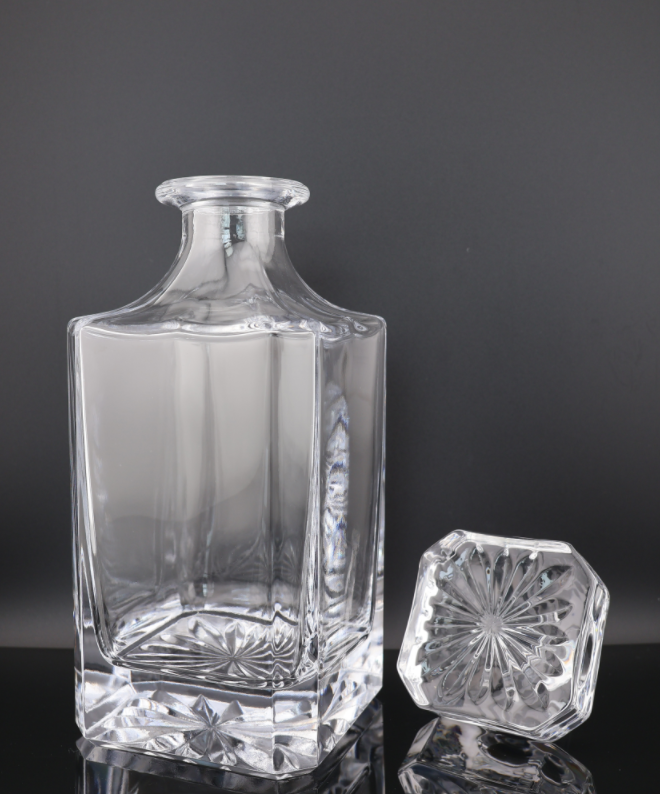
What Is a Whiskey Decanter Used For?
If you look up “what is a decanter used for,” the short answer isn’t complicated. But for whiskey, the actual purpose of a whiskey decanter isn’t really about “aerating” like wine. It’s more about practical stuff. Like pouring more consistently.
Not having to open the original bottle all the time. Keeping light off the liquid. Separating out a little sediment if there is any. And sometimes people use a decanter for blind tastings or to make an Infinity Bottle.
A lot of first time decanter users expect a dramatic flavor change, the same way you’d expect from red wine. But whiskey has already spent years in oak barrels. Its volatile compounds are pretty much stable by the time you buy it.
And here’s where it’s different from wine. With wine, the way you pour it and let it breathe – that aeration – directly affects the organic acids. So when people ask “is it necessary to buy a decanter for different types of wine ,” the real answer comes down to two things: how much molecular oxygen exposure the liquid gets, and what kind of preservation needs you’re dealing with – distilled or fermented.
What really affects how whiskey changes over time? Light exposure, temperature swings, how airtight the stopper is, and how much surface area of the liquid touches air. It’s not simply “more air is better.”
Why does some whiskey have sediment?
Certain non‑chill filtered whiskies (that’s the process that keeps more natural oils and flavor compounds) can turn a little cloudy or develop tiny sediment when it’s cold. Don’t panic – that’s not a sign of spoilage. In fact, it usually means the whiskey kept more of its natural fats and cask flavors.
Some whiskey bottle decanters include a punt (that’s the dimple on the bottom, like wine bottles have). That little design helps sediment settle around the edge, so you don’t accidentally pour it into your glass.
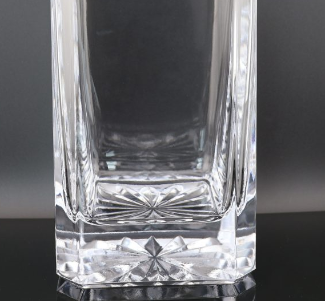
Why would anyone transfer whiskey to a decanter?
Honestly, a very practical reason: less wear and tear on the original bottle. Think about a whiskey you’ve been sipping for months. As the bottle gets emptier, the headspace (the air layer above the liquid) grows. Over time, that air slowly messes with the aroma stability.
Plenty of long‑time whiskey drinkers move their everyday pour into a decanter with a better seal. That way, they don’t risk messing up the original bottle over months of opening and closing.
Why Use a Decanter for Whisky?
Here’s something interesting. When you first pour whiskey into a decanter, many people think it smells softer. That’s not just in your head. The main reason is oxygen exposure – specifically, the surface area of the liquid that’s touching air.
When you pour from the original bottle into a whiskey bottle decanter, two things typically happen: the liquid’s surface area increases, and it gets a short burst of air contact. That lets some of the most volatile alcohol molecules escape first. This is especially noticeable with cask strength whiskey (often 55%–65% ABV, almost undiluted from the barrel).
Right after opening, it often has that sharp alcohol burn – like when you sniff high‑proof spirits and your nose heats up.
After a modest amount of air contact:
- The harsh alcohol burn goes down.
- You can actually smell the different layers of aroma.
- Notes like dried fruit, vanilla, and honey become clearer.
Those lovely scents come from esters – the compounds responsible for fruity, sweet smells in whiskey.
But over‑decanting is a real risk
This is where a lot of beginners get it wrong. A short bit of air can make whiskey more approachable. But leaving it exposed for too long? Not always a good thing.
Because whiskey isn’t wine. It doesn’t have tons of tannins that need to “open up.” If the stopper doesn’t seal well and the whiskey sits in the decanter for weeks or months:
- Alcohol slowly evaporates.
- Those layered aromas fade.
- The flavor turns flat and boring.
For peated whiskies, that change happens even faster. So experienced users of whiskey bottle decanters actually focus on controlled air contact, not just “let it breathe.”
Material Safety: Lead-Free Crystal vs. Standard Glass Bottles
When shopping for whiskey bottle decanters, most people look at looks first. But what really matters for everyday use is the material itself. Especially with old‑school lead crystal.
Why did traditional crystal decanters contain lead?
Classic crystal glass uses lead oxide – that’s what gives it that brilliant sparkle under light. Problem is, whiskey is high-proof alcohol. Ethanol can slowly leach lead from traditional crystal glass over time.
This chemical vulnerability is why modern supply chains place such a heavy emphasis on certified food grade glass bottles and non-toxic compound formulations. By replacing lead oxide with barium oxide or zinc oxide, modern lead-free crystal satisfies strict material safety standards while preserving high refractive index qualities
Why is lead‑free crystal so common now?
Modern lead‑free crystal replaces lead oxide with barium oxide, titanium oxide, or zinc oxide. They still give you a high refractive index (that clear, bright look that makes whiskey color pop), but without the safety concerns for long‑term storage.
Over the last few years, lead‑free crystal has become the go‑to choice for quality whiskey bottle decanters. If you plan to keep whiskey in there for a while, this really matters.
Why the Stopper Design Matters for Long-Term Storage
People seriously underestimate the stopper. But honestly, the stopper might be even more important than the glass itself for keeping your whiskey in good shape.
Here’s why: alcohol evaporates faster than water. If your decanter doesn’t seal tightly, alcohol will leave first. Over time:
- ABV drops.
- Aromas get weaker.
- The taste loses its layers.
- You get flavor flattening – that’s when a once‑complex whiskey turns simple and dull, like music losing all its highs and lows.
Many whiskey enthusiasts have noticed that a peaty, smoky whiskey left in a poorly sealed decanter for a few weeks loses most of that bonfire and sea spray character. Peated styles are especially sensitive.
Why is glass‑on‑glass sealing preferred?
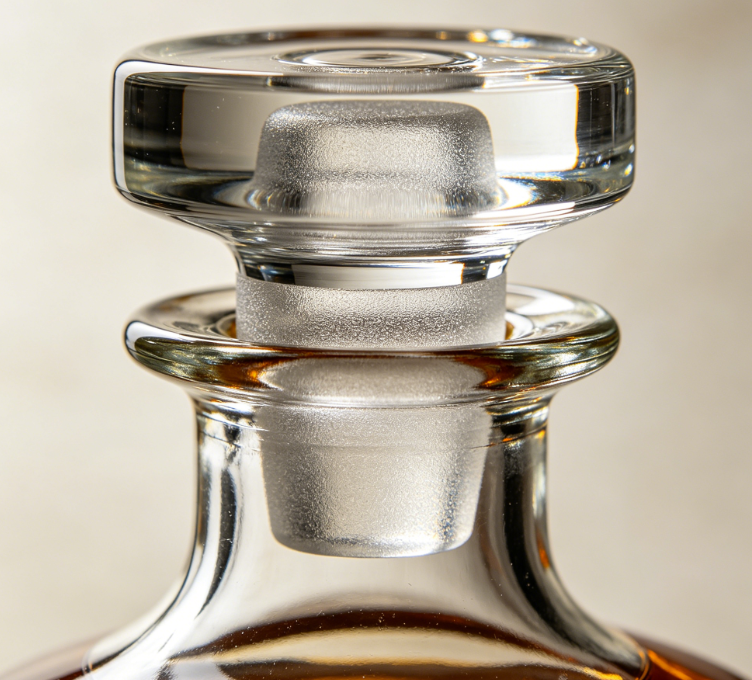
Higher‑end whiskey bottle decanters often use a glass‑on‑glass precision ground joint. That means the stopper and the mouth of the decanter are ground to fit together tightly – like two puzzle pieces. This kind of seal is stable, doesn’t absorb odors, and lasts a long time.
On the flip side, some purely decorative stoppers just “sit on top.” They look nice for a short display, but for long‑term storage, air slowly sneaks in.
Silicone rings aren’t automatically bad
Nowadays, many good whiskey bottle decanters include food‑grade silicone rings. Why? Silicone is soft and can make up for tiny imperfections in the glass. What really matters isn’t “does it have silicone?” but rather: is it food‑grade? Alcohol‑resistant? Built to last? The ones you want to avoid are loose, decorative stoppers that don’t really seal.
Choosing the Best Whiskey for a Decanter
Not every whiskey belongs in a decanter for the long haul. This is more important than most people realize.
Best types to put in whiskey bottle decanters
Cask Strength Whiskey
High‑proof whiskeys often have a sharp kick upfront. A modest amount of air contact can make them smoother, easier to nose, and less aggressive. So cask strength whiskey works really well for short‑term decanting.
Aged Whiskey
Older whiskies have complex aromas. Some non‑chill filtered versions might even have a little natural sediment. Using a decanter with a punt helps control pouring and keeps sediment out of your glass.
Infinity Bottle
This is a fun one. An Infinity Bottle is where you keep adding different whiskeys over time, creating your own ever‑changing blend. A decanter is perfect for this because: you can easily keep adding to it, you get to watch the flavor evolve over months, and it saves space on your shelf compared to keeping multiple original bottles. A lot of long‑time whiskey fans maintain their own Infinity Bottle.
Which whiskeys really depend on a good seal?
Heavily peated whisky is at the top of that list. Those smoky, medicinal, sea‑breezy notes come from phenols – the compounds that give peat its character. And those phenols are actually very volatile. If your decanter’s seal is just average, that beautiful smoke can fade noticeably in just a few weeks.
How Wall Thickness and Base Weight Protect the Liquid
You might think a thick‑bottomed whiskey bottle decanter is just for show. But the thickness of the glass and the weight of the base actually affect how well the liquid holds up over time, especially when it comes to temperature stability.
Why does a thick base help?
Good decanters use even wall thickness and a solid, heavy base. It’s not just about the feel in your hand. Here’s where thermal mass comes in.
That’s just a fancy way of saying how well the material resists temperature changes. In plain English? Thicker glass means the whiskey inside won’t heat up or cool down as fast when the room temperature shifts. And that actually comes in handy.
Like if you tend to keep your decanter near an air conditioner, or right by a window, or anywhere that sees noticeable swings between day and night.
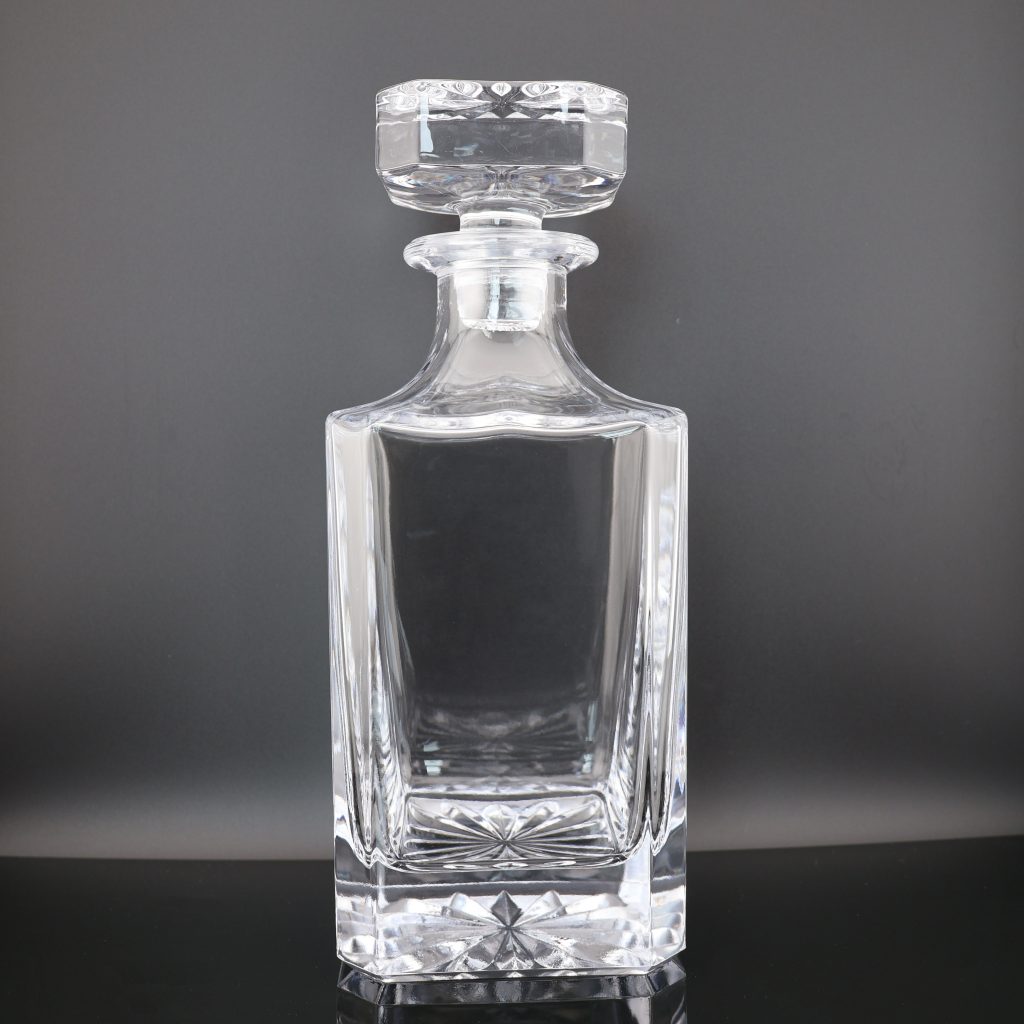
Why even wall thickness matters
With a good quality whiskey bottle decanter, you’re usually looking at a consistent wall thickness, somewhere around 4mm to 5mm. Take Hengjing Glass, for instance. They put a lot of attention into thickness uniformity and how precise the stopper is.
And there’s a good reason for that. Both of those things directly affect how the decanter performs over years of regular use. Think about it this way: if the glass isn’t even – if it’s thicker in some spots and thinner in others – then some parts will heat up and cool down faster than the rest. Over time, that creates stress points – local pressure inside the material that can hurt durability and even the long‑term seal quality.
So when you pick a decanter, don’t just look at the shape. Give the base a tap, feel the weight, and check if the glass feels consistently thick. Your whiskey will thank you later.