Those three seconds in front of the shelf determined everything.
Imagine a scene: Consumers stand in front of the shelves of a premium wine store, facing dozens of whiskies, gins or mezcal. They don’t have time to read each wine label carefully, nor will they check the ratings online on the spot. Before making the decision to “give it a try”, their judgment is often completed within three seconds – and this three seconds is entirely determined by the packaging.
This is not intuition, but data. Research shows that 72% of consumers indicate that packaging design directly affects their purchasing decisions. In the high-end spirits category, this proportion will be even higher – because consumers who purchase premium-priced goods essentially are not buying the liquid itself, but an identity, a brand story, and a memorable experience to share.
It is this logic that drives more and more high-end alcohol brands to shift their focus from standard round bottles to custom-shaped glass bottles. And this trend has evolved from a niche strategy to a mainstream competitive approach around 2025.
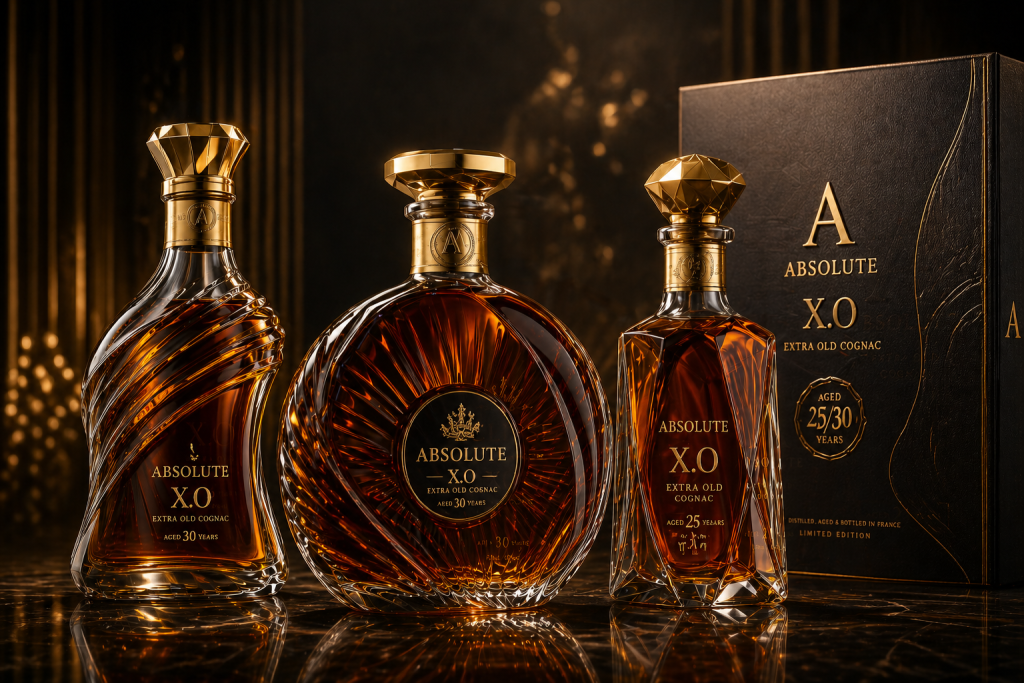
The size of the premium spirits glass bottle market confirms this judgment: In 2025, the market is valued at approximately 7.7 billion US dollars, and it is expected to reach 12.1 billion US dollars by 2035, with a compound annual growth rate of 4.6%. During this growth, the share of custom-shaped and customized bottles is accelerating to expand.
Why Are “Standard Round Bottles” No Longer Sufficient?
Before discussing the unconventional bottles, it is necessary to first understand a harsh reality: The round bottles are becoming the least memorable form on the shelves.
According to market data, round bottles still account for more than half of the high-end spirits glass bottle market. In other words, more than half of the brands have chosen the same bottle shape. When competitors all look similar, differentiation can only rely on label design – but labels can do much less directly and persistently than the bottle shape itself.The behavioral patterns of high-end consumers are also undergoing structural changes. In the past, purchasing high-end alcohol was a business etiquette behavior, following the path dependence of familiar brands; today, more and more young high-net-worth consumers have turned purchasing alcohol into an active exploration behavior: they are willing to try unfamiliar brands, are willing to pay a little more for “interesting packaging”, and are also willing to take a nice bottle of alcohol and post it on social media.
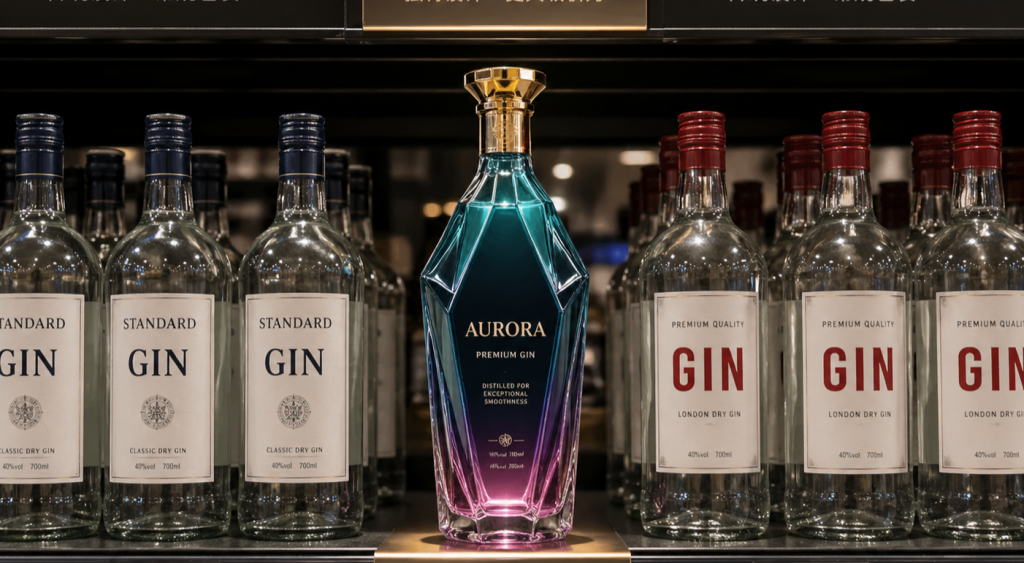
This brings about a key change: Packaging has transformed from a passive display tool to an active communication medium.
The unique unconventional bottles inherently possess the “social currency” attribute in opening box videos, table setups for photos, and social sharing. Even after a bottle of uniquely shaped wine is consumed, it still remains on the consumer’s bookshelf or bar counter, continuously promoting the brand.
From a commercial perspective, custom-shaped packaging can provide the brand with a direct price premium of 15% – 20%. And the premium multiple for artistic collaboration editions or limited edition unconventional bottles can even reach more than twice that of ordinary packaging – this has been verified in multiple cases of liquor cultural and creative products.
Investing in packaging is not a cost item, but brand asset.
Five Irregular Bottle Design Trends
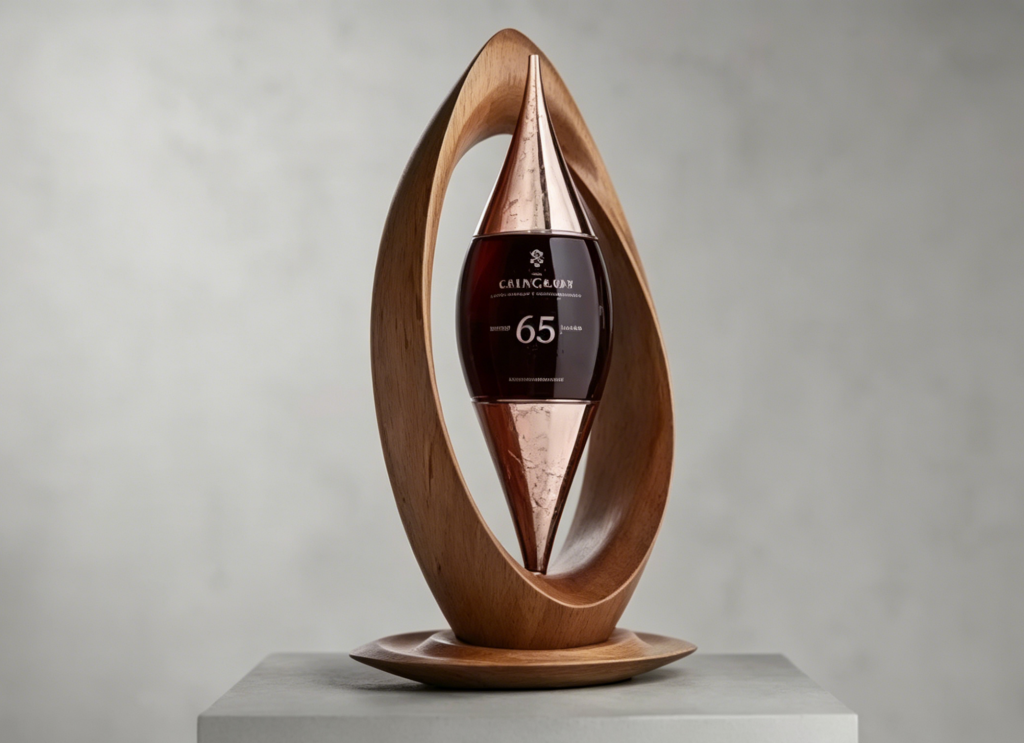
Trend 1: Sculptural Bottle Shapes – Turning Bottles into Collectibles
This trend is most prominent among top premium spirits brands. Brands collaborate with artists and design studios to transform the bottle into an object with artistic collectible value.
A typical example: Glen Grant Splendours Collection, whose bottle design is inspired by mountain plants, and the faux suede-lined gift box further enhances the sense of the opening ceremony; Johnnie Walker Couture Expression uses crystal material and a unique proportion, positioning the bottle as “a piece of art that can be placed in a display cabinet”.
The core logic of this design: The bottle itself is part of the product. Consumers pay for the design, and the brand achieves longer-term exposure through the act of collecting.
Trend 2: Cultural Narrative Bottle Design – Using Shape to Tell Brand Stories
Shapes can carry meaning. More and more brands are embedding the cultural background, historical anecdotes or brand myths of their products into the design of the bottle itself.
In the 2025 International Packaging Design Master Competition, the Indian single malt whisky Indri won the gold award with an elephant relief bottle design – the elephant is an important symbol in Indian culture, and the relief technique reinforces the brand’s commitment to “handcrafted” at the tactile level. Another winning work, Maya Pistola, transforms the goddess into a mythological story of the agave plant and presents it in relief form on the back of the bottle. Through the reflection of the wine liquid, it can be vaguely seen, and the visual narrative has a great sense of depth.
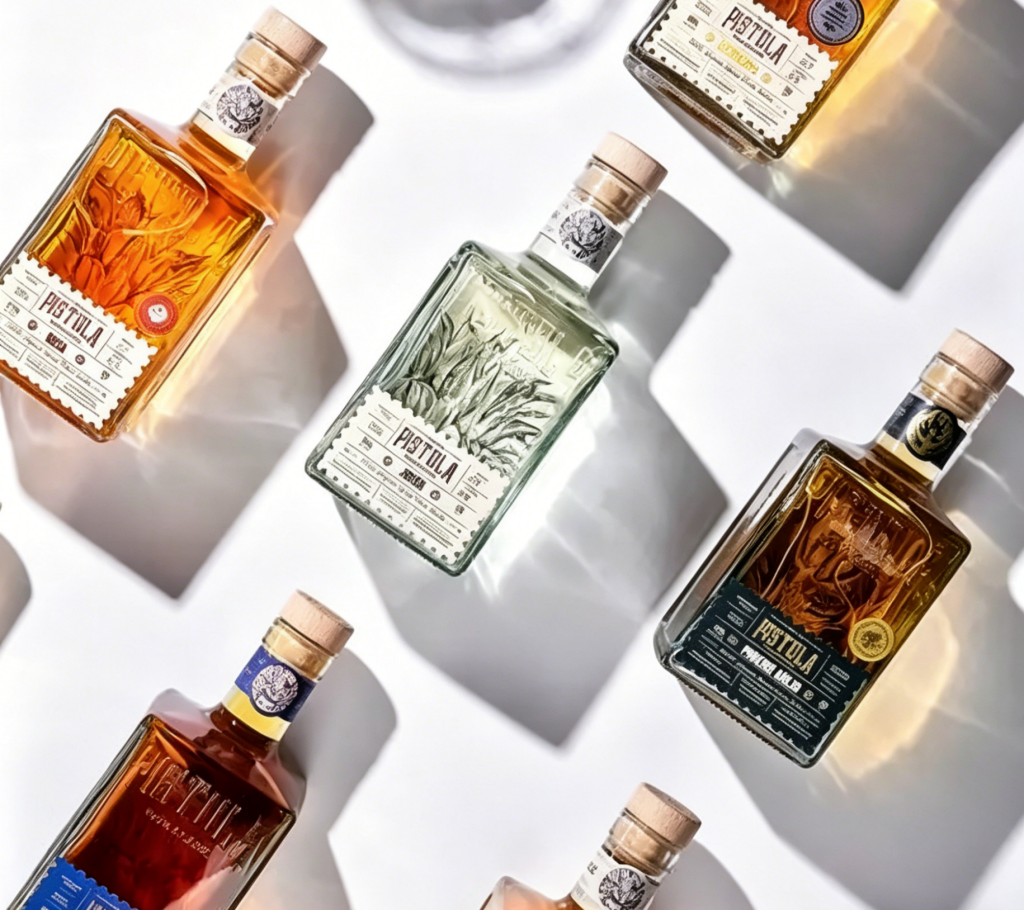
The Chinese market also validates this logic: A certain liquor brand launched a “Twelve Hours of Chang’an” cultural collaboration series, converting elements of the Tang Dynasty history into visual symbols, and after its launch, the regional market share increased by 25%, and the premium of the collaboration version was as high as 2.3 times that of the ordinary packaging.
The value of narrative design in culture lies not in complexity, but in its authenticity and immediacy. The deeper the brand’s roots, the more powerful the narrative of the unconventional bottle becomes.
Trend 3: Geometric Minimalism and Matte Texture – The Packaging Language of “Quiet Luxury”
The era of excessive decoration is coming to an end. The “quiet luxury” aesthetic that has spread from the fashion industry to the packaging industry is reshaping the design language of high-end wine bottles.
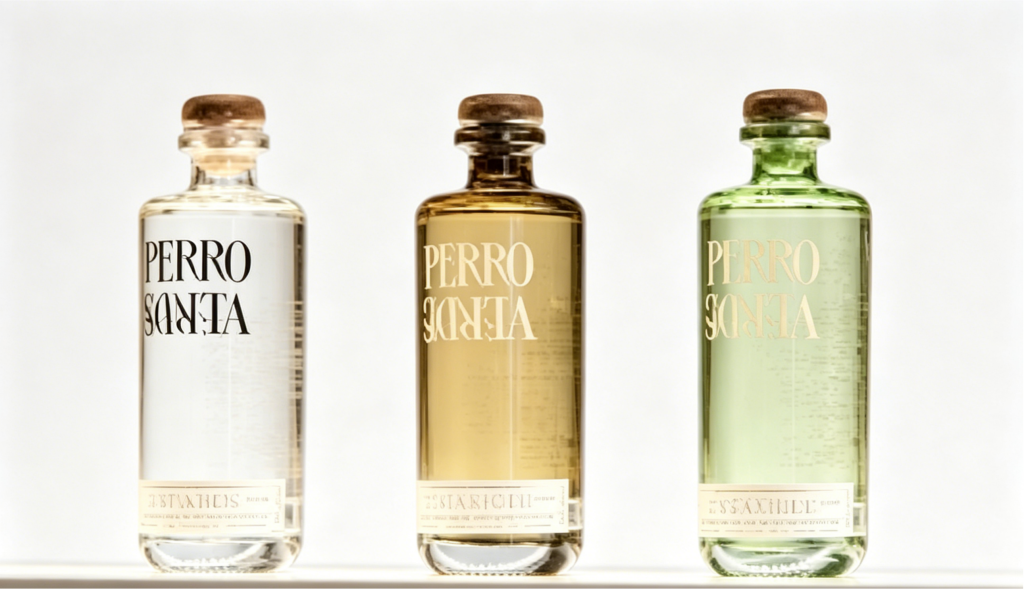
The characteristic of this trend is: abandoning elaborate decals and ornate labels, and instead conveying a sense of luxury through the geometric tension of the bottle shape and the texture craftsmanship of matte glass. Square bottles and multi-angled bottles combined with deep sandblasting and matte finishing can convey the luxurious air of “this item doesn’t need to shout loudly” without relying on color alone, merely through form and texture.
Currently, the demand for tactile techniques such as deep sandblasting, imitation stone patterns, and leather textures has significantly increased globally, and the orders for related processes from manufacturers have continued to rise.
Trend 4: Enhanced Tactile Technology – A “Physical Rebound” in the Digital Age
In today’s era where e-commerce shopping is highly prevalent, the offline interaction between consumers and products has become increasingly precious. This has made the tactile experience of glass bottles an unprecedentedly important design dimension.
Industry researchers refer to the feelings consumers experience when holding a bottle of wine as the “dopamine moment” – the sense of weight, edges, and embossed patterns. These tactile signals convey the quality in milliseconds, and these signals cannot be replicated by screens.
Therefore, the high-end wine bottle market in 2025-2026 shows a strong demand for deep embossing and “handcrafted flaws” glass textures. This deliberately created “imperfectness” actually conveys the unique value of artisanal craftsmanship, contrasting sharply with industrial mass-produced products.
Trend 5: Scenario-based irregular shapes – Packaging as a solution
The last trend is to deeply integrate the design of unconventional bottles with specific consumption scenarios.
The economy of single-person drinking has led to the demand for mini-shaped unconventional bottles; the gift market has driven the popularity of magnetic suction gift boxes and double-bottle combination sets; camping and outdoor scenarios have brought about the demand for functional designs such as hanging bottle bodies and anti-drop outerwear. An American craft beer brand’s camping set of wine bottles, due to its unique shape, which is suitable for outdoor scenarios, saw a 240% increase in sales.
The essence of scenario-based unconventional packaging is to have the packaging answer a consumer’s hidden question: Does this bottle of wine fit my lifestyle?
Functional Design Matters Too
Custom bottles are not just about appearance.
Practical Enhancements
- Ergonomic grip
- Controlled pouring
- Anti-slip structures
Good design improves both usability and perception.
Challenges to Consider
Cost and Complexity
- High mold costs
- Lower production efficiency
Logistics Limitations
- Difficult stacking
- Higher transportation costs
Custom bottles require strategic planning—not blind adoption.
Who Should Use Custom-Shaped Bottles?
- Premium spirits (whisky, tequila, brandy)
- Emerging brands seeking differentiation
- Gift-oriented or limited-edition products
- Co-branded or collaborative releases
Packaging is a brand’s first and most lasting impression on the world
The competition in the high-end wine market has never unfolded at the “meaning” level like it does today. The portion of premium that consumers are willing to pay for a good bottle of wine is actually paying for the story it conveys, the lifestyle it represents, and the satisfaction felt at that moment in their hands.
The unique-shaped glass bottle is the most effective carrier for embodying these intangible values. It speaks for the brand on the shelves, initiates the first tactile dialogue in the hands of consumers, and continues to tell the brand’s existence on the table after the wine is consumed.
Whether it’s sculpted forms, cultural narrative reliefs, minimalist geometric aesthetics, or scene customized designs – every path leads to the same goal: Make your bottle the one that consumers can easily identify without explanation.
If you are planning a packaging upgrade for your next high-end series, please feel free to discuss with our customization team – from concept design assessment, to mold production and prototyping, to mass production delivery, we provide full-chain support.