
When you’re picking goblet glasses for your brand — like for luxury hotels, private label wine collections, retail homeware, or corporate gifts — it’s not just about looks, it’s a whole trade off of aesthetics, function, and cost. Still, if you pick the wrong model it can cause a lot of breakage and then you end up with those not so great customer reviews, and yes even a weaker brand image. This write up leans on sourcing know how and material science, so you can check goblet glasses in a more step by step way, more systematic. We’ll talk through brand fit, material grades, size ergonomics, decoration methods, and supplier vetting criteria, so you can land on a procurement choice that lifts how people see your value , and also supports day to day operational efficiency.
Know Your Brand Positioning
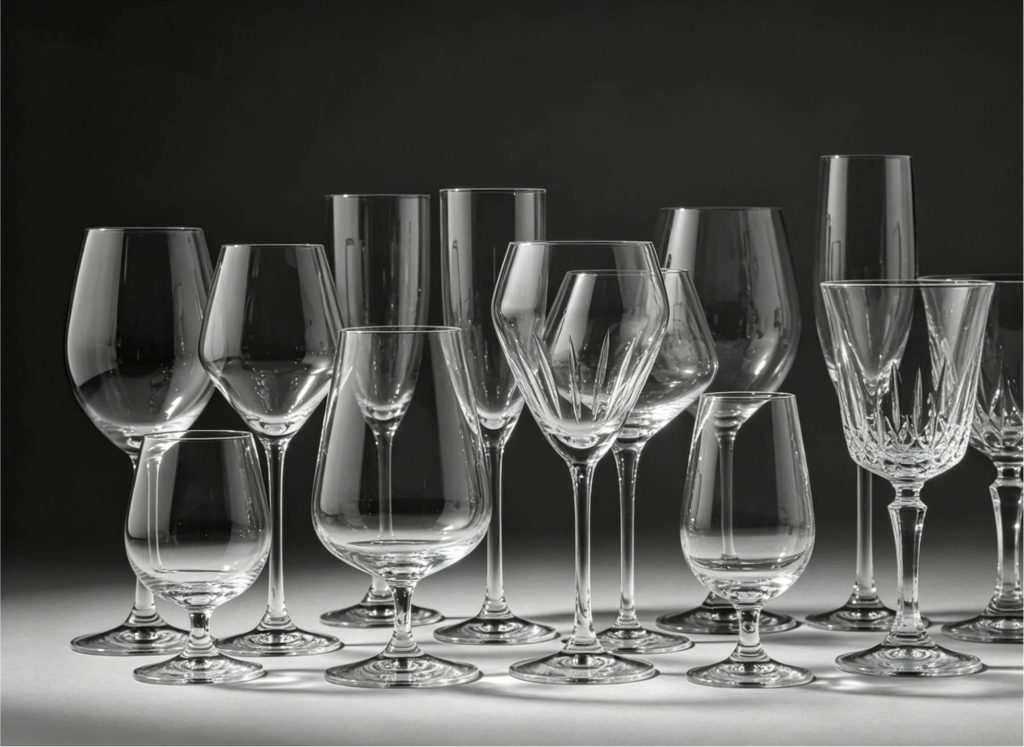
Your ideal goblet shape and quality tier basically depends on who’s going to use it and in what context. Like, a heavy ornate crystal goblet can wow people at a Michelin-starred restaurant but it would feel kind of impractical at a beachside bar, you know. Similarly, thin-rimmed glasses lean toward sophistication but they also need careful handling. They’re not ideal for high turnover catering either, it can get messy fast.
Use this matrix to map your market to the right style:
| Market Segment | Recommended Goblet Style | Key Consideration |
| Hotels & Fine Dining | Durable, classic designs with reinforced stems | Balance elegance with dishwasher safety |
| Wine & Beverage Brands | Elegant lead-free crystal goblets | Maximize clarity and “ring” for sensory appeal |
| Gift & Promotional Brands | Decorative or colored goblets | Visual distinctiveness matters more than thinness |
| Retail & Homeware | Modern, versatile shapes | Must suit multiple table settings and glassware sets |
A luxury wine brand may prioritize crystal clarity and elegant stems, while a restaurant chain may focus on durability and cost efficiency. Understanding your market first helps narrow down the right product specifications.
Choose the Right Material
Material is the single most impactful factor affecting durability, visual clarity, weight, and perceived value. For commercial sourcing, the choice almost always narrows to two grades:
Soda Lime Glass
- Composition: silica (SiO₂), soda (Na₂O), and lime (CaO) . I mean this is basically the most usual glass type, it covers well over 90% of the glass that gets made across the globe.
- Performance: it has a moderate ability to handle thermal shock, but it is more apt to pick up scratches and get that surface haze or cloudiness after a bunch of washes.
- Applications: for everyday restaurant glassware, those promotional giveaways, and entry level retail stuff.
- Cost advantage: usually it comes in about 30–50% cheaper per unit compared with crystal equivalents, assuming you are talking about similar volumes.
Lead-Free Crystal (Barium/Zinc Crystal)
- Composition: includes no less than 10% barium oxide, zinc oxide, or potassium carbonate instead of the usual lead oxide, so it feels more on the “cleaner material” side.
- Performance: a higher refractive index , roughly 1.52–1.54 compared to soda lime’s 1.51, so you get that vivid sparkle. Also when you flick it you hear a clear resonant “ping”, which some wine enthusiasts call a real quality cue.
- Applications: made for premium wine labels, anniversary gifts, and those upscale hotel mini bars and snack setups.
- Safety compliance: certified lead-free under EU Directive 2002/72/EC and FDA 21 CFR 175.300, which matters a lot for food contact, really.
Select the Right Size and Shape
Goblet dimensions directly affect both portion control and the drinking experience. Shape, in particular, influences how aromatics concentrate and how liquid hits the palate.
| Volume | Best For | User Experience |
| 250 ml | Dessert wines, sherry, tasting flights | Encourages small, focused sips; portion control |
| 350 ml | Standard red/white wines | Versatile; fits most wine pour norms (150 ml pour leaves room for swirling) |
| 450 ml | Bold reds (Bordeaux, Cabernet) | Ample surface area for aeration; improves bouquet release |
| 550 ml | Decorative pours, oversized novelties | Visual impact; often used as a gift or statement piece |

Bowl Shape and Function
- Wide Bowl – Maximizes oxygen contact. Ideal for tannic reds that need aeration. Visually dramatic but bulkier to store.
- Round Bowl – The most universal shape. Works across varietals. Its curvature directs wine to the mid-palate, balancing acidity and sweetness.
- Tall Bowl – Elegant, vertical design. Channels wine to the back of the mouth, minimizing acidity perception—preferred for sparkling wines and lighter whites.
Ergonomic tip: The stem should be at least 6–8 cm long to allow holding without warming the bowl. A short stem compromises functionality, regardless of how beautiful the bowl is.
Consider Customization Options
Customization helps transform standard goblet glasses into products that represent your brand. Whether you’re creating promotional merchandise or launching a private-label collection, selecting the right decoration method adds value and differentiation.
Popular customization options include:
- Logo Printing
A practical solution for restaurants, bars, hotels, and promotional products. Printed logos help strengthen brand recognition while maintaining competitive production costs. - Decal Decoration
Decals allow colorful and detailed graphics, making them suitable for commemorative products, seasonal collections, and branded drinkware. - Laser Engraving
Laser engraving delivers a permanent sophisticated look that doesn’t really fade, not over time anyway. It is often used for premium gifts and also luxury hospitality work. - Colored Glass and Special Finishes
Colored goblet glasses, frosted surface treatments, gradient coatings, and metallic accents are getting a lot more popular in retail and event spaces, giving brands extra ways to build distinctive collections. - Custom Mold Development
For brands seeking exclusive designs, custom molds make it possible to create unique shapes, stems, or decorative details that cannot be found in standard product catalogs.
The most suitable customization method depends on your branding goals, order quantity, and target market.
Choose a Manufacturing Partner That Supports Your Growth
Selecting the right manufacturer is just as important as selecting the right product. A reliable supplier should be able to support your business as your product line expands.
When evaluating a goblet glass manufacturer, consider whether they can provide:
- A wide range of standard goblet designs
- Flexible customization options
- Stable production capacity
- Consistent product quality
- Experience serving international wholesale markets
Working with an experienced manufacturing partner allows you to develop new collections more efficiently while maintaining consistency across every order.
Conclusion
Choosing the right goblet glasses kind of begins with getting to know your market, and then picking products that really match your brand positioning. If you pay attention to material, size ,shape, plus the ways you can customize them ,and even the manufacturing methods, businesses can put together glassware collections that look great, but still make commercial sense.
Whether you’re sourcing goblet glasses in wholesale for hospitality, retail, or maybe a private label project, teaming up with a manufacturer who’s got experience can help you craft items that stand out in a crowded market ,while also staying on point with what customers expect.