The European Union’s landmark packaging regulation is now weeks away from enforcement. For cosmetic brands selling into the EU market, the clock is ticking — and your choice of packaging material will directly determine your compliance costs for years to come.
The Regulatory Shift You Cannot Ignore
On 12 August 2026, Regulation (EU) 2025/40 — the Packaging and Packaging Waste Regulation, commonly known as PPWR — becomes fully enforceable across all 27 EU member states simultaneously. This is not a directive requiring national transposition. It is a regulation, meaning one unified set of rules applies identically from Lisbon to Helsinki, with no grace period for late adapters.
For businesses putting their packaging products into the EU market regardless of whether you are a cosmetics company, an importer, or a distributor, there will be penalties such as fines up to 4% of annual turnover, restriction from accessing the market, and reputation damage that is hard to redeem.

But here is the strategic reality that many brands are still missing: PPWR is not merely a compliance burden. The regulation’s eco-modulated fee structure means that your packaging material choices will directly reduce or increase what you pay under Extended Producer Responsibility (EPR) schemes — year after year. Getting this right early is one of the most consequential packaging decisions your brand will make this decade.
Understanding the Three Pillars of PPWR
1. Extended Producer Responsibility (EPR)
Producers are responsible under the PPWR system for all aspects of financing the lifecycle of their packaging, from collection through sorting, recycling, and final disposal. Any brand putting its packaging into circulation within the EU is required to register with the national EPR authority in each country of sale, provide an annual accounting of their packaging tonnage and materials, and pay the associated fees.
Notably, such fees are eco-modulated, whereby packaging that performs better in terms of recyclability is assessed much lower fees, whereas difficult to recycle or composite packaging can incur substantial additional charges. The cost of EPR fees across the EU are expected to increase by 30% to 60% between 2027 and 2030 due to rising recycling targets.
2. The Recyclability Grading System (A–E)
PPWR adopts a grading scale for recyclability. There are five grades in total: Grade A to Grade E, where Grade A denotes most easily recycled materials while Grade E means non-recyclable packaging. The costs involved are quite high: mono-material packaging will likely get Grade A or B status, hence the EPR costs will be in the range of €150-€200 per tonne.
From 2030, only Grade A, B, and C packaging will be permitted on the EU market at all. From 2038, Grade C is also eliminated, leaving only packaging with recyclability scores above 80%. Brands that delay transitioning to high-grade recyclable formats are not just paying more now — they are building a compliance liability into their supply chain.
3. Key Compliance Milestones
| Date | Requirement |
| 12 August 2026 | PPWR enforcement begins; EPR registration mandatory; PFAS restrictions in food-contact packaging |
| 12 August 2028 | Harmonized labeling requirements with material pictograms; QR codes on reusable packaging |
| 1 January 2030 | Design for recyclability mandatory; minimum recycled content thresholds apply (glass: 50%); single-use packaging restrictions begin |
| 2038 | Only Grade A and B packaging permitted on the EU market |
Why Mono-Material Glass Bottles Are the Optimal Choice for Cosmetics

The Natural Mono-Material Advantage
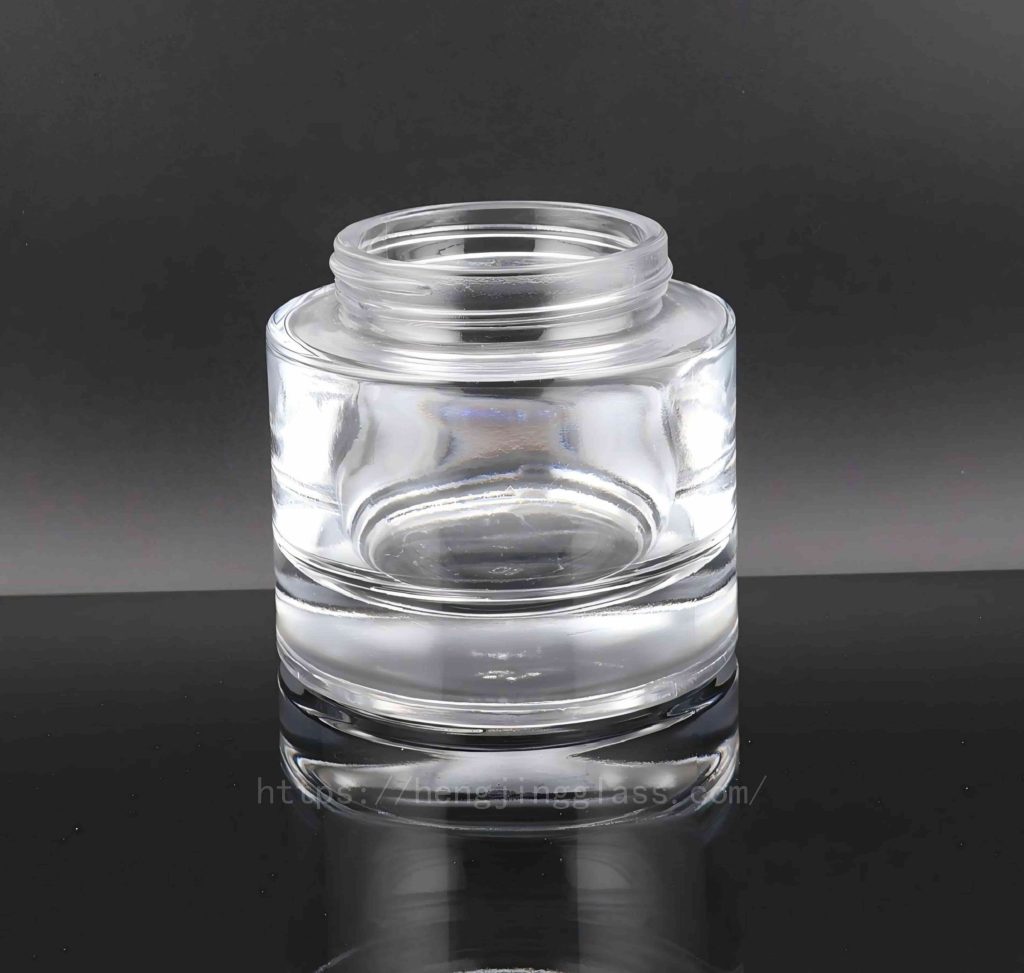
Glass is one of the very few packaging materials that is inherently a single, pure material — no adhesives, no laminates, no mixed polymers. It can be recycled infinitely without any degradation in quality. Under PPWR’s recyclability grading framework, this is not just an environmental benefit — it is a direct financial advantage.
With the advent of legislation that fines composite materials that are difficult to recycle, mono-material packaging will score higher in terms of recycling performance, save on EPR fees, and greatly ease compliance reporting processes. Take the typical glass bottle used in cosmetics like serums, perfumes, facial oils, or toners; there is no difficulty in material segregation for such packaging.
For brands currently using multi-component packaging with mixed materials, the EPR fee differential between their existing formats and a mono-material glass alternative will compound meaningfully over the coming years.
A Direct Strategy for Reducing EPR Tax Liability
The numbers are telling. Moving from a composite, multi-material cosmetic package to a mono-material glass bottle can shift your recyclability classification by two or more grades — translating to fee reductions of €150–250 per tonne of packaging placed on the market. For brands with meaningful EU sales volumes, this is not a marginal saving. It is a structural reduction in your ongoing compliance cost base.
Beyond the direct EPR fee reduction, glass also supports brands in meeting the 2030 recycled content requirements. In 2030, packaging made out of glass should be manufactured with at least 50% recycled content. By collaborating with a company providing PCR glass packaging solutions, it is possible to ensure that a brand integrates this requirement into their packaging guidelines well before the deadline hits, since there will be a shortage of the material.
Compliance Without Compromising Brand Equity
Another thing often raised by beauty brands is the apprehension about trade-offs; that to be sustainable in your packaging compromises aesthetics. Glass does away with this problem altogether.
Glass offers unmatched tactile quality, optical clarity, and shelf presence. It communicates product integrity and brand sophistication in a way that no plastic alternative fully replicates. For prestige skincare, fragrance, and luxury cosmetics, glass is not a compliance compromise — it is the material that simultaneously satisfies regulatory requirements and reinforces brand positioning.
Glass packaging not only stands out due to its superior quality but can also provide the greatest environmental story as it is fully recyclable, inert, and safe from any microplastic or chemical migration risks.
The Unique Compliance Challenges Facing Cosmetic Packaging
It should be recognized that cosmetics face a unique road to compliance compared to many other types of products. A basic skincare product will comprise several components such as the main pack, the pump, the cap, and even secondary packaging.
Here’s when engaging your supplier early in the process is vital. Companies should undertake an assessment of their current packaging and identify those with multi-materials or significant amounts of unused space, which could be targeted by the regulations. In making the transition to glass packaging, it will help to work with suppliers who can offer:
- Material composition certification confirming mono-material or recycled glass content
- Declaration of Conformity (DoC) documentation for PPWR purposes
- Recyclability grade assessment to support EPR fee calculations
- PCR glass content reporting to satisfy the 2030 recycled content requirements
…means your compliance documentation is built into your supply relationship, not assembled under pressure before an inspection.
What You Should Do Before August 2026
The window for preparation is narrow. Here is a practical action sequence for cosmetic brands:
1. Conduct a packaging audit immediately. Map every SKU sold in the EU. Flag multi-material components, composite formats, or any packaging likely to score Grade D or E under PPWR’s recyclability framework.
2. Quantify your EPR cost exposure. Estimate the fee differential between your current packaging and mono-material glass alternatives. In many cases, the EPR savings within two to three years will offset the cost of a packaging transition.
3. Register with national EPR authorities. You must be registered in every EU member state where you sell before 12 August 2026. Missing this registration means no legal right to distribute in that market — a commercial risk that cannot be resolved retroactively.
4. Engage your glass supplier on compliance documentation. Confirm they can provide the technical documentation required for your Declaration of Conformity, and discuss PCR glass options to get ahead of the 2030 recycled content mandate.
5. Treat 2030 as the real design deadline. Given typical packaging development cycles of 18–24 months, brands that begin redesigning now will be on schedule. Brands that wait until 2028 will not.
The Opportunity Inside the Regulation
PPWR is the most significant overhaul of European packaging law in three decades. If such companies treat it solely as a compliance issue, then they will incur additional costs. But for the companies that view it as a strategic signal, it gives an opportunity to establish a supply chain that is truly resilient, efficient, and forward-thinking, aligning with where the market and regulations are headed.
PPWR-compliant mono-material glass bottles find themselves in the sweet spot between all four trends impacting the cosmetics industry packaging today – regulatory compliance, EPR cost optimization, sustainability requirements of consumers, and brand positioning.
Those brands that act strategically in 2026 will not just be in compliance; they will have competitive advantages over their competitors due to low EPR fees, verified recycling content, and packaging that is consistent from the perspective of both regulations and consumers.
Looking to transition your cosmetic packaging to PPWR-compliant mono-material glass? Contact our team for a compliance consultation, material samples, and full technical documentation support.