
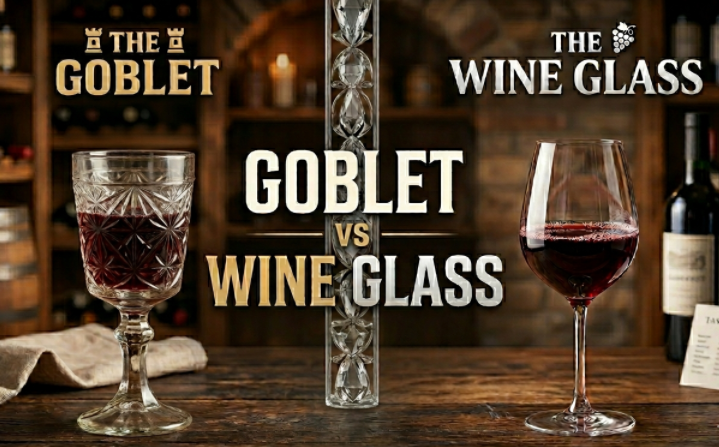
Whether you are organizing a romantic wedding, a luxurious hotel banqueting service, or purchasing goods for international e-commerce (such as Amazon and Wayfair) and interior designs, have you ever been puzzled by the bewildering variety of glasses available at your disposal? Especially for goblets vs wine glasses, although both of them appear to be stemmed glasses, their uses are quite distinct in terms of production techniques, practicality, and elegant dining table manner.
As a professional glassware manufacturer with vast experience in the industry, we often receive many questions from our customers abroad about these two types of glasses. Now we are going to give you an in-depth comparison of these glasses in aspects of exterior design, production technique, practicality, and dining manners.
What is a Goblet?
The goblet has a long history, dating back to the “chalices” used in medieval religious rituals or royal banquets. Modern home and catering goblets inherit that heavy, luxurious, and grand aesthetic.
1. Appearance and Design Features
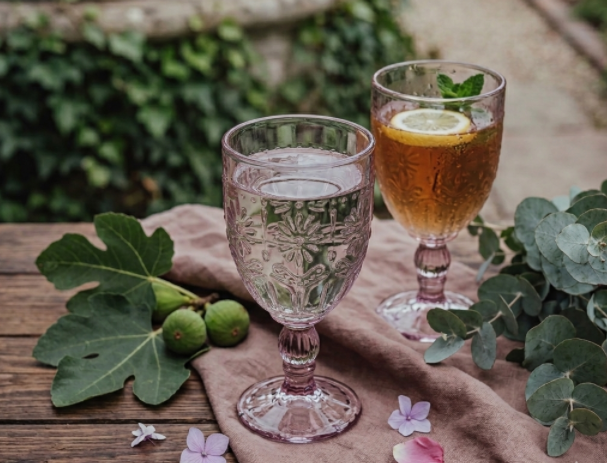
Thick Materials and Embossing: Goblets are commonly constructed using thick glass or crystal material. In order to create the appearance of being vintage and opulent, goblets are known to have detailed embossing designs, cut-glass design elements, or vintage colors, such as vintage green, amber, and amber gold.
Short and Thick Stem: The stem of the goblet tends to be short and very thick, giving the holder a strong, steady hold on the glass and preventing it from falling easily.
Wide Bowl: The bowl part of the goblet tends to be wide and round or somewhat U-shaped.
2. Core Uses and Market Demand
In formal Western dining, the primary identity of a goblet is the Water Goblet. It is not used for wine, but rather for serving premium ice water, iced tea, juice, and soda. In some casual taverns, large goblets are also used to serve craft beer.
On the production side, goblets are mainly produced using the machine-pressed glass process. This technique allows us to create complex, 3D embossed patterns on the body of the glass. Because of their heavy weight, high durability, and dishwasher-safe nature, goblets are in high demand in the wedding rental market, vintage restaurants, and the Middle Eastern and Euro-American gift markets.
What is a Wine Glass?
Unlike the goblet, which emphasizes stability and decoration, the wine glass is a purely “function-driven” piece of tableware. Every line of its design is engineered to provide the drinker with the ultimate wine-tasting experience.
1. Appearance and Design Features
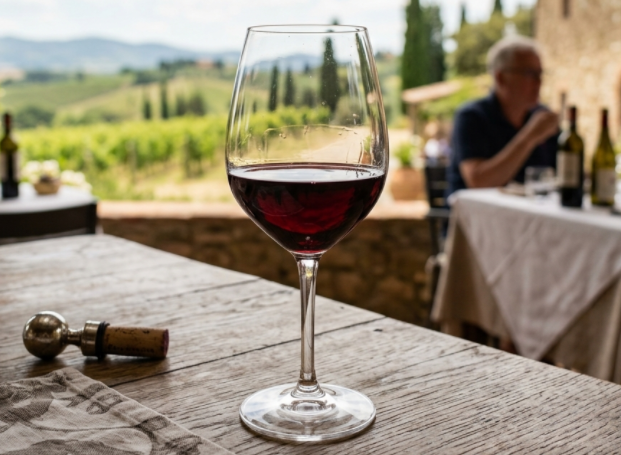
Ultra-Thin and Transparent Walls: To allow wine tasters to clearly observe the color and “legs” (viscosity) of the wine, wine glasses are almost always completely transparent with extremely thin walls (premium lines typically use lead-free crystal).
Lengthy Stem: The lengthy nature of the stem performs an important physical purpose, hand temperature isolation. It is important that drinkers hold the wineglass by its stem so that their palms do not touch the bowl, as this would cause the wine to warm up.
Tapered Rim: Be it the case that the bowl is shaped in the form of a tulip as in the Bordeaux glass or is rounded as is the Burgundy glass, the rims of these glasses always taper inwards.
2. Core Uses
Wine glasses are exclusively made to serve red wine, white wine, rosé, and sparkling wine. Based on the type, they are classified as red wine glasses, white wine glasses, and champagne glasses/flutes.
Highly accurate skill is required to manufacture wine glasses as they either hand-blown or machine-blown at a premium level. The process of making laser-cut rims guarantees that the edge remains very fine and the lips feel smooth, which cannot be accomplished with inexpensive pressed glass.
Goblet vs Wine Glass: Key Differences
To give you a more intuitive understanding of the differences between the goblet and wine glass, we have compiled the following comprehensive comparison table:
| Comparison Dimension | Goblet | Wine Glass |
| Primary Function | Serving water, iced tea, beer, soft drinks | Releasing wine aromas, observing color, temperature control |
| Formal Table Identity | Water Goblet | Wine Glass (Red/White) |
| Material & Thickness | Thicker, heavy; often features embossing or colored glass | Ultra-thin, lightweight; mostly transparent crystal or glass |
| Stem Length | Short and thick; solid and stable grip | Long and slender; easy to hold while isolating hand heat |
| Bowl Shape | Wide and rounded; usually larger capacity | Wide bottom with a tapered rim (e.g., tulip shape) |
| Manufacturing Process | Primarily Machine-Pressed | Primarily Machine-Blown / Hand-Blown |
| Common B2B Clients | Wedding planners, rental companies, gift wholesalers | Fine dining restaurants, wineries, home retail brands |
In short: The goblet emphasizes durability and multi-purpose utility, while the wine glass focuses on maximizing wine flavor and the overall drinking experience.
When Should You Bulk-Purchase Goblets?
When it comes to wedding banquet halls, hotel convention centers, fine buffet restaurants, resorts, and other large event venues, the goblet is always the choice that will provide you with a better Return on Investment (ROI).
Durable (Low Breaking Risk): Due to its thick glass and strong stem design, the goblet stands up to intensive dishwashing machines and knocks around the busy banquet service, minimizing your daily replacements.
The “Jack of All Trades” for Your Bottom Line: At a big banquet, an elegant goblet may be used not only for water but also as a glass for soft drinks, craft beer, or even cocktails. You will be able to cut down your SKUs and inventory costs dramatically.
When Should You Equip Professional Wine Glasses?
If your establishment is perceived as an upmarket Western restaurant, boutique hotel, wine bar, winery, or members-only club, the set of fine wine glasses is essential.
The Secret to High Average Checks: For the connoisseurs of wine, the weight of the glass will determine the quality of the experience. With the thin edge and specially designed bowl shape of the glasses, you get maximum aroma from premium wine and this is one of the key methods for the restaurant to sell more wines and improve margins.
Brand Visual PR and Luxury Factor: In today’s world of social media, the set of clear crystal lead-free wine glasses becomes the brand identity of “luxury” for the restaurant.
How Should Goblet and Wine Glass Be Arranged in Formal Dining?
When you are arranging tables in a hotel, organizing the layout in a wedding, or taking shots for product rendering images, placing goblet and wine glass rightly is an essential part of showcasing professionalism.
Following are the guidelines for placing wine glasses in Western table manners:
Goblet is the Base: The water goblet is the biggest and heaviest glass present on the table. It has to be positioned centrally on the table above the dinner knife (1 inch above the tip of the dinner knife) since water needs to be consumed continuously through the entire meal by the guests.
Arrangement of Wine Glasses: Wine glasses are positioned to the lower right of the goblet in a triangular or diagonal manner. The positioning of the wine glasses is based on the sequence of the consumption of wine:
White Wine Glass: Placed furthest to the right (the outermost position), as white wine is usually paired with appetizers and served first.
Red Wine Glass: Placed between the water goblet and the white wine glass, used alongside the main course.
Looking for a Premium Source Manufacturer for Goblets & Wine Glasses?
Whether you are an Amazon/independent site seller, a home decor brand owner, a wedding rental company, or a HoReCa procurement manager, choosing a supply chain with stable quality, punctual delivery, and design expertise is critical.
As a powerhouse glassware manufacturer integrating R&D, design, and production, Hengjing Glass has over a decade of OEM/ODM experience serving globally renowned brands. We are dedicated to providing you with a one-stop, flexible supply chain service, from conceptualization, 3D blueprint design, and precision prototyping to large-scale mass production, perfectly transforming your ideas into highly competitive market-ready products.
FAQs about Goblet vs. Wine Glass
Q1: Can I use a Goblet to serve wine?
A: In casual everyday family gatherings, absolutely. But from the professional wine tasting point of view, it is not advisable. The thick sides of a goblet hinder the ability to see the color of wine; it does not have a conical lip for concentrating the aroma; also the short handle causes the wine to get heated by the body temperature.
Q2: As a buyer, how should I choose the craftsmanship for Color Goblets?
A: As a source factory, we strongly recommend choosing solid color glass over sprayed color glass. Solid color glass is produced by the direct addition of metal oxides to the raw glass material during melting. This makes the color present in both interior and exterior parts of the glass and ensures that the glass does not fade, is totally food-safe, and totally dishwasher-safe. Sprayed color glass, on the other hand, which is much cheaper and comes in bright colors, is easily scratched and peeled off through continuous use. All our goblet series is made using the solid color technique.